Understanding when a root canal is necessary
If you are dealing with tooth pain or a cavity, it can be hard to know when a simple filling is enough and when a root canal is necessary. In general, a root canal is recommended when the pulp inside your tooth becomes inflamed, infected, or irreversibly damaged. The pulp is the soft tissue at the center of the tooth that contains nerves and blood vessels, and once it is infected, it cannot heal on its own in most cases [1].
When this happens, your dentist or endodontist removes the diseased pulp, carefully cleans and disinfects the canals, then fills and seals the space. This procedure is designed to relieve pain, eliminate infection, and save your natural tooth so it can continue to function normally [1]. Knowing how to recognize the warning signs early helps you protect your teeth and often means you can address a problem before it becomes an emergency.
How tooth decay progresses to the pulp
To understand when a root canal becomes necessary, it helps to see how a small cavity can turn into a deeper problem over time.
From early cavity to deep infection
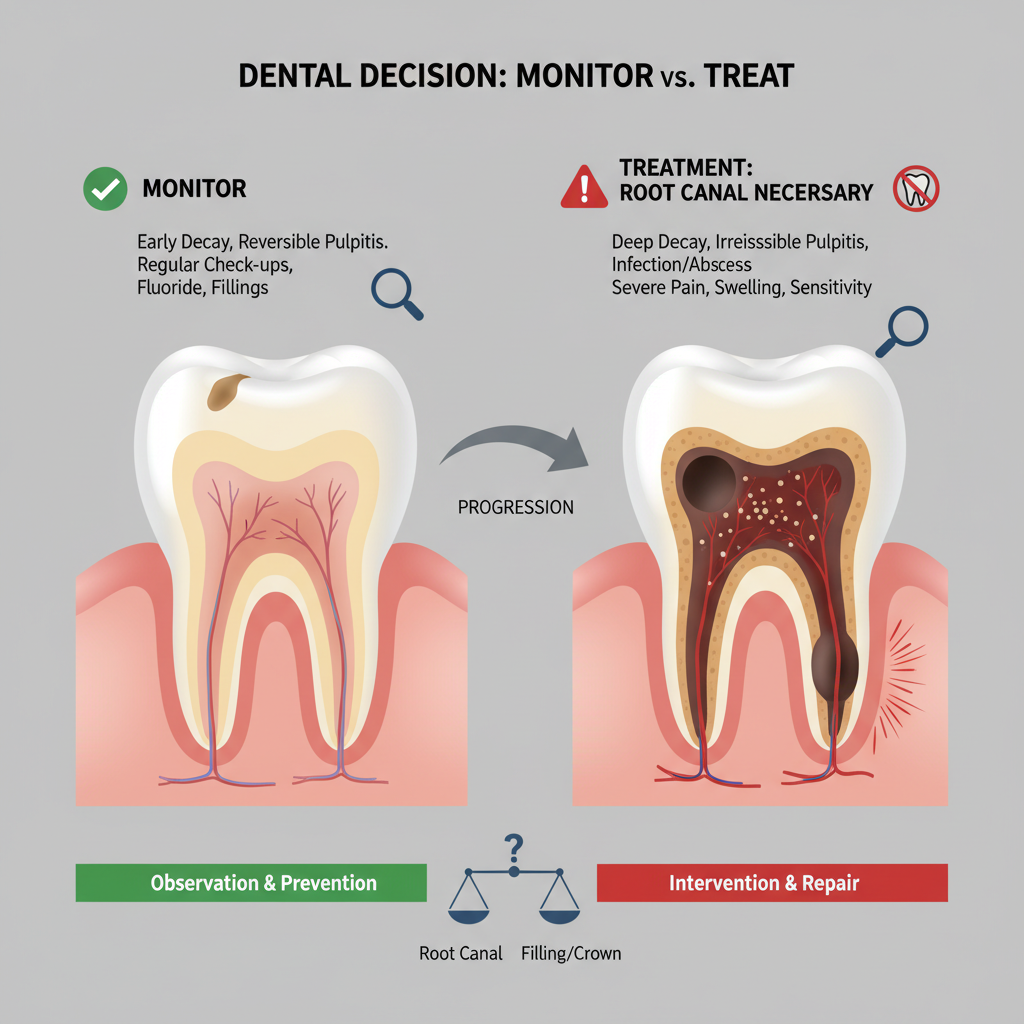
In the earliest stages, decay affects only the outer enamel. At this point, you might notice little to no pain, and conservative care such as a small filling is often enough. If you are unsure whether your symptoms match an early cavity, it can help to review common signs you need a dental filling and how to compare tooth sensitivity vs cavity.
If decay is not treated, it continues to move inward and reaches the dentin, which is softer and less resistant. You might start noticing sensitivity to sweets, cold, or biting in this phase. With timely care, there are still multiple early cavity treatment options that can stop the damage from progressing.
Once decay advances to the inner pulp chamber, bacteria have a direct pathway to the nerves and blood vessels. The pulp becomes inflamed and infected, which is often when pain becomes more persistent and severe. At this stage, brushing and flossing alone cannot reverse the damage, and you usually move beyond the point where a simple filling can help [2].
If you are wondering how to know if cavity is serious, pay close attention to whether your pain is worsening, lasting longer, or spreading. These are signs that decay may be affecting deeper structures.
Why you should not ignore early pain
Leaving deep decay untreated allows the infection to spread through the root tips into the surrounding bone. This can lead to an abscess, bone loss, and eventually tooth loss if the tooth cannot be saved [3]. You may also increase your risk for more complex and costly treatment later.
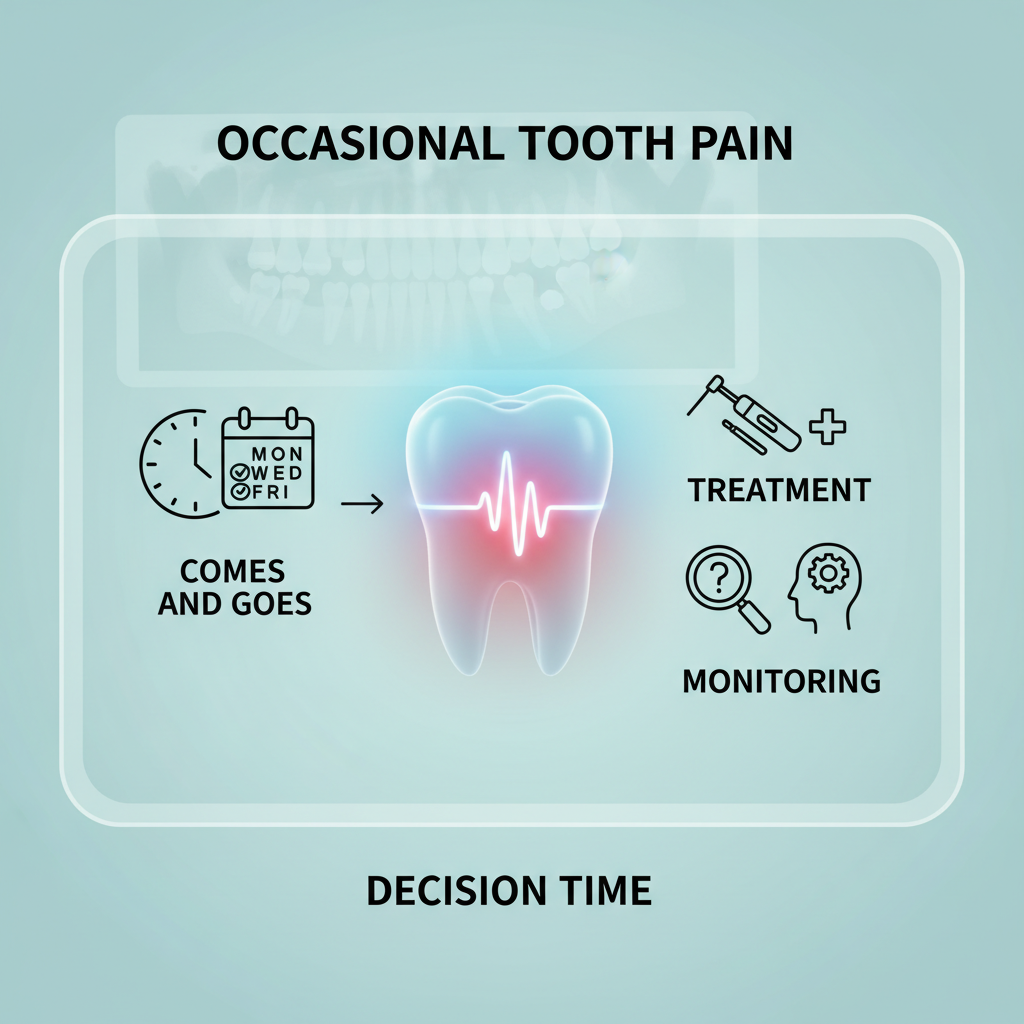
If you have mild tooth pain that comes and goes, it is still important to pay attention. Recurring discomfort can be a sign that decay is slowly progressing or that there is a crack in the tooth. For more detail on what intermittent pain can mean, you can explore tooth pain that comes and goes.
Major signs you may need a root canal
While only a dentist can confirm when a root canal is necessary, there are several symptoms that strongly suggest the pulp is inflamed or infected.
Persistent or throbbing toothache
One of the most common signs is pain that lingers or throbs, especially when you:
- Eat or drink something hot or cold
- Bite down or chew
- Lie down to sleep
Persistent tooth pain, whether constant or fluctuating, and especially if it radiates to your jaw, cheek, or nearby teeth, is a key warning sign that the nerve inside the tooth may be affected [4]. A throbbing toothache is often a clear sign that root canal treatment is needed to remove damaged tissue and relieve pain [5].
If you find yourself asking, “Why does my tooth hurt when I chew?” it is worth reviewing common mechanical and nerve-related causes in more depth at why does my tooth hurt when i chew.
Lingering sensitivity to hot or cold
Short-term sensitivity can be normal, especially if you have receding gums or recently had dental work. However, if you notice:
- Sharp or intense pain with hot or cold
- Pain that lingers for several seconds or minutes after the temperature stimulus is gone
Then it may indicate injury or infection of the nerve and blood vessels inside the tooth [4]. Lingering sensitivity that does not quickly fade can be a sign that the pulp is no longer healthy and may need root canal therapy [6].
Pain when biting or chewing
Pain or pressure when you bite can point to several issues, including a deep cavity, high filling, or cracked tooth. When the tooth is cracked or heavily decayed, each bite can irritate the pulp and surrounding ligament, causing sharp or aching pain.
A persistent ache or sharp twinge every time you apply pressure often signals that the damage has reached the inner part of the tooth. If you suspect a break, it can help to compare your symptoms with common cracked tooth symptoms, since cracked teeth often progress to needing root canal treatment [2].
Swollen, tender, or puffy gums
Swelling or tenderness in the gums around a specific tooth can indicate that infection has spread from the pulp into the surrounding tissues. You might notice:
- Red, puffy, or tender gums near one tooth
- A small pimple-like bump on the gum, which may drain fluid
- Bad taste or bad breath that does not improve with brushing
These are typical signs of an abscess or severe infection at the root of the tooth, which usually requires prompt root canal therapy and sometimes antibiotics [7].
Tooth discoloration or darkening
When the pulp inside a tooth dies, reduced blood flow and internal breakdown can cause the tooth to darken, often turning gray or grayish black. This can be particularly noticeable on front teeth. Tooth discoloration like this is an important indication that the pulp has been compromised and a root canal may be needed to save the tooth [8].
Facial or jaw swelling
In more advanced cases, infection from a tooth can spread into surrounding facial spaces. Signs include:
- Swelling in the cheek, jaw, or even neck
- Difficulty opening your mouth comfortably
- Pain that feels deep, throbbing, or widespread
These symptoms can indicate a serious infection that requires immediate attention. A dental abscess around the tooth root is a clear signal that urgent treatment, often including a root canal, is needed to prevent the infection from spreading further [9].
Common causes that lead to root canal treatment
Several underlying problems can eventually result in pulp infection and the need for a root canal.
Deep or untreated cavities
Deep cavities are the most frequent cause. When bacteria penetrate through enamel and dentin to reach the pulp, the infection cannot resolve on its own and root canal therapy is usually necessary to save the tooth [3]. If you are wondering what happens if you ignore a cavity, this progression from small decay to deep infection is the clearest example.
Cracked or chipped teeth
Cracks and chips can open a pathway directly to the pulp. You can develop a crack by:
- Biting down on something hard
- Experiencing a blow to the face
- Grinding or clenching your teeth
- Having a large, older filling that weakens tooth structure
A cracked or chipped tooth can expose nerves, increase the risk of infection, and often leads to root canal treatment if bacteria reach the pulp [10].
Repeated dental procedures or large restorations
Teeth that have undergone multiple procedures, very large fillings, or crowns can become stressed and irritated. Over time, this can inflame or damage the pulp, sometimes to the point where it cannot recover. The American Association of Endodontists notes that repeated dental procedures and faulty crowns are common reasons pulp becomes inflamed or infected and root canal therapy is then required [1].
Trauma, even without a visible crack
A traumatic injury to your mouth, such as a sports impact or fall, can damage the blood supply to a tooth. The tooth might not crack on the surface, yet the pulp can slowly deteriorate. Over time, this may cause discoloration, pain, and eventual infection that requires a root canal [3].
How dentists decide if a root canal is needed
Your symptoms are important, but they are only one part of the evaluation. Your dentist uses several tools to determine when a root canal is necessary.
Clinical exam and symptom review
You can expect your dentist to:
- Ask detailed questions about your pain
- Examine your teeth and gums
- Check for cracks, large cavities, or old restorations
- Test how the tooth responds to temperature and pressure
They will want to know how long you have had symptoms, what makes them better or worse, and whether the pain radiates. This helps distinguish between a problem that might be resolved with a filling and one that likely involves the pulp.
X‑rays and other diagnostic tests
X‑rays are critical for seeing what is happening inside the tooth and in the bone around the roots. Dentists use them to identify:
- Deep decay close to or into the pulp
- Signs of infection at the root tip
- Bone changes that indicate long‑standing inflammation
- Cracks or previous root canal work
The Cleveland Clinic notes that dentists rely on X‑rays and other diagnostic tests to confirm the presence of infection inside the tooth pulp before performing a root canal [11].
In some cases, an endodontist may use additional tests such as electronic pulp vitality testing to determine whether the nerve is alive, inflamed, or non‑vital. A root canal is considered necessary when the pulp is irreversibly inflamed or infected and will not heal on its own [5].
When monitoring may be appropriate
Not every symptom leads straight to a root canal. Mild, short‑lived sensitivity without visible decay might be monitored, especially if it improves with desensitizing toothpaste or a simple adjustment. Small cavities limited to enamel or shallow dentin usually respond well to fillings or less invasive options. If you are interested in whether early lesions can sometimes repair, you can read more on can a cavity heal on its own.
The key is to let your dentist decide when watchful waiting is safe. Self‑diagnosing and delaying treatment can allow a manageable problem to develop into one that requires more extensive care.
Why timely root canal treatment matters
Once your tooth reaches the point where a root canal is recommended, putting it off carries real risks.
Preventing serious complications
If pulp inflammation or infection is not treated, it can lead to:
- Severe, unrelenting pain
- A pus‑filled abscess
- Swelling in your jaw, face, or neck
- Bone loss around the tooth root
- Loss of the tooth itself
Untreated infection can spread beyond the tooth and, in rare cases, become a serious health threat [3]. The American Association of Endodontists emphasizes that delaying a needed root canal can mean losing the chance to save your natural tooth at all [5].
Saving your natural tooth
Saving your natural tooth with a root canal is usually preferable to extraction. Root canal‑treated teeth have a high success rate and can often last a lifetime with proper care, while replacements like bridges or implants, although effective, are more complex and usually more expensive [12].
By removing the infected pulp, cleaning and sealing the canals, and placing a final restoration such as a crown, your dentist aims to eliminate bacteria, prevent reinfection, and restore full function to the tooth [13].
When infection has reached the pulp, a root canal is usually the only way to relieve pain, stop the spread of bacteria, and keep your natural tooth instead of losing it.
Comfort during and after treatment
Many people worry that root canals are painful. In reality, modern root canal procedures are designed to be relatively comfortable. Dentists use local anesthetics to numb the area, and most patients report that the experience feels similar to getting a filling [14]. The goal of treatment is to relieve the pain caused by infection, not to create more.
With proper care, the results typically last for many years, often for life, unless new damage or decay occurs [14].
When a root canal might not be the only option
In some situations, alternatives may be appropriate, especially if the pulp is not yet irreversibly infected.
Less invasive options for early issues
If your dentist finds that the pulp exposure is minimal, the injury is fresh, and there is no sign of abscess or dead tooth, they may consider treatments such as:
- Direct pulp capping to protect a small exposure and stimulate new dentin
- Pulpotomy, which removes only part of the pulp in certain cases
These options are limited to specific situations and generally apply when the pulp is not yet irreversibly damaged. If infection develops or persists, a full root canal or extraction is often required [15].
Extraction as a last resort
When a tooth is severely broken down, cracked, or decayed beyond repair, or if infection cannot be resolved even with root canal therapy, extraction might be the only option. After extraction, you may consider a dental implant, bridge, or partial denture to replace the missing tooth [16].
Dentists generally prefer to save your natural tooth whenever possible, which is why timely diagnosis and treatment are so important.
Protecting yourself from needing a root canal
You cannot always prevent dental trauma or cracks, but you can significantly lower your risk of root canal treatment by reducing your risk for deep decay and infection.
Daily habits that help
Good oral hygiene and regular care help address problems while they are still small. The Cleveland Clinic recommends:
- Brushing after meals with fluoride toothpaste
- Flossing once a day to remove plaque between teeth
- Scheduling regular dental checkups and cleanings
These steps can help you avoid severe decay and infections that lead to root canals [11].
If your dentist identifies early cavities, make sure to follow through promptly with recommended early cavity treatment options. Acting early often keeps you in the range where a simple filling is enough and helps you avoid reaching the point where you need root canal therapy.
When you should schedule an evaluation
You should book a dental appointment promptly if you notice:
- Tooth pain that lasts more than a day or two
- Sensitivity that lingers after hot or cold foods
- Pain when you chew or bite
- Swelling or a bump on your gums
- A tooth that is turning gray or dark
Even if your discomfort seems minor, getting an evaluation before pain becomes severe allows your dentist to identify whether you only need a filling, a crown, or whether a root canal is necessary for lasting relief.
By paying attention to early symptoms, staying current with routine visits, and seeking care when something feels off, you give yourself the best chance of preserving your natural teeth and avoiding more complex treatment in the future.
References
- (American Association of Endodontists)
- (Smiles By Design)
- (Mayo Clinic)
- (Smile Charlotte)
- (American Association of Endodontists)
- (SpringDDS)
- (SpringDDS, Cleveland Clinic)
- (Smile Charlotte, SpringDDS)
- (Mayo Clinic, SpringDDS)
- (Smiles By Design, American Association of Endodontists)
- (Cleveland Clinic)
- (American Association of Endodontists, Mayo Clinic)
- (American Association of Endodontists, Delta Dental of North Carolina)
- (Delta Dental of North Carolina)
- (Milestone Family Dentistry, Swiss Smiles & Implants)
- (Milestone Family Dentistry, Mayo Clinic)