Why a periodontal evaluation matters for tooth loss prevention
If you are noticing bleeding gums, gum recession, or persistent bad breath, a detailed periodontal evaluation is one of the most important steps you can take to protect your teeth. A periodontal evaluation is a focused exam of your gums and the bone that supports your teeth. It is designed to detect gingivitis and periodontal disease as early as possible so you can avoid tooth loss and more invasive treatment later on.
Most adults have some level of gum disease, often without realizing it, which makes regular periodontal screenings essential for early diagnosis and treatment [1]. When you understand what happens during this evaluation and how it guides your care, you are better equipped to take control of your oral health and to prevent tooth loss from gum disease.
How gum disease leads to tooth loss
Gum disease starts quietly. Plaque and bacteria build up along your gumline, irritating the soft tissue that holds your teeth in place. At first, this inflammation is reversible. If it is not treated, it can progress and permanently damage the bone and ligament that support your teeth.
From gingivitis to periodontitis
In the early stage, called gingivitis, you may notice bleeding when you brush or floss, mild swelling, or occasional bad breath. At this point, professional cleanings and early stage gum disease treatment can often restore gum health.
Without treatment, gingivitis can progress to periodontitis. At this stage, the infection penetrates deeper under the gums and begins to destroy bone. Periodontal pockets form between the teeth and gums, trapping more bacteria and making it harder for you to clean at home. Periodontal disease affects about half of American adults and can cause permanent damage to gums and supporting bone if it is not detected and treated early [2].
Signs you should not ignore
You should schedule an evaluation quickly if you notice any of the following:
- Bleeding when you brush or floss
- Red, puffy, or tender gums
- Receding gumlines or teeth that look longer
- Persistent bad breath or a bad taste in your mouth
- Teeth that feel loose or a change in your bite
Symptoms such as tender gums, a shifting bite, loose teeth, or continuous bad breath are all reasons to seek a periodontal evaluation promptly [1]. These signs can indicate that gum disease is already affecting the support around your teeth.
What a periodontal evaluation includes
A periodontal evaluation is more detailed than a quick visual check of your mouth. It is a structured process that looks at your gums, bone, and risk factors so your dentist or periodontist can identify issues and customize your treatment.
The American Dental Association recommends periodontal screenings twice yearly as part of routine dental checkups, often including visual gum inspection and dental x‑rays to identify redness, puffiness, gum recession, pocket formation, and bone deterioration [1]. In addition, the American Academy of Periodontology advises an annual Comprehensive Periodontal Evaluation, or CPE, for a full assessment of gum and bone health [3].
Medical history and risk review
Your visit typically begins with a review of your medical and dental history. Conditions such as diabetes and heart disease, medications, and habits such as smoking can increase your risk of gum disease and influence how your gums respond to treatment [4].
This conversation helps your dentist or gum disease treatment dentist understand your overall health and tailor your care. You can use this time to mention any symptoms such as bleeding, swelling, or gum tenderness you have noticed at home.
Visual examination of your gums
Next, your provider will visually inspect your gums for:
- Color changes such as redness or darkening
- Swelling or puffiness
- Areas of gum recession
- Signs of pus or active infection
- The way your teeth fit together when you bite
A clinical periodontal evaluation can identify gum inflammation and swelling as signs of disease progression, which may show up as red, swollen gums, formation of periodontal pockets, and increased tooth sensitivity [2]. Early identification at this stage gives you the best chance to resolve inflammation with gum inflammation treatment before more serious damage occurs.
Measuring pocket depths with a periodontal probe
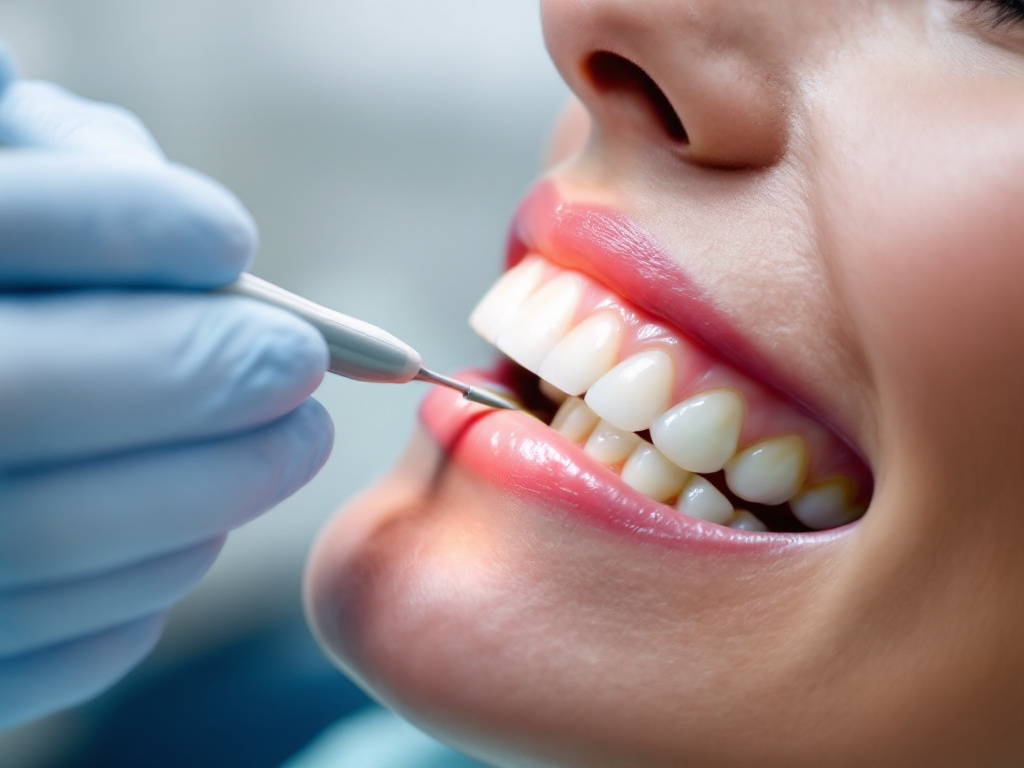
One of the key parts of your periodontal evaluation is measuring the depth of the pockets between your teeth and gums using a very thin instrument called a periodontal probe. Healthy pocket depths are typically between 1 and 3 millimeters. Deeper pockets, especially when paired with inflammation or bleeding, are a sign that gum disease is progressing and that you are at risk for bone loss and potential tooth loss if this is not addressed [5].
Several types of probes are commonly used, including the Michigan O, Williams, and Naber probes, which have specific millimeter markings that allow precise measurement of pocket depths [6]. Your provider will gently slide the probe around each tooth to record measurements in multiple spots. These numbers help classify the severity of periodontal disease and guide your treatment options.
Checking for calculus, irregularities, and tooth mobility
To get a full picture, your dentist may also use an explorer, such as the ODU 11/12, to detect calculus deposits, tooth surface irregularities, and cavities that can be missed on visual inspection [6].
Your teeth will also be checked for mobility and changes in your bite. Mobility and occlusal alterations are advanced indicators of periodontal disease and signal significant loss of supporting tissues, which requires prompt professional care, often including scaling and root planing, bite adjustments, or, in severe cases, surgery [2].
Dental x‑rays to evaluate bone levels
Visual and probing findings are combined with dental x‑rays to show how much bone remains around each tooth. X‑rays can reveal hidden abscesses and bone loss that cannot be seen during an oral exam alone [4].
Together, these findings provide a clear map of your periodontal health. They allow your provider to explain which areas are healthy, which show early disease, and which require more focused periodontal therapy.
A Comprehensive Periodontal Evaluation is designed to assess your gums and surrounding structures in detail so that periodontal issues are detected early, when they are most manageable and treatment is less invasive [3].
How often you need a periodontal evaluation
Routine monitoring is critical because gum disease can be “silent,” with few noticeable symptoms even in its later stages [5].
For many adults, twice‑yearly dental visits will include a screening of the gums and supporting structures. In addition, the American Academy of Periodontology recommends that you receive a Comprehensive Periodontal Evaluation at least once a year to thoroughly assess your periodontal health and identify any conditions that might need additional treatment [3].
If you already have diagnosed periodontal disease, your dentist may recommend more frequent assessments, often every three months. Research suggests that maintenance visits at about three month intervals, which include periodontal evaluation and thorough cleaning, help keep probing depths stable and reduce disease recurrence when compared with less frequent care [7].
Linking evaluation findings to your treatment options
One of the main goals of a detailed periodontal evaluation is to match your treatment plan to the exact condition of your gums and bone. Early disease is managed very differently than advanced periodontitis, so accurate diagnosis is essential.
Early stage gum disease treatment and deep cleaning
If your evaluation shows mild inflammation and shallow pockets, your dentist will likely recommend a combination of improved home care and professional cleanings. This is often enough to reverse gingivitis and stabilize the gums.
When pockets are slightly deeper or plaque and calculus have built up below the gumline, your provider may suggest deep cleaning for gums, also referred to as scaling and root planing. This treatment removes hardened deposits and bacteria from the tooth surface and smooths the roots so that the gums can reattach more effectively. Ultrasonic scalers, which vibrate at 20,000 to 45,000 times per second, are often used as part of this process. They can remove up to 99 percent of biofilm while reducing patient discomfort by roughly 30 percent compared with manual instruments [6].
Curettes, including specialized Gracey curettes, are then used for precise cleaning beneath the gumline and smoothing of the root surface while minimizing trauma to soft tissue [6]. Your deep cleaning dental appointment may take one or more visits depending on how many areas need attention.
Treating advanced periodontal disease
If your evaluation finds deep pockets, significant bone loss, loosened teeth, or advanced infection, your plan may include advanced periodontal treatment. This can involve:
- More extensive scaling and root planing
- Local or systemic antibiotics as gum infection treatment
- Surgical procedures to access deep pockets or regenerate lost bone and tissue
- Adjustments to your bite or splinting of mobile teeth
The results of your evaluation determine which teeth are at greatest risk and where to focus treatment first. This targeted approach is critical if your goal is to prevent tooth loss from gum disease.
Addressing specific symptoms and concerns
Your periodontal evaluation also guides care for particular symptoms:
- If you have heavy bleeding, your provider will recommend bleeding gums treatment and may adjust your cleaning schedule.
- For puffiness or tenderness, you may need focused treatment for swollen gums combined with changes to your home care routine.
- If you are concerned about exposed roots or cosmetic changes, your dentist may act as a dentist for receding gums and discuss both health and appearance options.
- Persistent bad breath linked to gum disease may call for targeted bad breath from gum disease treatment, which often improves as infection is treated.
Periodontal maintenance and long‑term gum health
Once active treatment is complete, maintaining your results is just as important as the initial therapy. Periodontal Maintenance, as described by the American Academy of Periodontology, is a phase of care that includes periodontal evaluation, soft tissue examination, radiographic follow up, and removal of bacterial biofilm at regular intervals [7].
Why regular maintenance visits matter
Studies show that patients who attend their maintenance appointments consistently have less bleeding, reduced plaque, and lower risk of tooth loss than those who do not return regularly [7]. During each visit, your provider will:
- Re‑check pocket depths and gum health
- Look for new signs of inflammation or gum recession
- Perform gum pocket cleaning to remove plaque and calculus
- Reinforce home care techniques and update your instructions
Your periodontal maintenance appointment is also a time to talk about any changes in your health, medications, or lifestyle that could affect your gums. Depending on your risk level, the optimal interval for these visits is often about every three months, but your provider will individualize this schedule [7].
Daily habits to support your gums
Professional care is only one part of the picture. Your daily routine is what maintains the improvements between visits and helps you manage gum disease long term. After your evaluation and initial treatment, most providers will recommend that you:
- Brush at least twice a day with fluoride toothpaste
- Clean between your teeth once a day with floss or interdental cleaners
- Use an antimicrobial mouthwash if recommended
- Avoid tobacco products
- Follow specific instructions for cleaning around any dental work or problem areas
Following your periodontal evaluation, home care like careful daily brushing, flossing, and antimicrobial rinses works together with professional treatment to keep your gums as healthy as possible [8].
Taking an active role in your periodontal evaluation
You are an important part of the evaluation process. The AAP encourages you to be engaged during your Comprehensive Periodontal Evaluation by asking questions and using tools like their printable checklist to follow each step and understand what is being measured [3].
When you attend your visit, you can make the most of it by:
- Sharing your full medical and dental history
- Pointing out any areas that bleed, feel sore, or seem to be receding
- Asking your provider to explain your pocket measurements and x‑rays
- Clarifying which teeth or areas need closer monitoring
- Reviewing your personalized plan to manage gum disease long term
If you know that anxiety, transportation, or schedule challenges might interfere with regular care, let your dental team know. Factors like fear, economic concerns, and logistics can affect how often patients attend periodontal maintenance, and your provider can often help find solutions so that you can stay on track [7].
When to schedule your periodontal evaluation
You should not wait for pain before you schedule a periodontal evaluation. Gum disease can progress significantly before you feel discomfort. You especially should consider making an appointment if:
- Your gums bleed regularly when brushing or flossing
- Your gums are swollen, tender, or shiny
- Your teeth look longer or you see notches near the gumline
- You have persistent bad breath that does not respond to brushing or mouthwash
- Any teeth feel loose, or your bite feels different
A periodontal evaluation is your starting point for personalized chronic gum disease care. It gives you a clear picture of your gum health and a step‑by‑step plan for gum disease treatment dentist services such as periodontal therapy, deep cleaning for gums, and ongoing maintenance.
By acting early and staying engaged in the evaluation and follow up process, you put yourself in the best position to protect your smile, preserve your natural teeth, and avoid tooth loss from gum disease.