Why it matters to know if a cavity is serious
When you first notice a spot on a tooth or a bit of sensitivity, it is not always easy to tell how serious it is. Understanding how to know if a cavity is serious helps you decide whether you can schedule a routine visit or you need urgent dental care. Cavities that are caught early are usually simple to treat. When you wait, they can progress to deep decay, infection, and even tooth loss [1].
You may be hoping a small cavity will go away on its own. Unfortunately, tooth decay does not reverse once it has gone beyond the outer enamel, and it always gets worse without treatment [2]. Learning the early warning signs, and the red flags that indicate serious decay, helps you avoid emergency pain and more complex procedures.
How cavities form and progress
To understand how serious a cavity might be, it helps to know what is actually happening inside your tooth. Cavities start when bacteria in your mouth feed on sugars and starches. They produce acids that mix with food particles and saliva and form sticky plaque. This plaque gradually erodes enamel and creates weak spots and tiny openings in the tooth surface [3].
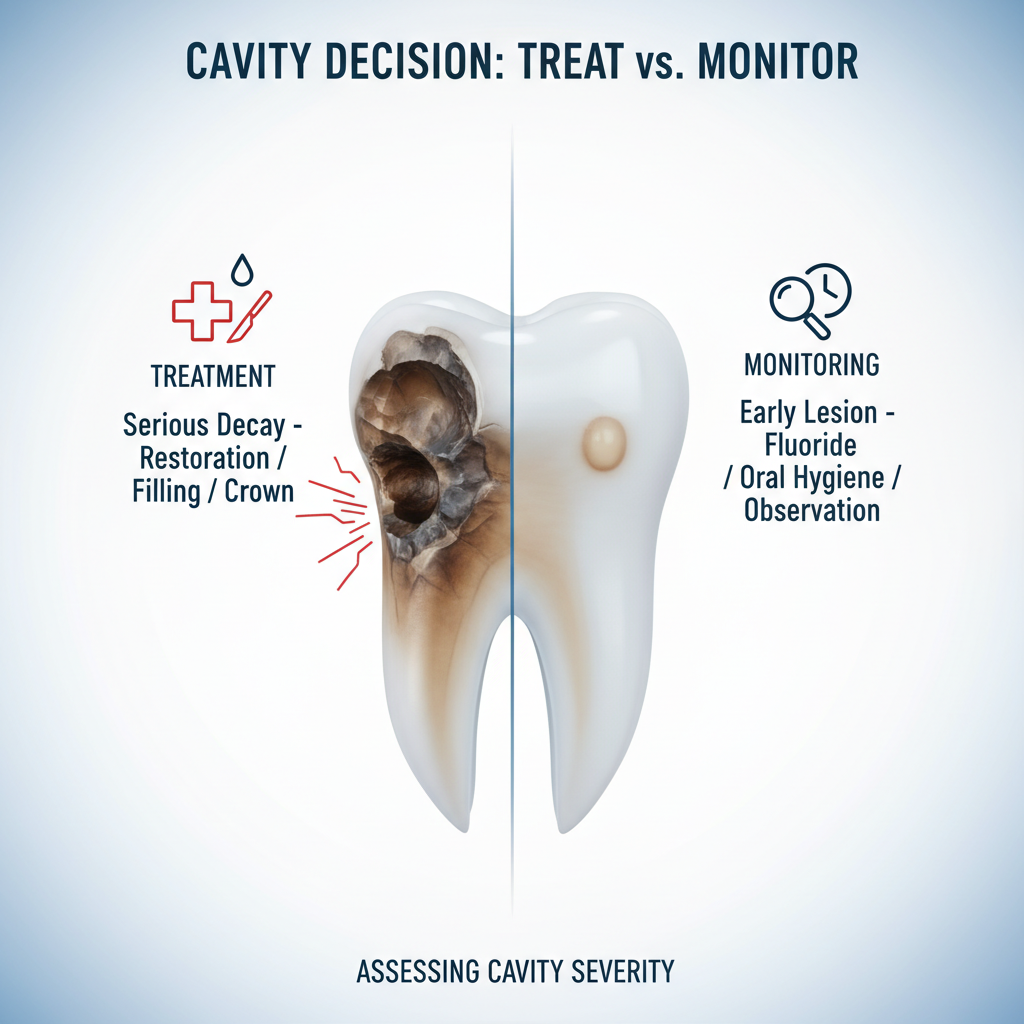
In the earliest stage, decay is limited to the enamel. At this point you usually do not feel pain. With good hygiene and fluoride, some early enamel damage may be stabilized or even partially reversed [4].
If plaque is not removed, the decay breaks through the enamel and reaches the dentin, the softer layer under the enamel. At this stage the cavity is no longer reversible. You are more likely to notice sensitivity because dentin transmits temperature and pressure to the nerve more easily.
When decay keeps progressing, it can reach the pulp, the inner chamber that contains nerves and blood vessels. Once bacteria invade the pulp, infection, intense pain, and sometimes an abscess can develop. This is when a cavity becomes serious and can threaten not only the tooth but also your overall health if the infection spreads [5].
Early signs of a cavity that needs attention
Even though very early cavities may not hurt, your mouth often gives you small clues that something is off. These signs usually mean you should schedule a dental exam soon, even if you are not in constant pain.
Mild sensitivity to hot, cold, or sweets
You might notice a quick zing of discomfort when you drink ice water or eat something sugary. According to the Cleveland Clinic, pain or sensitivity to heat, cold, or sweets tends to appear once decay has spread beyond the enamel into deeper layers [4].
Mild, brief sensitivity can also be caused by worn enamel or gum recession, not just a cavity. If you are unsure whether you have tooth sensitivity vs cavity, an evaluation can help you find the cause before symptoms worsen.
Visible pits, lines, or color changes
On chewing surfaces, an early cavity may look like a small pit or a line in the grooves of the tooth. Sides of teeth may show chalky white spots, light brown areas, or rough, dull enamel. As decay progresses, these areas can darken to brown or black [4].
You may be able to see or feel these small changes with your tongue, even if they are not painful yet. Any visible hole or rough spot in a tooth is a sign to book a visit and discuss early cavity treatment options.
Occasional, mild tooth twinges
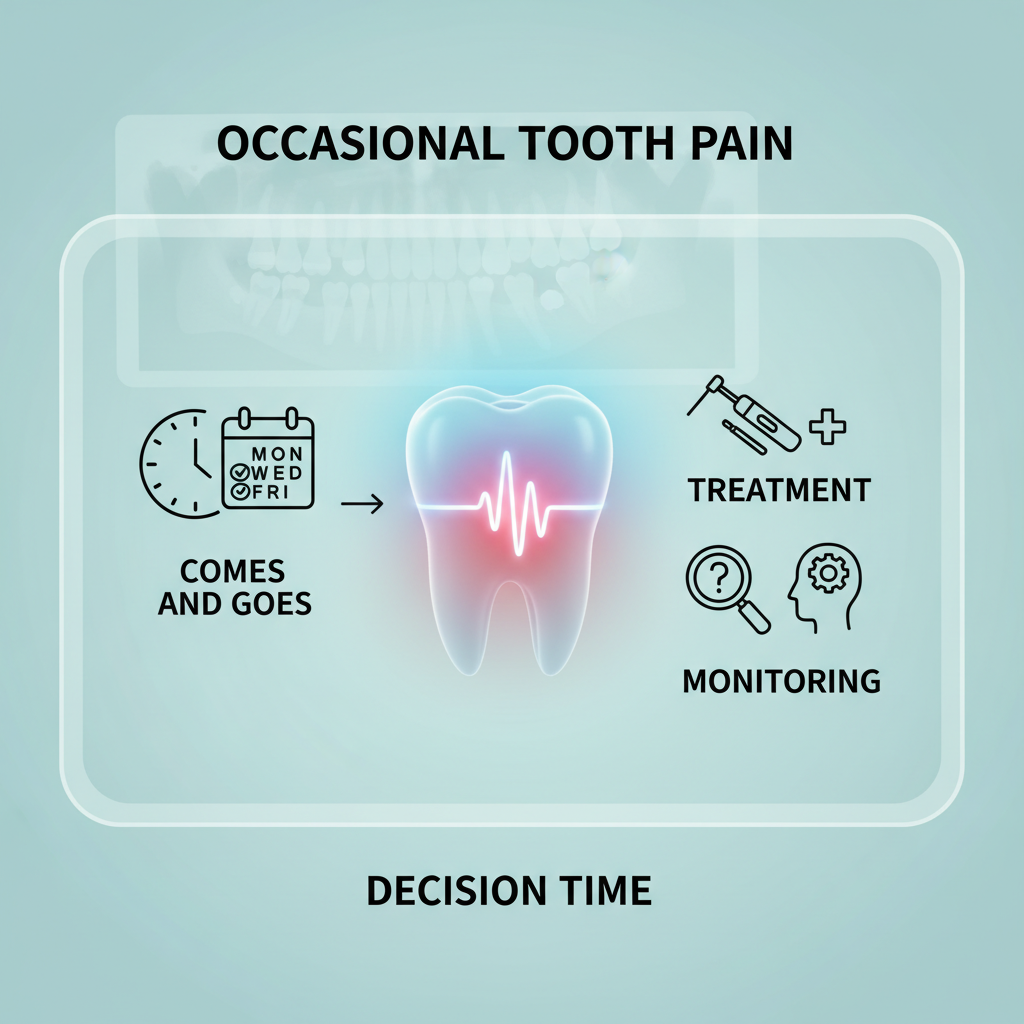
A tooth that twinges once in a while, for example when you bite into something harder or very sweet, can be an early warning sign. This kind of tooth pain that comes and goes should not be ignored. Pain means nerves are involved, which usually indicates that decay is beyond the very outer layer.
Clear signs your cavity is becoming serious
Once a cavity moves beyond the enamel into deeper tooth layers, the risk of significant pain and infection increases. At this stage, waiting often leads to more invasive and more expensive treatment.
Persistent toothache or throbbing pain
A lasting toothache is one of the strongest signals that your cavity is serious. The Mayo Clinic notes that toothache or mouth pain usually appears as the cavity grows larger and spreads deeper [6]. The Cleveland Clinic also notes that pain occurs when decay goes beyond the enamel into the dentin and pulp [4].
If you feel:
- A dull, nagging ache in one tooth
- Throbbing that keeps you awake or distracts you during the day
- Pain without an obvious cause
you should treat this as urgent. This level of discomfort often means the nerve is inflamed or infected, and you may be approaching the point where root canal therapy or extraction is needed.
Strong sensitivity that lingers
Short sensitivity can be an early sign, but strong, lingering sensitivity often points to deeper decay. If a tooth stays uncomfortable for more than a few seconds after hot or cold contact, or if it reacts sharply to sweets or even cool air, decay may be close to or already in the pulp [4].
This type of sensitivity is different from a quick surface reaction. It often feels like a deeper ache that radiates or pulses for several minutes.
Dark spots, large holes, or broken tooth structure
As cavities enlarge, they can create obvious holes that you can see or feel with your tongue. Dark brown or black spots are common in more advanced decay and are listed as warning signs of serious cavities by the Cleveland Clinic [4].
You may also notice:
- A piece of tooth breaking off while you eat
- A rough, sharp edge on a tooth
- Food frequently packing into the same area
By this point, you almost always need a filling or possibly a crown to restore strength. You can review more specific signs you need a dental filling to understand what your dentist may recommend.
Pain when chewing or biting
If you feel a sharp pain every time you bite down on a particular tooth, this may be a sign of a deeper cavity, nerve irritation, or a fracture. While decay is one common cause, similar symptoms can show up with a cracked tooth as well.
If you notice:
- A stab of pain only when chewing on one side
- Discomfort that appears when you release a bite, not when you clamp down
- Pain with certain textures or hard foods
you should schedule an exam soon. It can be helpful to read more about why does my tooth hurt when I chew and cracked tooth symptoms so you know what to mention at your visit.
Swelling, bad taste, or pus
When decay reaches the pulp, bacteria can create an infection inside the tooth or at the root tip. This may lead to an abscess, which the Cleveland Clinic describes as a severe infection that can spread through the body if untreated [4].
Warning signs of an abscess include:
- Swelling in the gums or face near the tooth
- A pimple-like bump on the gum
- Drainage of pus or a foul taste in your mouth
- Fever or feeling generally unwell
These are all urgent signs. You should contact a dentist or urgent care provider right away if you notice them. Ignoring an abscess can lead to serious complications.
If a cavity is causing significant pain, visible damage, or any signs of infection, it is considered serious and needs prompt professional treatment. Leaving it alone does not help and typically leads to more pain and more complex procedures [7].
How dentists determine cavity severity
From the outside, a tooth might just look like it has a small spot. Your dentist uses several tools to determine how serious the cavity really is and what level of treatment is needed.
Visual and tactile exam
During your exam, the dentist looks for pits, discoloration, and surface changes. They may gently explore suspicious areas with a dental instrument to feel for softness or roughness. Early decay can be subtle, so trained eyes and proper lighting are important for detection [6].
Dental X rays
X rays reveal how far decay has spread and whether it has reached the dentin or pulp. They are especially helpful for spotting cavities between teeth and under old fillings where you cannot see decay directly. The depth and location of the cavity on X ray guide the choice between a simple filling, a larger restoration, or more advanced treatment [8].
Checking for nerve involvement
If you have pain, your dentist may test how the tooth responds to temperature or percussion (tapping). These tests help determine if the pulp is inflamed, infected, or dying. The severity of pulp involvement is a key factor in deciding whether you only need a filling or if when is a root canal necessary for your tooth.
Treatment options by cavity stage
Once your dentist knows how advanced the decay is, they will recommend the most conservative treatment that can still fully solve the problem. Different stages of severity call for different approaches.
| Cavity Stage | Typical Symptoms | Common Treatment | Why It Matters |
|---|---|---|---|
| Early enamel decay | Often no pain, possible white spot or tiny pit | Fluoride, monitoring, small filling if needed | Can be treated simply, sometimes stabilized |
| Dentin level cavity | Sensitivity, visible hole or dark spot, mild pain | Filling or onlay | Stops decay before it reaches the nerve |
| Deep cavity near pulp | Strong sensitivity, pain with chewing, larger hole | Larger filling or crown, possible root canal | Prevents nerve death and infection |
| Pulp involvement or abscess | Severe pain, swelling, pus, fever | Root canal with crown or extraction | Removes infection and protects health |
For minor to moderate cavities, fillings are often enough. As the Pacific View Smile Center explains, fillings can effectively treat minor decay, but when the pulp is involved a root canal is usually necessary, and if the tooth is too damaged, extraction may be required [8].
If you are wondering specifically about different options for small and moderate decay, you can explore early cavity treatment options so you know what to expect.
Why waiting makes a cavity more serious
You might be tempted to wait if your tooth only bothers you occasionally. However, both the Mayo Clinic and the Cleveland Clinic emphasize that untreated cavities worsen over time and can lead to infection, pain, and ultimately tooth loss [1].
Several things happen when you delay care:
- The hole gets larger and deeper, which destroys more healthy tooth structure
- Bacteria and acids move closer to the nerve
- Risk of sudden severe pain or a dental emergency increases
- Treatment options shift from simple fillings toward root canals, crowns, or extractions
Cavities do not go away on their own. Sensational Smiles notes that professional treatment is needed to remove decay and fill the space, and without this step decay continues to spread [2]. To understand the risks better, it may help to read more about what happens if you ignore a cavity.
Can you ever just monitor a cavity?
You may wonder if you can safely watch an early cavity and avoid treatment. In very specific situations, your dentist may suggest close monitoring instead of immediate drilling, especially if decay is only in the outer enamel and you are highly committed to improving your oral hygiene and fluoride use.
However, this is not the same as doing nothing. It involves:
- Regular checkups and X rays, usually more often than once a year
- Daily brushing with fluoride toothpaste and possibly a prescription fluoride product
- Professional fluoride treatments or sealants in the office
If you are hoping your cavity will heal on its own, it is important to remember the limits. Once decay reaches dentin, it cannot be reversed and must be restored. You can learn more in detail in can a cavity heal on its own.
The safest approach is to let a dentist decide whether a spot is early enough to monitor or already needs treatment. Self diagnosing at home is risky because symptoms often appear late in the process [6].
When to call a dentist right away
Use these guidelines to decide when to seek prompt care. If you are ever unsure, it is always better to schedule an evaluation rather than hope symptoms will disappear.
You should contact a dentist as soon as possible if you notice:
- Persistent toothache or pain that keeps returning
- Sharp pain when you bite down or chew
- Lingering sensitivity to hot, cold, or sweets
- Visible dark spots, holes, or broken tooth structure
- Swelling in the gums or face, a bump on the gum, or pus
- Fever, bad taste, or difficulty swallowing along with tooth pain
These are all signs that a cavity may be serious and that deeper layers of the tooth, or even surrounding tissues, could be affected [9].
Even if your symptoms are milder, such as occasional twinges or a small visible spot, scheduling a checkup now can prevent more extensive problems later.
Taking a proactive, prevention‑focused approach
You have more control than it might feel like when it comes to cavities. Regular professional exams and cleanings are essential because early stage cavities often do not cause pain or obvious symptoms [6]. Combined with consistent home care, these visits let your dental team spot problems long before they become serious.
A proactive approach includes:
- Twice daily brushing with fluoride toothpaste
- Daily flossing to remove plaque between teeth
- Limiting frequent snacking on sugary or starchy foods
- Keeping up with recommended checkups and X rays
When you notice a change in a tooth, listen to it instead of waiting until pain is severe. If you act quickly, treatment is usually simpler, more comfortable, and more affordable, and you are much more likely to save your natural tooth.
Understanding how to know if a cavity is serious gives you a clear next step. If any of the warning signs described here sound familiar, consider scheduling a dental evaluation soon so you can address the problem before it turns into an emergency.