Tooth pain can be confusing. You might feel a quick zing when you sip something cold, or you might notice a dull ache that just will not go away. Understanding tooth sensitivity vs cavity is one of the most important steps in deciding whether you can monitor symptoms at home or need treatment right away.
When you recognize early warning signs and act quickly, you can often fix problems with simple treatments and protect yourself from bigger procedures later.
How healthy teeth should feel
To understand tooth sensitivity vs cavity, it helps to start with how a healthy tooth works.
Each tooth has three main layers:
- Enamel, the hard, outer shell that protects your tooth
- Dentin, a softer layer under the enamel that contains tiny tubes leading to the nerve
- Pulp, the inner part of the tooth that holds nerves and blood vessels
When enamel is strong and gums fully cover the tooth roots, hot, cold, and sweet foods should not cause pain. You might feel pressure when you chew, but not sharp or lingering pain.
Anything that exposes dentin or irritates the pulp can lead to sensitivity or toothache. That is where the difference between tooth sensitivity and cavities begins.
What tooth sensitivity usually feels like
Tooth sensitivity is very common, especially in adults between 25 and 35 years old, and it often feels different from a classic cavity toothache. Many people describe it as a quick, sharp, nerve-like pain that stops once the trigger is gone.
You are more likely to notice sensitivity when you:
- Drink something cold or hot
- Eat sweet or acidic foods
- Breathe in cold air
- Brush or floss around a specific tooth
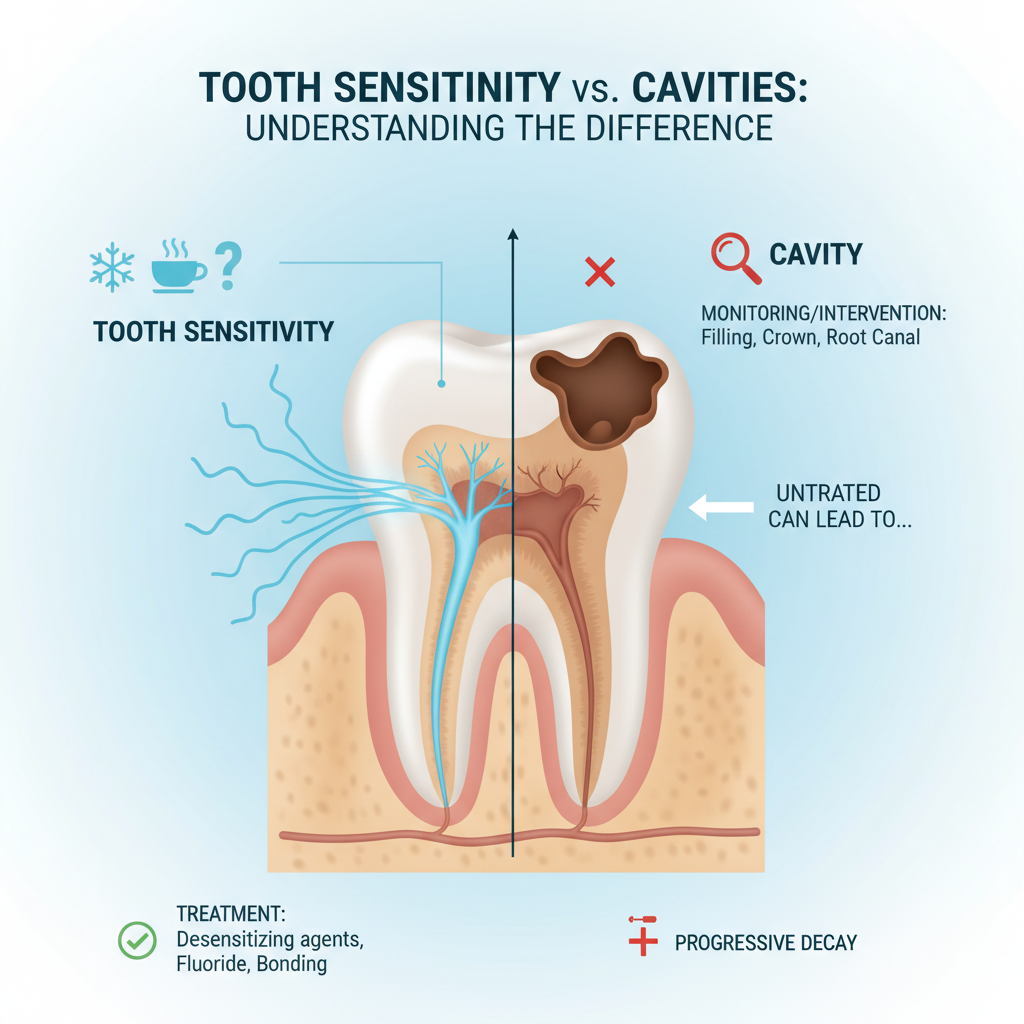
According to the Cleveland Clinic, sensitivity happens when enamel wears down or gums recede, exposing the dentin layer that contains tiny tubes connected to the nerve inside your tooth. When temperatures or acids hit that exposed dentin, signals travel quickly to the nerve and cause pain [1].
For many people, this pain is short and sharp. It does not usually throb, and it often fades within seconds.
Common causes of tooth sensitivity
Tooth sensitivity does not always mean you have a cavity. In fact, there are many non-decay reasons your teeth may suddenly react:
- Enamel wear from brushing too hard or using a stiff toothbrush
- Acid erosion from citrus, soda, sports drinks, or frequent snacking
- Teeth grinding or clenching that slowly wears the biting surfaces
- Gum recession that exposes the roots of your teeth
- Recent whitening treatments that temporarily irritate the nerves
- Dental work such as recent fillings or crowns that are still settling
Mayo Clinic notes that both worn enamel and exposed roots can lead to sensitivity during everyday activities like brushing, eating, and drinking, even in otherwise healthy teeth [2].
In some cases, sensitivity can also signal more serious problems such as cavities, cracked or chipped teeth, worn fillings, or gum disease [2]. This is why it is important not to ignore it, especially if it gets worse over time.
What a cavity is and how it starts
A cavity is different. It is permanent structural damage to your tooth.
Cavities, also called dental caries, begin when bacteria in plaque feed on sugars from your diet and produce acids. Over time, these acids dissolve minerals from your enamel. If you do not interrupt this process with good brushing, flossing, and dental visits, a soft spot can become a hole that continues to grow deeper into the dentin and eventually the pulp.
Sensodyne reports that about 92% of American adults between 20 and 64 have had cavities, and that the main cause is acid produced by bacteria in plaque that is not removed regularly [3].
Unlike many causes of basic sensitivity, a true cavity will not repair itself. You need professional treatment to stop the decay and seal the tooth.
How cavity pain usually feels
Cavities and tooth sensitivity can overlap, but they often feel different.
Cavities may cause:
- A dull, lingering toothache
- Pain that worsens when you bite or chew on that tooth
- Sensitivity to hot, cold, or sweet that lingers after you remove the trigger
- Occasional sharp jabs of pain, even without eating or drinking
At first, a small cavity may cause no pain at all. As it grows, you might notice occasional zaps with cold drinks. Eventually, decay can reach the nerve and lead to continuous, throbbing pain or tooth pain that wakes you up at night. Cleveland Clinic notes that damaged enamel can expose the dentin layer, which makes teeth more vulnerable to temperature changes and sweet substances, contributing to sensitivity and pain when a cavity is present [1].
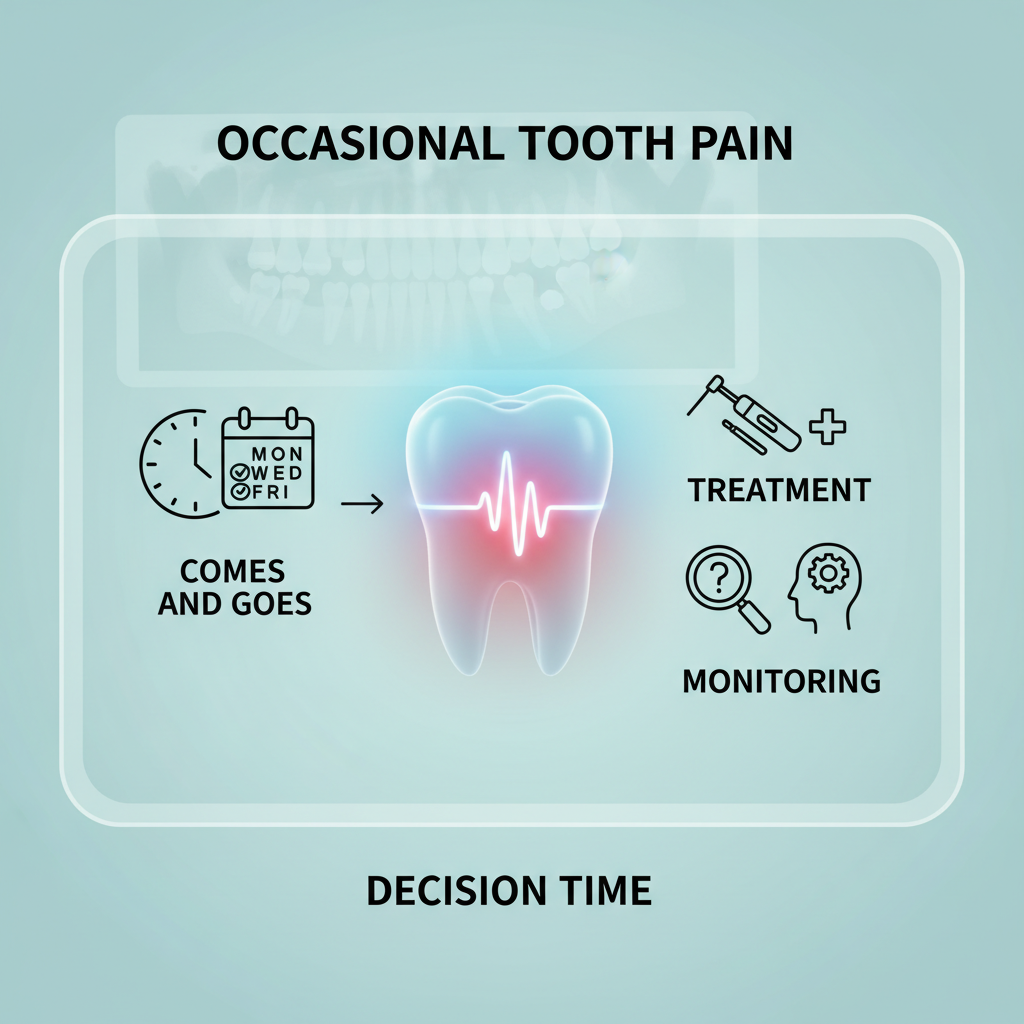
If you are feeling tooth pain that comes and goes, especially in the same area, it is worth reading more about why that happens in resources like tooth pain that comes and goes, then scheduling an evaluation.
Tooth sensitivity vs cavity: Key differences
When you are feeling discomfort, it helps to compare how tooth sensitivity and cavities usually behave.
| Feature | Typical tooth sensitivity | Typical cavity pain |
|---|---|---|
| Cause | Exposed dentin from worn enamel or receding gums, sometimes whitening or grinding | Active tooth decay causing a hole in the tooth |
| Type of pain | Short, sharp, triggered by hot, cold, sweet, or acidic foods | Dull ache or sharp pain, may linger after hot, cold, or sweet |
| Duration | Lasts seconds, stops when the trigger is gone | Can last minutes or longer, may be spontaneous |
| Visible signs | Teeth may look normal or slightly worn, gums may appear receded | Dark spots, pits, or holes, sometimes caught only on x‑rays |
| Age pattern | Very common in adults 25 to 35 [4] | Can occur at any age, often worsens over time if untreated |
| Reversibility | Sometimes improved with new habits or products | Requires professional treatment to stop decay |
The tricky part is that cavities can also cause sensitivity. Damage from decay opens pathways to the nerve, which can feel like temperature sensitivity or sweet sensitivity in the early stages [1].
So while sensitivity can exist without a cavity, the only way to know for sure what is happening is a dental exam.
Signs your sensitivity might be a cavity
Some types of sensitivity are more suspicious for decay than simple enamel wear. You should be especially alert if you notice:
- Pain in one specific tooth instead of generally across your mouth
- A visible dark spot, pit, or small hole on the tooth
- Roughness you can feel with your tongue or when floss catches
- Sensitivity that turns into a dull ache or throbbing
- Pain that lingers after you finish eating or drinking
- Discomfort when you chew on that side of your mouth
Pinnacle Dental Associates point out that a cavity forms when a hole in the enamel allows bacteria to enter, leading to damage that can feel like sensitivity or a dull, persistent ache, sometimes accompanied by visible dark spots on the tooth [5].
If you are unsure, review the common signs you need a dental filling so you know what to watch for.
Can you treat sensitivity at home?
Mild, generalized sensitivity that comes and goes and does not involve obvious damage can often be improved with simple changes. For many people, these steps reduce or even eliminate symptoms:
- Switching to a desensitizing toothpaste
- Using a soft toothbrush and gentler brushing technique
- Avoiding aggressive scrubbing along the gumline
- Cutting back on acidic drinks and sipping water afterward
- Wearing a mouthguard at night if you grind your teeth
Sensodyne, a leading brand of desensitizing toothpaste, notes that using a sensitivity toothpaste twice daily can provide relief from nerve pain in many cases, especially when the cause is exposed dentin rather than active decay [3].
Even if these steps help, you should still mention your symptoms at your next checkup. Sensitive teeth may be an early sign of bigger dental problems such as cavities or gum disease that are much easier to treat in the beginning [1].
Why you should not ignore ongoing pain
Tooth pain, even if it seems minor, is your body asking for attention. Cavities, cracked teeth, and infections do not get better on their own. They continue to spread deeper into the tooth and sometimes into the jaw or surrounding teeth.
Multiple sources, including Sensodyne and Royal Vista Dental, emphasize that early cavities may cause no pain at all, but as decay progresses you can develop continuous toothache, sharp occasional pains, and sensitivity to hot, cold, or sweet foods and drinks [6].
Waiting until pain is severe often means you have moved beyond a small filling and may now need more complex treatment. If you are wondering how to know if cavity is serious, the presence of constant pain, swelling, or pain that keeps you up at night is usually a sign that you should call your dentist immediately.
When to monitor vs when to treat
You do not need to rush to the dentist for every one-second zing from ice water, but there are clear times when an evaluation is important.
You may be able to monitor at home, while scheduling a routine appointment, if:
- Sensitivity is mild and affects several teeth, especially near the gumline
- Pain is brief and only occurs with strong triggers such as very cold drinks
- There are no visible holes, chips, or dark spots
- You notice improvement after switching to sensitive toothpaste and soft brushing
You should schedule an evaluation soon if:
- Sensitivity is getting worse instead of better
- Only one tooth is painful, especially when chewing
- You see a dark spot, crack, or rough area on the tooth
- Pain lingers after the trigger is gone
- You experience tooth pain that comes and goes in the same area repeatedly
You should seek urgent dental care or an emergency appointment if:
- The pain is severe and constant
- Your face or gums are swollen
- You have fever with tooth pain
- Pain wakes you up at night or prevents you from eating
A dentist is the only professional who can definitively distinguish between a sensitive tooth and a cavity and can recommend the right treatment before problems worsen [5].
What treatment for a cavity usually involves
If your dentist confirms a cavity, treatment will depend on how advanced the decay is. The goal is to remove the damaged portion, stop the infection, and restore the tooth so you can chew comfortably again.
Common options include:
- Fillings for small to moderate cavities
- Inlays, onlays, or crowns for larger areas of decay
- Root canal treatment if decay has reached the nerve
- Extraction only when a tooth is too damaged to save
Sensodyne notes that treatment for cavities often includes fillings, crowns, root canals, or extraction in severe cases, and that prevention with good oral hygiene and regular checkups is essential [3].
If you are curious about less invasive options, especially when decay is caught early, you can explore early cavity treatment options and learn more about what happens in those first stages. If decay is more advanced, your dentist will walk you through when is a root canal necessary and whether that applies to your situation.
Why early care protects you from bigger problems
A small area of demineralization or a tiny cavity is often quick and comfortable to treat. The longer you wait, the more likely you are to face:
- Larger fillings that weaken more of the tooth structure
- Cracks that form around old or large fillings
- Infections that spread to the nerve of the tooth
- More complex procedures such as crowns or root canals
Royal Vista Dental and Pinnacle Smiles both highlight that early dental consultation for any tooth pain or sensitivity helps prevent complications from cavities and other oral health problems. Waiting can mean more pain, higher cost, and fewer options for conservative treatment [7].
If you have ever wondered what happens if you ignore a cavity, the answer is that decay continues to progress until it reaches the nerve or the structure of the tooth fails. At that point, you are often looking at either root canal treatment, extraction, or ongoing infections.
By choosing to act when symptoms are still mild, you give yourself the best chance at simple, comfortable treatment and long-term dental health.
Other causes of tooth pain to consider
Tooth sensitivity vs cavity is a very common comparison, but they are not the only possible causes of discomfort. Your dentist will also consider:
- Cracked or chipped teeth, which can cause sharp pain when you bite, especially if the crack flexes. If this sounds familiar, review cracked tooth symptoms.
- Problems with an existing filling or crown that has worn down, leaked, or broken.
- Gum disease that exposes roots or causes inflammation around the teeth.
- Sinus issues that can sometimes cause upper tooth pain.
- Grinding or clenching that leads to sore teeth and jaw muscles.
If your pain is mostly when you bite or chew, and especially if it is focused on one tooth, you might find it helpful to read why does my tooth hurt when i chew before your visit so you can better describe your symptoms.
No matter the cause, having a clear diagnosis is the first step to feeling better.
Taking the next step
Tooth sensitivity vs cavity can be difficult to sort out on your own, especially when symptoms overlap. Sensitivity from worn enamel, receding gums, or whitening can sometimes improve with home care, but cavities and other structural problems will not heal without treatment.
If you are noticing new or worsening tooth pain, do not wait for it to become severe before reaching out for help. A quick evaluation can often catch problems early, give you peace of mind, and help you choose the most comfortable and conservative treatment path.