Understanding early cavities and tooth pain
When you first notice tooth sensitivity or a small dark spot, it is natural to wonder if you need treatment right away or if you can simply wait and watch. Knowing your early cavity treatment options helps you decide what to do now so you can avoid severe pain, root canals, and extractions later.
Tooth decay starts with demineralization, a loss of minerals from your enamel. In this earliest stage, you may see chalky white spots or feel mild sensitivity, but there is not yet a permanent hole in the tooth. At this point, you can often stop or even reverse the process with the right combination of diet, fluoride, and oral hygiene [1]. Once a true cavity forms, the focus shifts from reversal to repair.
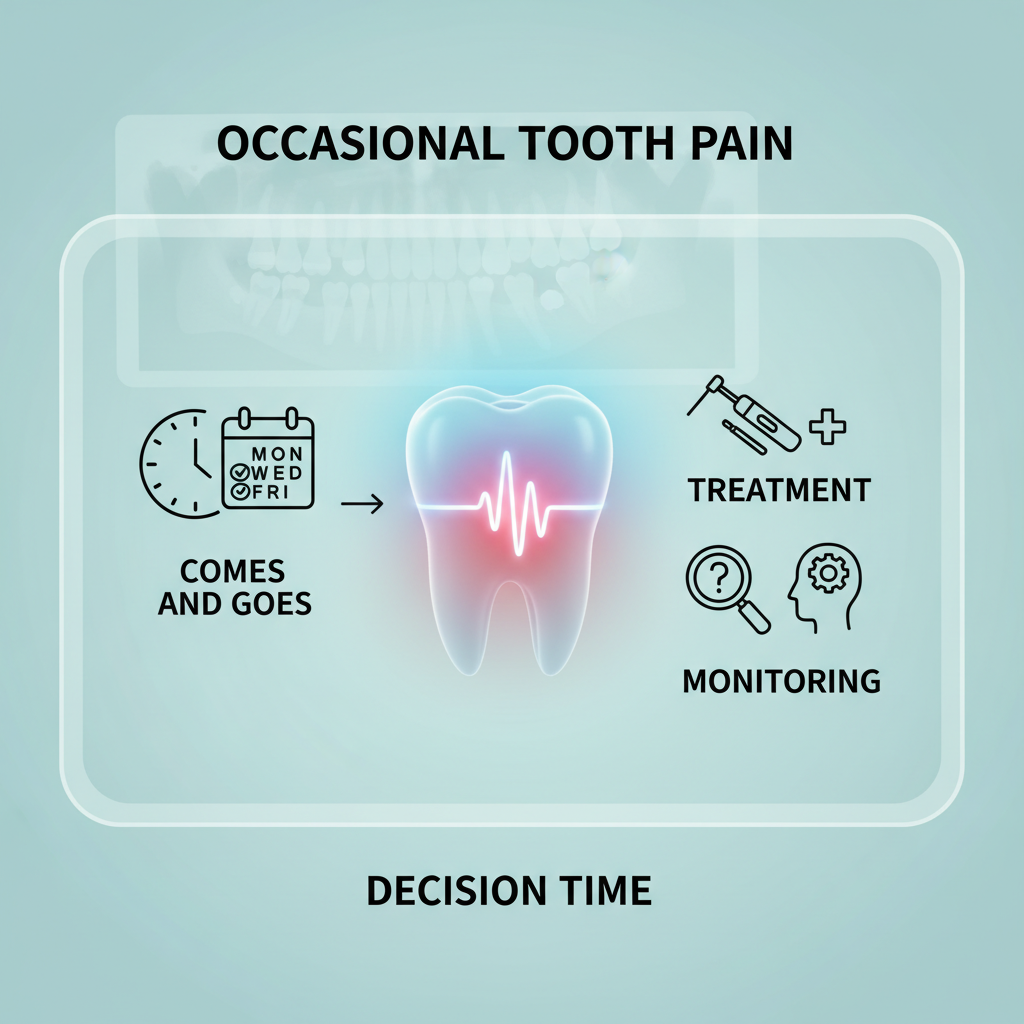
If you are already having discomfort, it can help to understand how your symptoms line up with common warning signs like tooth pain that comes and goes, tooth sensitivity vs cavity, and cracked tooth symptoms. An evaluation with a dentist is still essential, but this context can make your options clearer.
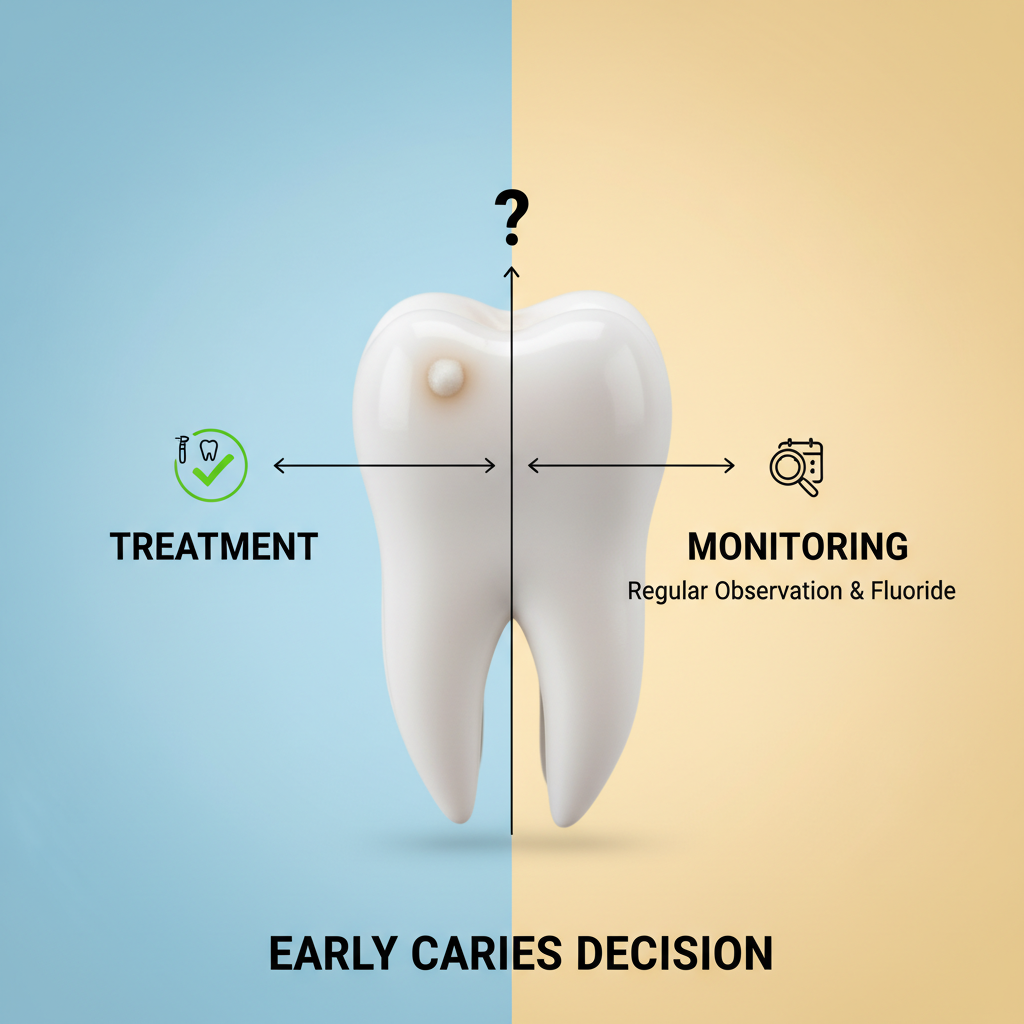
When you can monitor instead of treat
You do not always need a drill or filling the moment a dentist spots a change in your enamel. In some situations, your dentist may recommend monitoring, combined with preventive strategies, instead of immediate restorative work.
Very early demineralization
In the earliest stage, decay shows up as a white or chalky patch where minerals have been pulled out of the enamel, but the surface is still intact. You may not feel any pain. With improved home care, topical fluoride, and dietary changes, this demineralization can often be reversed through remineralization, which restores lost minerals like calcium and phosphate to the enamel [1].
Your dentist might suggest a period of watchful waiting in these situations if you:
- Have excellent home care and are willing to improve
- Do not have other high risk factors
- Can return reliably for follow up exams and X‑rays
Mild, intermittent symptoms
If you have brief sensitivity to cold or sweet foods but no lingering pain, the issue may be early decay or even non decay sensitivity. Reviewing how to tell tooth sensitivity vs cavity can give you a better idea of what you are feeling. Your dentist will use that information, along with an exam and X‑rays, to decide if it is safe to monitor or if you already need a filling.
Keep in mind that early cavities often cause no symptoms at all. That is why regular checkups are critical for catching problems before you feel them [2].
When you need treatment right away
There is a line between a spot on your enamel that can be monitored and a cavity that needs active treatment. Once decay breaks through the surface and creates a hole, it will not heal on its own. At that point, a filling or another restorative option is necessary to prevent the damage from spreading [1].
You should consider urgent treatment if you notice:
- A visible hole or pit in the tooth
- Brown or black spots that are rough or soft to the touch [3]
- Tooth pain that lingers after hot, cold, or sweet foods
- Pain when chewing or biting on that tooth
- Persistent bad breath or a bad taste in your mouth [3]
These are often signs you need a dental filling and indicators that you should not delay care. Waiting at this stage increases the risk that decay will reach the nerve of the tooth and you will end up asking when is a root canal necessary rather than which early options you still have.
At home early cavity treatment strategies
If your dentist confirms that your decay is in the earliest stage, or if you are at high risk for cavities, there are several non invasive steps you can take at home that support remineralization and can slow or halt early tooth decay.
Improve brushing and flossing habits
Daily dental care is still your first line of defense. Brushing twice a day with a fluoride toothpaste and cleaning between your teeth once a day removes plaque and provides the fluoride needed to repair early damage [2].
Many people find it helpful to add an anticavity rinse. Mouthwashes such as LISTERINE TOTAL CARE ZERO FRESH MINT can help control bacteria and strengthen enamel between dental visits [3].
Support remineralization through diet
Diet plays an important role in whether your teeth lose minerals or gain them. Research shows that early demineralization can be reversed when you consistently provide your teeth with the right building blocks.
You can support remineralization by:
- Eating calcium rich foods like dairy, leafy greens, and almonds
- Choosing meals that include phosphorus, such as meat, eggs, and nuts
- Drinking water throughout the day to maintain saliva flow
- Chewing crunchy vegetables to stimulate saliva and naturally cleanse teeth
Historic research also points to the importance of vitamins A and D, and calcium from animal fats, for healthy tooth development and resistance to cavities. Studies in the early 1900s found that diets high in these nutrients promoted strong enamel, while deficiencies led to enamel defects and more caries [4]. Similar work in children showed fewer new cavities and more arrested lesions on diets rich in vitamins A and D and calcium but low in phytic acid from cereals [4].
These studies do not replace modern care, but they reinforce how a nutrient dense diet can complement early cavity treatment options.
Limit sugars and snacking
Every time you consume sugary or acidic foods, cavity causing bacteria in plaque produce acid. Frequent snacking means your mouth spends more time in an acidic state where teeth lose minerals.
To protect your enamel:
- Reserve sweets for mealtimes instead of sipping or grazing all day
- Rinse with water after sugary drinks
- Choose tooth friendly snacks like cheese, nuts, and vegetables
Improving your diet and hygiene will not fix a cavity that already has a hole, but it can be enough to stabilize very early lesions and keep new ones from forming [1].
Fluoride based early cavity treatment options
Fluoride is central to nearly every modern strategy for preventing and treating early cavities. It makes enamel more resistant to acid, helps rebuild softened areas, and interferes with the ability of bacteria to produce acid [5].
Daily fluoride at home
The most effective early cavity treatment option recommended by the CDC is frequent exposure to small amounts of fluoride every day. You get this through optimally fluoridated drinking water and twice daily brushing with fluoride toothpaste [6].
For many adults this routine is enough to maintain low cavity risk. If you have a history of decay, your dentist may recommend prescription strength fluoride toothpaste or a fluoride mouthrinse to give your enamel an extra boost [2].
Professional fluoride treatments
If you are at higher risk for cavities, in addition to home care your dentist can apply concentrated fluoride products during routine visits. These gels, foams, or varnishes create a temporary calcium fluoride like layer on your teeth that slowly releases fluoride in response to acid attacks, directly at the site of early lesions [6].
Topical fluoride treatments are especially important if:
- You have multiple early lesions
- You have a dry mouth from medications or medical conditions
- You wear braces or have other areas where plaque collects easily
According to a 2018 review, various fluoride delivery methods like water, milk, and salt fluoridation, as well as topical toothpaste, rinses, gels, and varnishes, can all contribute to lower cavity rates when used appropriately [5].
Special fluoride programs
Public health strategies like water, milk, and salt fluoridation make fluoride accessible to large groups:
- Water fluoridation can reduce caries by 40 to 60 percent in children and adults, but less than 10 percent of the global population has access due to infrastructure limits [5].
- Milk fluoridation programs provide fluoride to children through daily milk in some regions. These programs have been supported by the WHO since the 1980s, although fluoride bioavailability is somewhat lower compared to water fluoridation [5].
- Salt fluoridation delivers fluoride through table salt and has been shown to reduce cavities by up to 50 percent where it is implemented, at very low cost, although it should not be combined with water fluoridation and must account for local salt consumption habits [5].
You will not control these broader programs yourself, but knowing how they work helps you understand the role fluoride may already be playing in your everyday life.
In the very earliest stage, improved oral hygiene combined with fluoride exposure can halt and even reverse small areas of damage before drilling or fillings are needed [2].
Non invasive in office options for early cavities
If decay is more advanced than a simple white spot but not yet deep, your dentist may suggest minimally invasive procedures that treat cavities with little or no drilling.
Silver diamine fluoride (SDF)
Silver diamine fluoride is a liquid that your dentist paints onto decayed areas to stop the cavity from progressing. It combines silver, which acts as a powerful antibacterial agent, with fluoride, which helps rebuild weakened tooth structure, so it can arrest decay without anesthesia or drilling [7].
The procedure is straightforward:
- The tooth is cleaned and dried.
- SDF is applied to the cavity with a small brush.
- The process is usually repeated around three times over a period as the cavity heals [7].
This option is especially helpful for:
- Young children
- Patients with special needs
- Adults who are very anxious about dental treatment
The main tradeoff is cosmetic. SDF turns the decayed part of the tooth black as it hardens. Healthy tooth structure does not stain, and once the cavity is arrested, your dentist can often cover the dark area with a white filling if appearance is a concern [7]. There are no documented serious adverse reactions, but it is not recommended if you have a silver allergy [7].
Dental sealants for at risk grooves
If your molars have deep grooves that trap food but do not yet have full cavities, dental sealants may be recommended. A sealant is a protective coating placed on the chewing surfaces of back teeth. It seals pits and fissures where bacteria and food linger, and it makes the surface smoother and easier to clean through brushing [8].
The process is quick and painless:
- The tooth is cleaned and dried.
- A conditioning gel is placed briefly to help the sealant bond.
- The liquid sealant is brushed on and hardened with a light.
Sealants are most common in children and teens, but adults with deep grooves and early changes may benefit as well. They are often combined with fluoride treatments and improved home care for a layered prevention approach.
Air abrasion and laser cavity removal
If you already have a small cavity that requires removal of decayed tissue, your dentist may use technologies that are more conservative and comfortable than traditional drilling.
Air abrasion uses a stream of tiny particles and air pressure to remove decay. There is no vibration, heat, or high pitched drill sound, and often no need for a shot of anesthesia. This method can preserve more healthy tooth structure and make the experience easier for many patients [9].
Dental lasers provide another option. They can precisely target decayed areas, remove them, and simultaneously sterilize the tooth surface. Patients often report less discomfort, and the reduced bacteria and trauma can support faster healing [9].
After decay is removed with either method, the tooth is typically restored with a tooth colored filling.
When fillings become the best option
At some point, you cross from preventive or non invasive treatment into restorative treatment. Once decay has created a hole in your tooth, no amount of brushing, diet, or fluoride alone can rebuild the lost structure. At that stage, a filling is needed to remove the infection and restore function [2].
During a filling:
- Your dentist removes decayed tissue.
- The space is cleaned and shaped.
- The cavity is filled with materials like composite resin, amalgam, or gold depending on your situation and preferences [2].
Modern composite resins are strong and blend with natural tooth color. Many practices now use advanced composite materials rather than traditional metal fillings for both better appearance and durability [9].
If you delay fillings even after your dentist recommends them, the decay can progress into the nerve and surrounding structures. You may then need root canal therapy or even extraction. Learning what happens if you ignore a cavity can give you a clearer picture of the risks of postponing care.
When early cavities progress to advanced problems
If you have had a cavity for a while, or if you are feeling more severe symptoms, your treatment options may already be more extensive than the early approaches described above.
You should seek urgent evaluation if you notice:
- Throbbing tooth pain that wakes you up at night
- Swelling in the gums or face
- A pimple like bump on the gums near a tooth
- Pain when you bite or chew on that tooth that does not go away even after you stop chewing [10]
These signs suggest that decay has reached the nerve of your tooth or that an infection has formed at the root. At this stage, early cavity treatment options like fluoride and sealants are no longer enough. You may need a root canal to save the tooth or, in severe cases, an extraction. Understanding when is a root canal necessary can help you know what to expect if your dentist recommends this step [2].
In some situations, especially when teeth cannot be saved, dental implants or other restorative options may be discussed. Practices like Le Sueur Family Dental highlight that personalized and cost conscious treatments, including implants, are available when early cavity measures are no longer sufficient [1].
How to decide your next step
If you are trying to decide whether to act now or wait, it helps to consider a few key questions:
- Are you having any pain, sensitivity, or bad taste that could signal progressing decay?
- Has your dentist already confirmed a hole or only early demineralization?
- How consistent are you with brushing, flossing, and fluoride use at home?
- Have you recently changed your diet or medications in ways that affect your mouth?
Reading more about how to know if cavity is serious and can a cavity heal on its own can give you a framework, but self diagnosis is not reliable. Early stage dental cavities might not show any symptoms at all, which is why twice yearly checkups with X‑rays are strongly recommended for catching decay before it worsens [2].
Modern dental technology allows your dentist to spot decay long before you can see it yourself. Early detection means more conservative treatment, such as small fillings, SDF applications, or non invasive preventive measures, instead of root canals or extractions later [9].
If you are noticing any of the signs discussed here or you are concerned about a possible cavity, booking an evaluation now gives you the widest range of early cavity treatment options. Acting while problems are small is the easiest way to protect your comfort, your smile, and your long term oral health.