Oral cancer screening for adults over 40 is one of the most straightforward, highest-return exams in preventive dentistry, and most people have never been told to ask for it. That changes today. Here is exactly what the exam involves, why your forties are the right time to start, and what the research says about what happens when you catch something early versus late.
What Is Oral Cancer Screening?
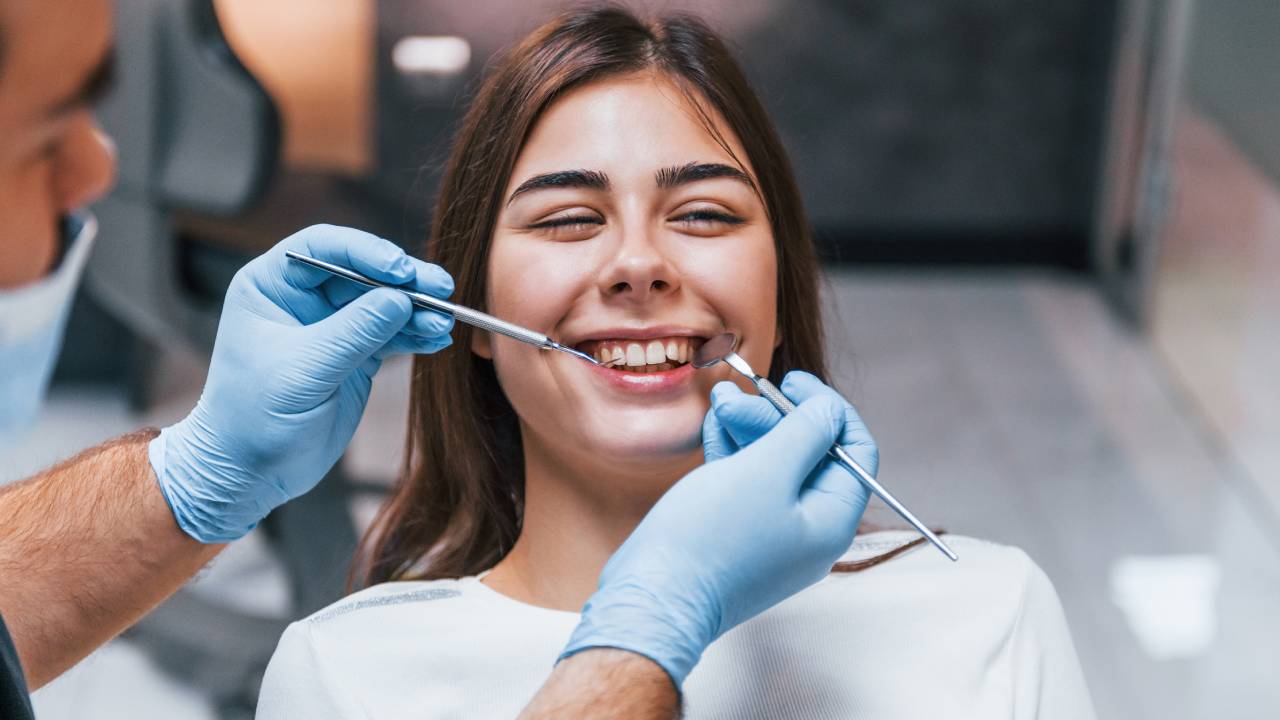
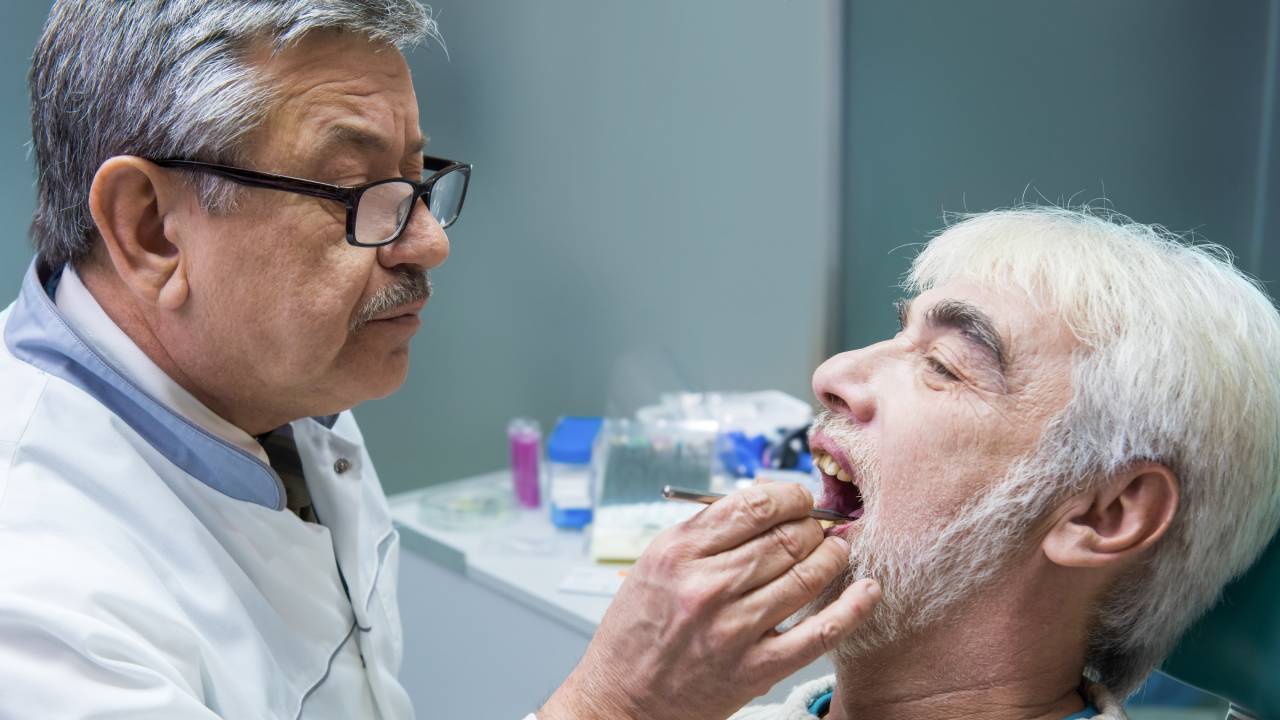
An oral cancer screening is a visual and physical examination of your mouth, lips, tongue, throat, and the surrounding soft tissue. Your dentist looks for abnormal changes in color, texture, or shape, and physically feels the jaw and neck for unusual lumps or swelling. The whole process takes two to five minutes and is typically folded into a routine cleaning appointment. Nothing is inserted, nothing is injected, and nothing hurts.
According to the American Cancer Society, roughly 58,450 people in the United States receive a diagnosis of oral cavity or oropharyngeal cancer each year. That number has been rising for more than a decade, driven largely by HPV-related cancers in younger adults and continued tobacco use across all age groups. The screening exists specifically because oral cancer is highly visible to a trained eye when caught early, and highly dangerous when it isn’t.
Why Age 40 Is the Turning Point
The National Cancer Institute’s surveillance data shows that oral cancer incidence climbs steeply after age 40, with median age at diagnosis sitting around 63. The risk does not appear suddenly at a birthday. It accumulates. By midlife, many adults carry years of cumulative tobacco or alcohol exposure, a history of HPV exposure they may not know about, and immune changes that make tissue less effective at repairing cellular damage on its own.
The practical translation: your forties are not too early to start screening. They are exactly the right window. If you have never had an oral cancer screening and you are over 40, your next dental appointment is the right moment to ask for one specifically by name.
The Risk Factors That Matter Most After 40
Tobacco use, in all forms, is the single most established risk factor. Smoked tobacco exposes the entire oral cavity to carcinogens repeatedly over years. Smokeless tobacco concentrates chemical exposure directly against the gum tissue and cheek lining, and it produces leukoplakia, white lesions with meaningful malignancy potential, at higher rates than smoked forms.
Alcohol amplifies tobacco risk rather than simply adding to it. A 2020 analysis published in the International Journal of Cancer found that people who both smoke and drink heavily face a risk of oral cancer 30 times higher than non-users of either. The mechanism is direct: alcohol dissolves the protective mucosal barrier, making it easier for carcinogens to reach the underlying cells.
HPV, specifically HPV-16, has reshaped the epidemiology of oral cancer over the past two decades. According to the CDC, HPV-16 is now the leading cause of oropharyngeal cancers in the United States, surpassing tobacco in that anatomical subsite. A 2021 study published in the Journal of Clinical Oncology found that oropharyngeal cancers attributable to HPV have increased by more than 200% since the 1980s. The catch: HPV-related oral cancers often develop in people with no tobacco or alcohol history, which is why age-based screening matters regardless of lifestyle.
Chronic sun exposure on the lips is a separate risk pathway, particularly for people who have worked outdoors for decades. Cancer of the lip behaves more like skin cancer than oral cavity cancer, and it is one of the most visible and easily detected forms at early stages.
Before your next dental visit, take a few minutes to think through your personal history with these factors honestly. That information helps your provider assign you an accurate risk category and set the right exam interval.
What High Risk Actually Means for Screening Frequency
For most adults over 40 with no significant risk factors, an annual oral cancer screening at a routine dental visit is the standard. The American Dental Association recommends that dentists perform these exams as part of comprehensive oral evaluations, which already occur at new patient visits and periodic recall appointments.
High-risk status, meaning a history of tobacco use, heavy alcohol use, prior oral cancer, or known HPV exposure, shifts the calculus toward more frequent monitoring, typically every three to six months depending on findings and history. High risk is not a diagnosis. It is a scheduling decision. Ask your dentist directly to assign you a risk category so you both know how often the exam should happen.
What Happens During the Screening
The exam begins before you open your mouth. Your dentist inspects your lips and face for asymmetry or visible changes. Once you are seated, the visual inspection moves to your gums, the inner surfaces of your cheeks, the roof of your mouth, the floor of your mouth, your tongue on all surfaces including the underside, and the back of your throat.
Manual palpation follows the visual exam. Your dentist uses gloved hands to feel along the jaw, under the chin, and along the sides of the neck. Lymph node swelling or unusual firmness in soft tissue gets noted.
Some offices use adjunctive tools to enhance visibility. A VELscope is a device that shines blue light into the mouth; healthy tissue fluoresces differently than abnormal tissue, making certain changes more visible under the light. Toluidine blue dye is a rinse that selectively stains abnormal cells a darker blue, flagging areas worth monitoring. A 2022 review published in the Journal of Oral Pathology and Medicine found that VELscope, used alongside standard visual examination, improved detection sensitivity for high-grade lesions. These tools are supplements to a trained eye, not replacements for it.
Your only job during the exam is to open your mouth and hold still.
What the Dentist Is Looking For
Two categories of tissue changes prompt closer attention. Leukoplakia are white patches that cannot be wiped away. Erythroplakia are red patches, often velvety in texture, and the Oral Cancer Foundation notes that erythroplakia carry a malignancy rate of up to 51%, making them the higher-priority finding. Ulcers that have not healed within two weeks are a third category. Any persistent lump, hard tissue where soft tissue should be, or visible asymmetry in the structures of the mouth rounds out the list.
These terms sound clinical, but the practical takeaway is simple. If you notice a sore, patch, or lump in your mouth that is still there two weeks later, contact a dental provider that week. Do not wait for the next scheduled cleaning.
What Happens if Something Looks Abnormal
An abnormal finding at a screening is not a diagnosis. The American Academy of Oral Medicine’s published protocols describe a typical follow-up sequence: watchful waiting with a recheck appointment in two weeks, referral to an oral surgeon for evaluation, or biopsy if the lesion has characteristics that require tissue analysis. Most findings that prompt a recheck resolve on their own. A biopsy, when it happens, is a short outpatient procedure that produces a definitive answer.
If you are referred for follow-up, schedule it within the same week the referral is given. Delay is the one variable in this process that patients can actually control, and it is the variable with the most direct effect on outcomes.
Survival Rates and Why Early Detection Changes Them
This is where the numbers become motivating rather than abstract. According to the American Cancer Society’s most recent published data, the five-year survival rate for localized oral cancer, meaning cancer caught before it spreads beyond the original site, is approximately 89%. For oral cancer diagnosed after it has spread to regional lymph nodes, that rate drops to 67%. For distant-stage disease, it falls to 40%.
Those numbers reflect a biological reality. Cancer found at the surface responds to localized treatment: surgery, targeted radiation, or both. Cancer found after it has invaded lymph nodes or spread to distant tissue requires systemic treatment, longer recovery, greater side effects, and produces substantially worse outcomes.
The screening itself is not the risk. Skipping it is.
Barriers to Screening and How to Work Around Them
Cost, dental anxiety, inconsistent access to a provider, and simply not knowing the screening exists are all real obstacles. The Health Resources and Services Administration’s data on rural dental access confirms that patients in rural and underserved counties face structural barriers to consistent dental care, not personal failures of motivation. If you have spent years avoiding dental care because of cost or anxiety, that is a documented national pattern, not an individual shortcoming. For context on returning to dental care after a long gap, the process is more manageable than most people expect once you know what to ask.
On the financial side: oral cancer screening is typically included in a comprehensive dental exam at no separate charge. For patients on Medicaid, adult dental benefits vary by state, but screening is generally covered within a covered exam. Uninsured patients should ask directly about exam fees before the appointment, since many practices offer sliding-scale or flat-fee options for uninsured adults.
One concrete action: call the dental office before your appointment and say the words “oral cancer screening” out loud. Ask whether it is included in the exam that is being scheduled. Confirm it explicitly. Do not assume it will happen automatically.
Self-Exam as a Between-Visit Practice
A monthly self-exam does not replace professional screening, but it extends your surveillance window between visits. The Oral Cancer Foundation publishes a step-by-step self-exam guide that walks through examining the lips, the inside of the cheeks, the gums, the tongue, the floor of the mouth, and the roof of the mouth using a mirror and bright light. The target: color changes, texture changes, lumps, or sores that persist beyond two weeks.
For adults managing age-related changes in oral health after 50, building a monthly self-check into an existing routine, such as the first of every month, makes it sustainable rather than aspirational. Set a phone reminder, use a well-lit bathroom mirror, and take three to five minutes to look carefully. If something seems different from last month, write it down and mention it at your next appointment.
The One Thing That Changes Outcomes
Seniors managing multiple health conditions often find that oral health connects to overall systemic health in ways their other providers do not always address. Oral cancer screening is one of the clearest examples of a low-cost, low-burden exam with outsized consequences depending on whether it happens.
Book a dental appointment. When you call, say “oral cancer screening” explicitly to confirm it is included. Not next month. This week. The exam takes less time than the phone call to schedule it, and the survival data makes the stakes clear. Early detection is the variable you control, and it is the one that matters most.