Nearly 1 in 5 adults aged 65 and older have untreated tooth decay, according to the CDC, and yet tooth loss is not the inevitable outcome of aging that many people assume it is. Your mouth changes as you get older, but those changes are manageable with the right habits and consistent care. These senior dental health tips are grounded in research, and each one comes with a concrete action you can take right now.
1. Brush Twice Daily With a Fluoride Toothpaste , But Use the Right Technique
A 2019 study published in the Journal of Dental Research followed adults over 65 and found that brushing twice daily with a fluoride toothpaste reduced root surface cavities by 42% compared to brushing once daily without fluoride. That gap matters because older mouths face a specific set of vulnerabilities: gums recede over time, exposing the root surfaces of teeth, which lack the protective enamel layer that covers the crown. Slower saliva production, which is common after 60, reduces your natural defense against acid and bacterial buildup.
The technique is as important as the frequency. Use a soft-bristled brush and angle the bristles at 45 degrees toward the gumline. Move in short, gentle circular strokes rather than scrubbing horizontally, which abrades already-exposed root surfaces. The full session should take two minutes, not thirty seconds.
The action to take tonight: set a two-minute timer on your phone before you brush. Most people significantly underestimate how long two minutes actually feels.
2. Floss Every Day to Protect Against Gum Disease
A large-scale NIH study tracking adults aged 60 to 74 found that those who flossed daily were significantly less likely to develop severe periodontitis than non-flossers, even after controlling for brushing frequency and dental visit regularity. The mechanism is straightforward: plaque that collects between teeth hardens into tartar within 24 to 48 hours. No toothbrush, no matter how well-angled, reaches those contact points.
Skipping floss is not a neutral decision. It accelerates bone loss, and bone loss is what leads to loose teeth and eventual extraction. For adults managing dexterity challenges, floss picks or water flossers produce comparable results and require less manual coordination than traditional string floss.
The action: floss before bed tonight, one pass between every pair of teeth. If the gums bleed, that is not a reason to stop. Bleeding is usually a sign of existing inflammation, and consistent flossing reduces it within two to three weeks.
3. Ask Your Doctor About Dry Mouth , It’s Destroying More Teeth Than You Think
The NIH’s National Institute of Dental and Craniofacial Research estimates that dry mouth affects over 30% of adults over age 65, with medication side effects being the leading cause. More than 500 commonly prescribed drugs list dry mouth as a side effect, including antihistamines, antidepressants, diuretics, and blood pressure medications. Saliva does more than people realize: it neutralizes acid, washes away food particles, and remineralizes early-stage tooth decay. Without adequate saliva, the decay process accelerates dramatically.
For a closer look at how reduced saliva affects tooth surfaces over time, the connection is more direct than most patients expect. Cavities can form and deepen within months when dry mouth goes unaddressed rather than over years.
The practical step: pull out your current medication list and look up each drug. If dry mouth appears as a listed side effect for any of them, bring that list to your next dental visit. Your dentist can recommend saliva substitutes, prescribe fluoride treatments, or coordinate with your physician about alternatives.
4. Watch for Early Signs of Gum Disease
The CDC’s Oral Health Data reports that nearly 68% of adults aged 65 and older have some form of periodontal disease. That prevalence makes it easy to dismiss, but gum disease is not a cosmetic problem. A 2021 study in the Journal of Clinical Periodontology found a statistically significant association between untreated periodontitis and increased risk of cardiovascular events, with the connection running through systemic inflammation triggered by oral bacteria.
The signs to look for are specific: bleeding when brushing or flossing, gums that appear red or swollen, persistent bad breath that does not resolve with brushing, gum recession that makes teeth look longer than they used to, and any looseness or shifting in teeth. None of these symptoms are painful in early stages, which is precisely why they get ignored.
The action this week: take thirty seconds in front of a mirror and look at your gums. Press a finger gently against them. Note any puffiness, color change, or tenderness. If anything looks off, that is information worth bringing to your next appointment.
5. Don’t Skip Regular Dental Checkups , Even If Nothing Hurts
The American Dental Association has documented consistently that a significant percentage of serious oral health conditions in older adults, including early-stage oral cancer and deep root decay, produce no pain until they are well advanced. Pain is a late signal. By the time a cracked tooth hurts, the crack has often reached the root. By the time gum bone loss becomes noticeable, a meaningful amount of support is already gone.
Many adults in Brunswick and New Hanover County have gone years without a dental visit due to cost concerns, provider availability, or anxiety built up from past experiences. If that describes your situation, you are far from alone, and getting back into a regular dental routine does not require starting with a complicated or expensive visit. A cleaning and exam is enough to establish where things stand.
Medicaid covers adult dental services in North Carolina, and community health centers offer sliding-scale fees based on income. The financial barrier is real, but it is lower than most people assume. The action: call and schedule a cleaning this week, even if the appointment is three months out. Getting it on the calendar is the step that matters.
6. Understand the Oral Cancer Risk That Rises With Age
The Oral Cancer Foundation reports that the average age of diagnosis for oral cancer is 62, and that incidence climbs steeply after age 55. Roughly 54,000 Americans are diagnosed each year. The five-year survival rate for localized, early-stage oral cancer is approximately 84%. For late-stage, regional spread, that number drops to 39%. Early detection is not a minor advantage; it is the difference between a straightforward treatment and a life-altering one.
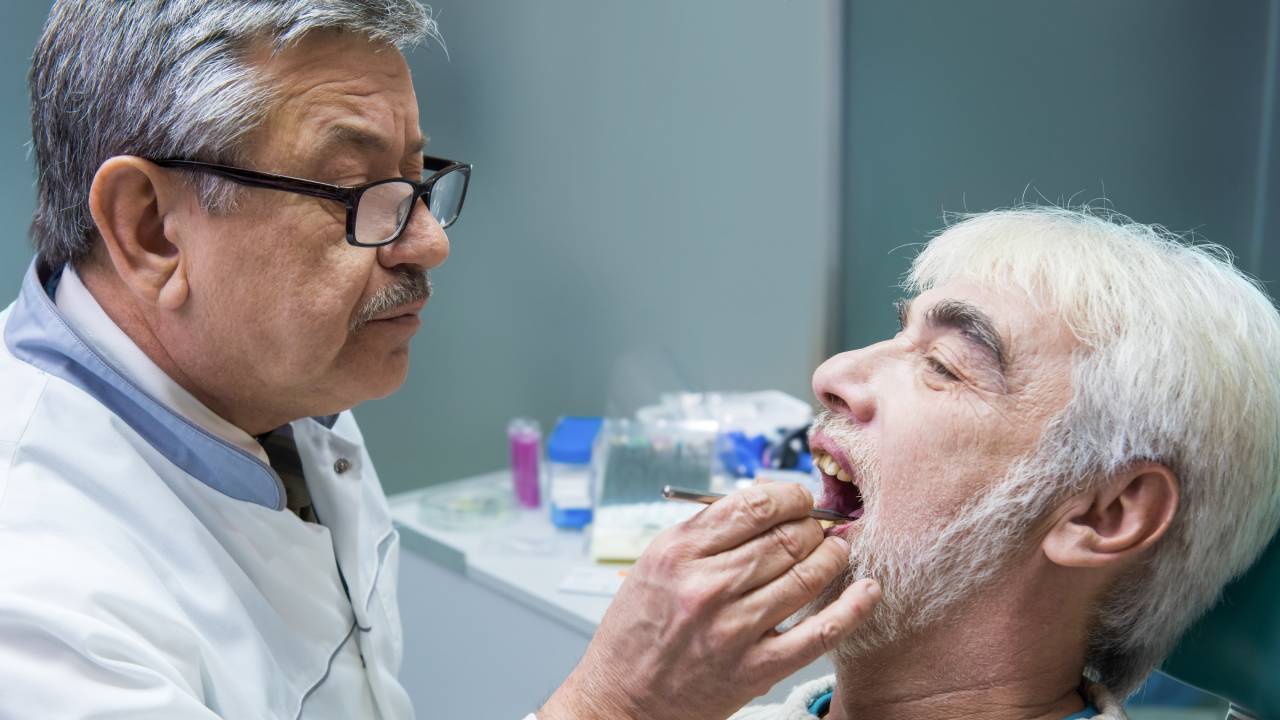
During a routine dental exam, a dentist screens for soft tissue changes, unusual patches (white or red lesions that do not resolve), persistent sores, and any thickening or asymmetry in the floor of the mouth or throat. Most patients do not know this screening is happening because it takes about two minutes and involves no discomfort. For a clear picture of what this exam actually involves and what to expect, the process is less involved than most people anticipate.
The action at your next checkup: ask the dentist directly to perform an oral cancer screening and explain what they are looking at. The request itself takes ten seconds, and it ensures nothing gets passed over.
7. Manage Your Dentures or Dental Implants With the Same Discipline as Natural Teeth
The National Institute on Aging notes that many older adults assume dentures require less care than natural teeth, and that assumption leads to predictable problems. Poorly cleaned dentures harbor bacteria and fungi, raising the risk of oral thrush, chronic inflammation, and aspiration pneumonia in patients who are already medically vulnerable. Ill-fitting dentures accelerate bone resorption in the jaw, which leads to further fit problems over time, difficulty chewing, and downstream nutritional deficiencies.
Daily cleaning matters. Dentures should be brushed with a soft brush and non-abrasive denture cleaner every day, then soaked overnight in water or a denture solution. The gums and remaining oral tissue should also be brushed daily even without natural teeth present. Implants require the same brushing and flossing discipline as natural teeth; the implant itself does not decay, but the surrounding gum tissue and bone can still be lost to infection.
The action this week: check your denture fit. If they shift when chewing, cause sores, or feel loose in ways they did not six months ago, call your dentist. A reline or adjustment is a simple outpatient procedure and far less costly than replacement.
8. Connect Your Oral Health to Your Overall Health , The Link Is Direct
A 2023 study from Tufts University School of Dental Medicine, analyzing data from over 65,000 adults, found that individuals with severe periodontitis had a 25% higher risk of cardiovascular disease compared to those with healthy gums, after controlling for diet, smoking, and exercise. The mechanism is not abstract: bacteria from inflamed gum tissue enter the bloodstream through the capillary-rich gum pocket, triggering systemic inflammatory responses that affect arterial walls, insulin sensitivity, and cognitive tissue.
For anyone managing diabetes, heart disease, hypertension, or cognitive decline, dental care belongs inside that management plan, not outside it. Uncontrolled gum disease makes blood sugar harder to regulate. The relationship runs both directions: elevated blood sugar also slows healing and deepens susceptibility to infection.
Understanding how oral health shifts in the decades after 50 helps connect these dots in a practical way. The action at your next visit: tell your dentist about every systemic condition you are managing. That information changes how the dentist approaches your care, and the coordination is worth more than most patients realize.
9. Build Habits That Make Daily Oral Care Easier to Stick To
A 2010 University College London study led by Phillippa Lally, tracking 96 participants over 12 weeks, found that new behaviors take an average of 66 days to become automatic, not the popular 21-day figure. The implication is that motivation is the wrong tool for building a dental routine. Motivation fluctuates. Environment does not.
Habit formation research points consistently to “habit stacking,” pairing a new behavior with an existing one, as the most reliable way to make something stick. Flossing after washing your face, or brushing immediately after your morning coffee, attaches the new behavior to something already automatic. Visibility matters too: a floss container sitting on top of your toothbrush gets used far more consistently than one stored inside a drawer.
The one action to try tonight: place your floss on top of your toothbrush before you go to bed. That single change in your environment reduces the decision barrier to zero. Keep it there for three weeks, and the behavior starts to run itself.
What Consistent Care Actually Preserves
Tooth loss is not a natural part of aging. It is the outcome of unmanaged disease, and most of the disease that leads to it is preventable or arrestable with the habits described above. The research is not ambiguous on this: adults who brush effectively, floss daily, stay on top of dry mouth, and see a dentist regularly retain more teeth into their 80s and 90s than those who do not, regardless of starting point.
If years have passed since your last visit, the right move is not to wait until something hurts. Start with one habit from this list tonight, book an appointment this week, and tell your dentist exactly where things stand. That conversation is the beginning of a different trajectory, not a judgment on where things have been.