
You have tried everything in the medicine cabinet. You held ice against your cheek until your hand went numb, and the tooth still throbs with every heartbeat. It is 3am, or Sunday afternoon, and you need the pain to ease long enough to think clearly. The 3-3-3 rule is a simple plan for this moment. It is a few steps that may help provide hours of relief while you arrange same-day care. The pain is a signal that something inside the tooth or gum has gone wrong, and temporary relief will not fix it. If you just typed “what is the 3-3-3 rule for toothache” into your phone, this page gives you the plain answer, the safety limits that matter, and the point where an emergency dentist in Leland, NC like Total Smiles of Leland should take over.
What Is The 3-3-3 Rule For Toothache, And Can It Help You Get Through Tonight?
The 3-3-3 rule is a short-term ibuprofen plan. You take three 200 mg tablets (600 mg), three times a day, for no more than three days, while you get in to see a dentist. For some people, it may take the edge off a bad toothache for several hours at a time. It is a bridge to treatment, not the treatment itself.
You will see the rule described a few different ways online. Patients share it as a rule of thumb. It is not a formal guideline from a dental association. The ibuprofen version above is the most common one. Many people also add two supporting steps: a cold compress and keeping the head raised. Both may help, so this page covers all three.
Ibuprofen leads the plan because most toothache pain comes from inflammation. The soft pulp inside your tooth holds the nerve and blood supply. It sits inside a hard shell with no room to swell, so when the pulp becomes inflamed, pressure builds against the nerve. Ibuprofen is an NSAID (a nonsteroidal anti-inflammatory drug), so it works on the inflammation itself instead of only dulling the pain signal. The American Dental Association’s guideline on acute toothache pain recommends NSAIDs such as ibuprofen or naproxen as the first choice for toothache pain in adults and teens, either alone or combined with acetaminophen. The same guideline advises against opioids as a first option.
Many 3-3-3 posts leave out one important safety point. Three doses of 600 mg add up to 1,800 mg in 24 hours. That is more than the over-the-counter label allows (1,200 mg a day) unless a doctor or dentist tells you otherwise. Call a pharmacist before you go past the label dose. Many pharmacies keep one on duty into the evening, and they can check your other medicines and health conditions in a few minutes.
Ibuprofen is also not safe for everyone. Ask a doctor or pharmacist before taking it if any of these apply to you:
- You have stomach ulcers or stomach bleeding.
- You have kidney disease or heart disease.
- You take a blood thinner.
- You are pregnant.
- You have had a reaction to aspirin or another NSAID.
The medicine works on inflammation, and cold and elevation may help with the swelling and throbbing. Wrap an ice pack in a thin cloth and hold it on the outside of your cheek, 15 minutes on and 15 minutes off. The cold narrows the blood vessels and may slow swelling. Prop your head and shoulders up at about 45 degrees to keep blood from pooling in your head. Pooling blood is a big reason toothaches feel worse the moment you lie down at night.
Set your expectations for how fast this works. Ibuprofen usually needs 30 to 60 minutes to take effect, and relief tends to fade as each dose wears off. The third “3” in the rule matters most, because it is a deadline rather than a goal. MedlinePlus advises calling a dentist when a toothache is severe or lasts longer than a day or two. The rule is meant to carry you to the dentist’s chair, not to replace it.
Why Does The Pain Keep Coming Back After The Ibuprofen Wears Off?
The pain comes back because the 3-3-3 rule only manages the symptom. The problem behind it keeps going. Pain severe enough to send you searching for relief in the middle of the night usually points to one of four causes, and none of them heals on its own.
Decay that has reached the nerve. A cavity starts small and painless. Once it breaks through to the pulp, bacteria reach the nerve directly. Ibuprofen may quiet the inflammation for a few hours, but the bacteria are still there.
An inflamed pulp, which dentists call pulpitis. In the early stage, the pulp can sometimes calm down once a cavity is cleaned out and filled. Some signs suggest the nerve may not recover:
- Pain lingers long after you drink something hot or cold.
- The tooth throbs on its own.
- The pain wakes you up at night.
At that stage, a root canal or an extraction may be needed to address the pain.
An abscess. This is a pocket of infection at the tip of the root or in the gum. It often brings deep throbbing, tenderness when you bite, a bad taste, or a bump on the gum. An abscess will not drain away safely on its own, and the infection can spread into the jaw and neck.
A cracked tooth. Sharp pain when you bite down or let go is a common sign. Chewing tends to make a crack deeper, and a crack that reaches the root can mean losing the tooth.
Watch out for pain that suddenly stops. Say you get through the weekend on the 3-3-3 rule and the throbbing fades by Tuesday. It is tempting to decide the tooth fixed itself. Often the nerve inside has actually died. The infection can keep growing quietly and return later as a swollen abscess. Each extra week tends to narrow your options, sometimes from a filling to a root canal, and from a root canal to an extraction. The relief you feel tonight is a window to get care, not a reason to wait.
What Qualifies As A Dental Emergency?
A toothache that sends you searching at night is often a dental emergency, but it is not the only one. A dental problem generally counts as an emergency when it causes severe pain, signals infection, or puts a tooth at risk of being lost. Call for a same-day emergency appointment if you have any of these:
- Severe or throbbing tooth pain that ibuprofen only partly controls
- Pain that wakes you up or lasts more than a day or two
- A swollen gum, a bump on the gum, or a bad taste that suggests an abscess
- A cracked, chipped, or broken tooth, especially if it hurts to bite
- A lost or broken filling or crown that leaves the tooth sensitive or sharp
- Bleeding or painful gums that come on suddenly, which can be linked to gum disease
- A broken denture, or a denture that suddenly hurts and keeps you from eating
Some symptoms go beyond a dental emergency and need a hospital. The next section explains which ones.
Should You Call Total Smiles Of Leland In The Morning, Or Go To The ER Tonight?
Call Total Smiles of Leland when the office opens if both of these are true:
- The 3-3-3 rule brings your pain to a level you can manage.
- You have no warning signs.
When you call, ask for a same-day emergency appointment.
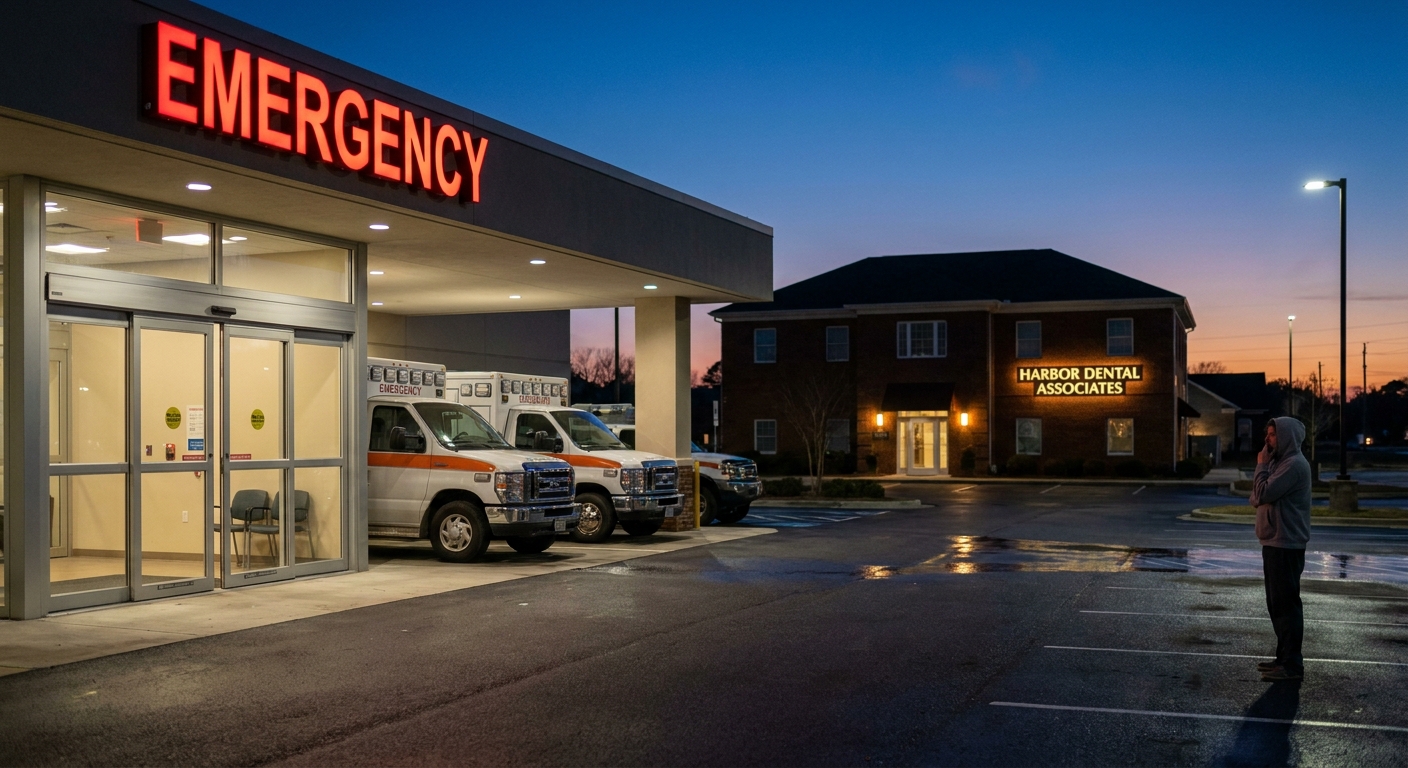
Go to the emergency room or call 911 now if you have any of these warning signs:
- Spreading facial swelling
- A fever
- Trouble swallowing or breathing
- Swelling under your tongue
These signs matter because they can mean an infection has moved beyond the tooth. Infection can spread quickly into the spaces below the jaw and around the throat. As swelling builds there, it can push the tongue up and narrow the airway, sometimes within hours.
A few other signs also call for a hospital tonight rather than a dentist tomorrow:
- Swelling that climbs toward your eye
- A high fever or chills
- Feeling confused or very ill
- A hard blow to the face
- Bleeding in the mouth that does not stop with steady pressure
In any of these situations, do not wait for office hours.
There is also a middle ground. Your pain may still be severe after the medicine has had an hour to work, even though you have none of the warning signs. In that case, call a pharmacist or a nurse line about safe options for the rest of the night. Then make Total Smiles of Leland your first call in the morning. If the pain is truly unbearable, getting seen tonight is reasonable. Just know that a hospital visit for a toothache usually still leaves you needing a dentist to treat the tooth itself.
Many people reading this at night will take the first path. The 3-3-3 rule may help you get to morning, and then you make one phone call. Total Smiles of Leland offers same-day emergency appointments for tooth pain and other dental emergencies, so you do not have to spend another night managing pain at home. The practice is in Leland, NC 28451 and serves patients from Leland and Wilmington. When you call, say that you have a toothache and are asking for a same-day emergency appointment.
Worried About The Bill Or What The Dentist Will Think? That Worry Should Not Keep You Home
Cost and embarrassment are two of the most common reasons people stretch the 3-3-3 rule from three days into three weeks. Total Smiles of Leland focuses on removing both barriers:
- The practice accepts Medicaid.
- It provides affordable care for everyone.
- It offers same-day emergency appointments.
- It takes a compassionate, judgment-free approach, no matter how long it has been since your last visit.
Maybe it has been years since you saw a dentist, and you are bracing for a lecture. Maybe you are afraid of hearing a number you cannot pay. Or maybe you had a visit that hurt, or a time you were turned away, and you do not want to go through that again. Those fears are real, and they make sense. They also tend to make the problem bigger. A tooth that might have needed a filling last month can need a root canal this month. A tooth that could have been saved can end up needing to come out.
Total Smiles of Leland is built around a simple belief: you deserve compassionate, affordable dental care without barriers. That means no judgment about the condition of your teeth, how long you waited, or why. At an emergency visit, the Total Smiles of Leland team’s job is to find the source of your pain and help you decide what to do next. It is not to grade your past.
If the person in pain is your child, you may also be worried about how they will handle the visit. That worry is natural, especially when a child is already hurting and scared. Total Smiles of Leland offers pediatric visits and teen dental care, along with gentle care for dental anxiety. Let the team know ahead of time if your child is nervous. The same goes for you. If dental visits make you anxious, say so up front, and the Total Smiles of Leland team can go at your pace.
What Is The Cost Of Emergency Dental Care?
The cost of emergency dental care depends on what the tooth needs. That is why the first step at any emergency visit is finding the cause. A tooth that needs a simple filling costs far less than one that needs a root canal and a crown. Catching a problem early usually keeps the bill lower. Because every situation is different, no honest office can quote an exact price before an exam.
Being informed helps more than guessing:
- If you have Medicaid: Total Smiles of Leland accepts it. Bring your card and ask what your plan includes for the treatment you need.
- If you do not have insurance: Ask about cost and payment options when you call, so there are no surprises.
- Before any treatment starts: Ask the team to explain each option, what it involves, and what it costs. Then decide what makes sense for you.
Affordable care for everyone at Total Smiles of Leland includes being clear about costs before the work begins.
What Should You Do In A Dental Emergency Before Getting To The Dentist?
Now that you know the rule, the warning signs, and what to expect on cost, here is how to put it all together tonight. Follow these steps in order:
- Check that ibuprofen is safe for you. Read the list in the first section. If ibuprofen is not an option, acetaminophen may be. Follow the label, and make sure you are not also taking a cold or flu medicine that already contains acetaminophen.
- Take ibuprofen with food and a full glass of water. Follow the label dose. Talk to a pharmacist before going up to 600 mg, which is more than the label allows on your own.
- Rinse and clean the area gently. MedlinePlus suggests rinsing with warm salt water and flossing gently to remove any trapped food that could be adding pressure.
- Keep pills off your gums. Placing aspirin or a crushed tablet against the gum can burn the tissue. It does nothing for the nerve inside the tooth.
- Apply cold to the outside of your cheek. Wrap an ice pack or a bag of frozen vegetables in a cloth. Hold it on for 15 minutes, take it off for 15 minutes, and repeat. Do not put heat on a swollen face.
- Raise your head to about 45 degrees. Stack pillows or rest in a recliner, especially when you try to sleep.
- Go easy on the tooth. Avoid very hot, very cold, or sugary foods, and chew on the other side.
- Watch for warning signs through the night. If you notice spreading swelling, fever, trouble swallowing or breathing, or swelling under your tongue, go to the ER now.
- Call Total Smiles of Leland when the office opens. Ask for a same-day emergency appointment. Tell the team when the pain started, what you took and when, and whether you see any swelling.
Expect the first dose to take 30 to 60 minutes to work. The pain may ease and then return a few hours later. That pattern is normal, and it is one more sign that the cause still needs treatment.
If the toothache belongs to your child, do not use the adult 3-3-3 rule. Children’s ibuprofen is dosed by weight, so check the package or ask a pharmacist or pediatrician. Never give aspirin to children or teens. Total Smiles of Leland provides pediatric visits, teen dental care, and adult and senior care, so one call covers whoever in your family is hurting.
What Will Total Smiles Of Leland Actually Do About The Tooth?
At a same-day emergency appointment, Total Smiles of Leland works to find what is causing your pain. The goal is to treat it, or at least relieve it, at that visit whenever possible. The practice offers root canals, simple and surgical extractions, cracked tooth repair, tooth fillings, and dental crowns. Together, these cover the conditions behind most severe toothaches.
The visit follows a few steps:
- A conversation. The dentist asks where it hurts, when it started, what makes it worse, and what you have taken.
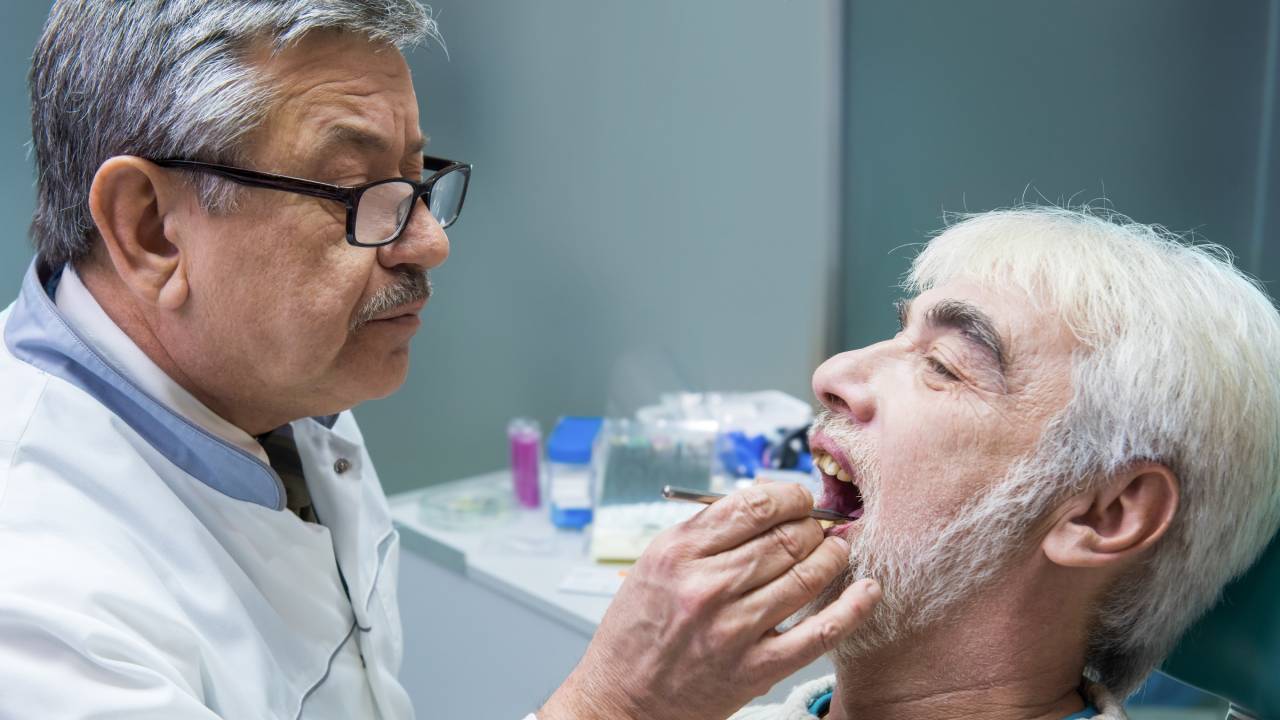
- An exam. The dentist checks the tooth and the tissue around it. This may include gently tapping the tooth, testing how it reacts to cold, and checking for swelling.
- An x-ray. An x-ray of the area is usually part of finding the cause, because decay near the nerve, an abscess at the root, or a deep crack is often invisible from the outside.
- Your options. Once the cause is clear, the dentist explains your options in plain language so you can decide.
What happens next depends on what the dentist finds:
- Cavity that has not reached the nerve: a tooth filling may be enough.
- Inflamed or infected nerve: a root canal removes the damaged pulp and may save the natural tooth. A dental crown is often placed afterward to protect it.
- Tooth that cannot be saved, or extraction as your choice: a simple or surgical extraction removes the source of the pain and infection. If you are missing teeth afterward, dental bridges and partial or full dentures are options to discuss.
- Cracked tooth: cracked tooth repair may help protect what remains before the crack spreads.
- Denture problem: denture repairs and relines can restore comfort and fit.
Some treatments are finished in one visit, and others happen in stages. Either way, the first appointment aims to deal with the cause instead of sending you home to keep managing symptoms.
Once the emergency is handled, you have a choice to make. Many people only see a dentist when something hurts, and that pattern is part of how a small problem turns into a 3am search. Total Smiles of Leland offers routine cleanings and exams, fluoride, sealants, and oral cancer screening. It also provides care for every age, from pediatric visits to adult and senior care. The emergency visit can be the start of a steady dental home for your whole family, so the next toothache is less likely to catch anyone off guard.
Still Have Questions While You Wait For The Office To Open?
These are the questions that come up most often when a toothache will not let you sleep. The answers are short and honest. None of them replace an exam, but they can help you make the next decision.
What is the 3-3-3 rule for toothache, in one sentence?
It means taking 600 mg of ibuprofen three times a day for no more than three days, along with cold and elevation, to help manage pain while you arrange dental care, after checking with a pharmacist because that total is above the over-the-counter label limit.
Can I use the 3-3-3 rule instead of going to the dentist?
No. The 3-3-3 rule is temporary relief while you arrange same-day dental care. Decay, a damaged nerve, an abscess, or a crack will not resolve on its own, even when the pain eases for a while.
What if the 3-3-3 rule does not stop my toothache?
Give the medicine 30 to 60 minutes to work. If the pain is still severe and you have no warning signs, call a pharmacist or nurse line about safe options. Then call your dentist first thing in the morning. If you develop a fever, facial swelling, trouble swallowing, or swelling under your tongue, seek emergency care right away.
Do you offer same-day emergency dental appointments in Leland, NC?
Yes. Total Smiles of Leland offers same-day emergency appointments in Leland, NC for patients in acute dental pain. Call when the office opens, say you have a dental emergency, and ask for a same-day emergency appointment. The practice serves patients from Leland and nearby Wilmington and accepts Medicaid. It sees children, teens, adults, and seniors.
What are common dental emergencies you treat?
Total Smiles of Leland treats the dental emergencies that bring many people in, including:
- Severe toothaches and tooth pain
- Deep cavities and tooth decay that have reached the nerve
- Infected or inflamed nerves that may need a root canal
- Tooth abscesses and swollen gums
- Cracked, chipped, or broken teeth
- Lost or broken fillings and crowns
- Painful gums linked to gum disease
- Teeth that may need a simple or surgical extraction
- Broken or ill-fitting dentures that need repair or a reline
When should I go to the ER instead of an emergency dentist for a toothache?
Go to the ER if you have any of these:
- Facial swelling that is spreading
- A fever
- Difficulty swallowing or breathing
- Swelling under your tongue
These signs can mean the infection is spreading beyond the tooth and needs hospital care right away. A hard blow to the face or bleeding that will not stop with pressure also belongs in the ER. For tooth pain without those signs, an emergency dentist is the better choice, because a hospital usually cannot treat the tooth itself.
Can I take ibuprofen and acetaminophen together for a toothache?
The ADA’s toothache pain guideline includes ibuprofen combined with acetaminophen as a first-line option for adults and teens. Dosing and timing depend on your health and your other medicines, so check with a dentist or pharmacist before combining them.
If you are in dental pain right now, use the 3-3-3 rule to get through the night. In the morning, call Total Smiles of Leland to book a same-day emergency appointment in Leland and have the problem causing the pain evaluated. Before you dial, write down three things:
- When the pain started
- What medicine you took and at what times
- Whether you see any swelling
That short note helps the Total Smiles of Leland team understand quickly how urgent your visit is.
Get Relief Today in Leland, NC
A toothache that disrupts your sleep or your day deserves immediate attention, not another round of temporary fixes. Total Smiles of Leland makes space for same-day appointments when you’re in pain, so you can move from managing symptoms to addressing the actual problem. Our team in Leland, NC is ready to help you feel better and protect your long-term oral health.
This article is general information, not medical advice. Individual experiences with pain relief and treatment outcomes vary. If you think you or someone with you is having a medical emergency, call 911 or go to the nearest emergency room.