
Your tooth cracks during dinner, and the pain builds until you cannot think straight. Most people assume the emergency room is the right call because hospitals fix emergencies, but ERs rarely have dentists on staff, and the treatment they offer, a prescription and a referral, leaves the underlying problem untouched. If you arrive expecting a filling or an extraction, you will leave with instructions to call a dental office like Total Smiles of Leland in the morning, often after waiting several hours and paying hundreds of dollars for that advice.
Does the ER Have Emergency Dentists, or Only Doctors Who Can Ease the Pain?
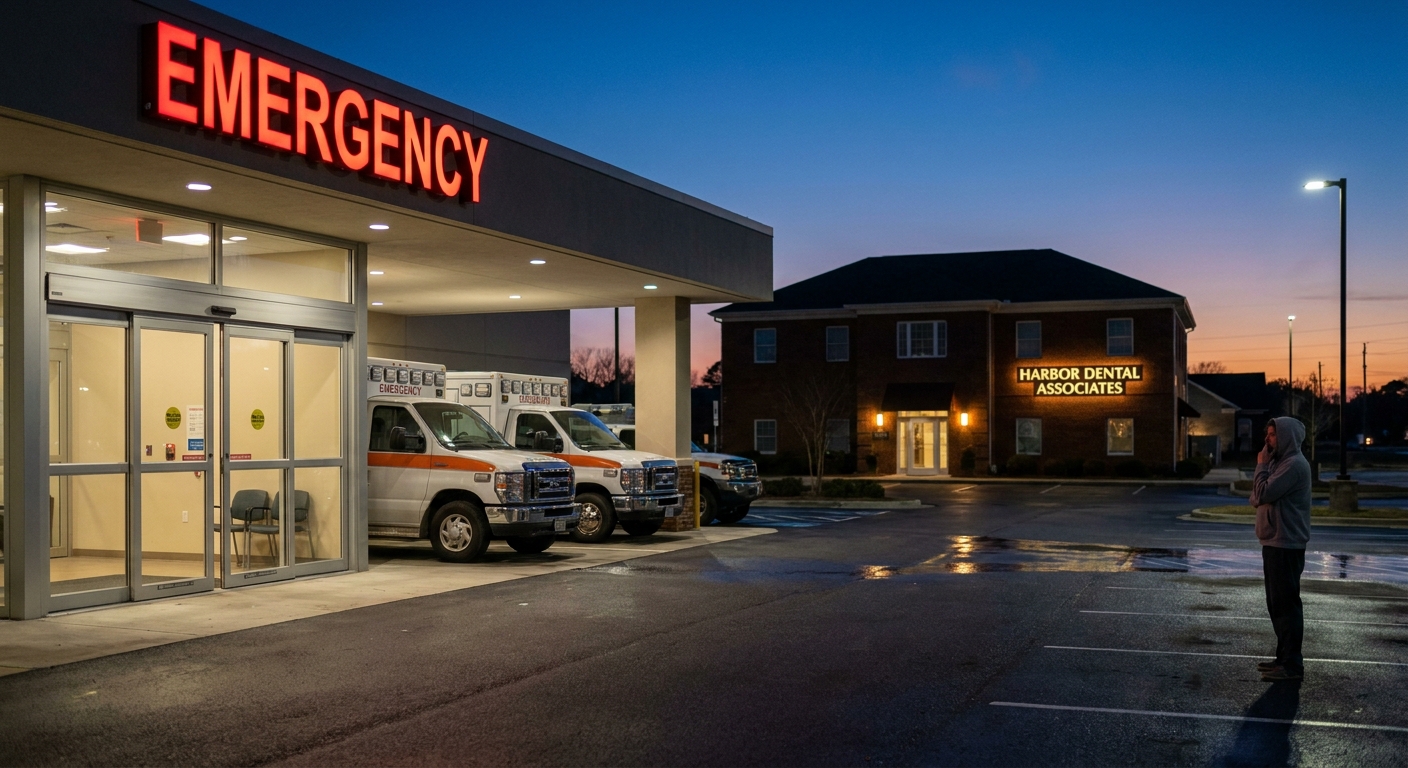
Most hospital emergency rooms do not have a dentist on duty. ER doctors and nurses are trained for medical emergencies. For tooth pain, they may be able to ease your symptoms, but they typically cannot repair the tooth.
An ER is built for heart attacks, strokes, car accidents, broken bones, and high fevers. The rooms hold heart monitors, IV lines, and trauma equipment. They do not hold a dental chair, a drill, or the tools needed to place a filling, clean out an infected nerve, or remove a tooth from the jawbone. Some larger hospitals can call in an oral surgeon for serious facial injuries, but that help is saved for trauma, not for a cracked molar or a tooth abscess.
When you arrive with tooth pain, your visit usually goes like this. You check in and wait, often behind patients with more urgent problems. A provider looks in your mouth, asks about your pain, and may write a prescription to manage it. If there are signs of infection, you may also receive a prescription. Then you leave with discharge papers telling you to follow up with a dentist. The pain may calm down for a while, but the underlying issue (cavities and tooth decay, a crack, gum disease, or an infected nerve) is still there when the medicine wears off.
This gap is common enough that the American Dental Association runs an initiative focused on emergency department referrals. It was built to connect people who arrive at hospitals with dental pain to dentists who can address the underlying problem. In other words, even the country’s largest dental organization views the ER as a temporary measure for most tooth problems, not the definitive solution.
What Qualifies as a Dental Emergency?
Before you decide where to go, it helps to know whether your problem truly can’t wait. A dental emergency is any problem that causes severe pain, puts a tooth at risk of being lost, or shows signs of infection or injury. Common examples include:
- Severe or throbbing tooth pain that keeps you or your child awake or won’t ease with over-the-counter pain relievers
- A knocked-out adult tooth, or a tooth that has been pushed loose or out of place
- A broken, cracked, or chipped tooth that hurts or leaves a sharp edge
- Swelling in the gums, cheek, or jaw, or a pimple-like bump on the gum that may signal an abscess
- Bleeding from the mouth that won’t slow down with firm pressure
- A lost filling or crown that leaves the tooth painful or sensitive
- A cut or injury to the lips, tongue, or cheeks
- A broken denture that keeps you from eating or speaking
A small chip with no pain, a mild sensitivity to cold, or a denture that feels a little loose can usually wait for a regular appointment. If you are not sure which group your problem falls into, a quick call to Total Smiles of Leland will sort it out.
When Is the ER the Right Call for a Dental Problem?
Go to the ER, or call 911, when a dental problem affects your breathing, will not stop bleeding, or comes with a serious injury to your head or jaw. For tooth pain, infection without those warning signs, and broken or knocked-out teeth, an emergency dentist may be a more direct path to treatment.
Bleeding is the first thing to check. After a tooth is knocked out or pulled, some bleeding is normal. Fold clean gauze or a damp black tea bag, place it over the area, and bite down with firm, steady pressure. If the bleeding has not slowed after 15 minutes of firm pressure, head to the ER.
Swelling is the second check. A tooth infection can cause a puffy cheek, and that alone is a reason to call the dentist today. If the swelling spreads toward your eye or down your neck, or makes it hard to swallow or breathe, the infection may be spreading, and that needs hospital care right away. A high fever with facial swelling belongs in the same category.
Injuries are the third check. Go to the ER first if a fall, a car accident, or a hard hit to the face leaves your jaw unable to close or your bite suddenly feeling off. The same is true if you or your child is dizzy, confused, or was knocked out even for a moment. Doctors need to rule out a broken jaw or a head injury before anyone treats the teeth. Once you are stable, call a dentist to take care of the teeth themselves.
Everything else belongs with an emergency dentist like Total Smiles of Leland. That includes a severe toothache, a knocked-out tooth with no other injury, a broken or cracked tooth, a lost filling or crown, a broken denture, or a swollen gum with no breathing or swallowing trouble. If you are ever unsure, call the office and describe what is happening, and the team can tell you whether to come in for a same-day emergency appointment or go to the hospital.
What Can an Emergency Dentist Address That the Hospital May Not?
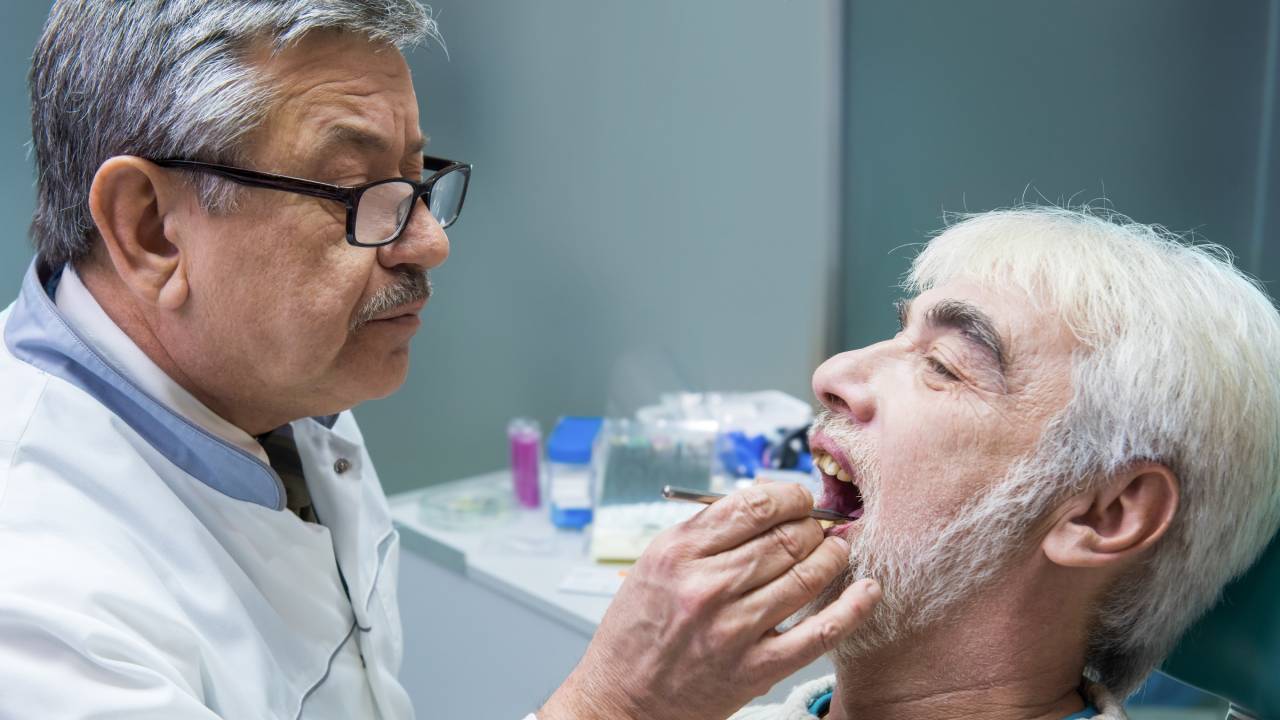
An emergency dentist can examine the source of your pain and treat it, sometimes at the same visit. Instead of leaving with a prescription and a referral, you may leave with the tooth filled, the infection treated at its source, or the damaged tooth removed, depending on your individual situation.
At Total Smiles of Leland, the dentist starts by examining the tooth and talking with you about what happened and how it feels. From there, the treatment matches the problem. Dental emergencies the practice treats include:
- Tooth pain from cavities and tooth decay or an infected nerve
- A knocked-out or loosened tooth
- A broken, chipped, or cracked tooth
- A lost filling or crown
- A tooth abscess or painful, swollen gums from gum disease or infection
- A tooth that may need to be removed
- A broken or ill-fitting denture
Each of these may correspond to a procedure on the practice’s service list. A cavity that has started to hurt may be treated with a tooth filling. An infected nerve may be addressed with a root canal, which removes the infection from inside the tooth. A cracked tooth may be treated with cracked tooth repair or a dental crown to stabilize it, and a missing tooth can later be replaced with a dental bridge. When a tooth cannot be saved, the dentist at Total Smiles of Leland can perform a simple extraction, or a surgical extraction for teeth that are broken at the gumline or harder to reach. For denture wearers, denture repairs and denture relines may help restore comfort and function.
One patient we treated at Total Smiles of Leland arrived after a fall left his front tooth cracked and painful. After examining the tooth and discussing options with him, the dentist placed a crown that day to stabilize it, and he left able to eat dinner that evening. His same-day crown was possible because of the specific nature and timing of his injury, so his experience is one individual case, not a typical result. Most cracked tooth cases require at least two visits: an initial stabilization appointment and a second visit for the permanent restoration.
Not every case finishes in one visit. Sometimes the first appointment addresses the pain and stabilizes the tooth, and the final restoration comes later. Either way, you are treating the underlying cause instead of just numbing it. Because Total Smiles of Leland offers pediatric visits, teen dental care, and adult and senior care, the same office can see your teen’s chipped front tooth and your own throbbing molar. If you or your child feels nervous in the dental chair, the practice offers gentle care for dental anxiety, so fear does not have to be one more thing standing between you and relief.
Why a Hospital Toothache Visit Often Costs More and Addresses Less
Cost is often the next worry, and it is a fair one. An ER visit for tooth pain can be more expensive than a visit to a dentist, and you usually still have to pay a dentist afterward because the hospital did not repair the tooth. You may end up paying twice for one problem.
An ER bill is built from several pieces. There is a hospital facility fee just for being seen in the emergency department, plus a separate fee for the physician who examined you. Any imaging is billed too, and so are any prescriptions you fill on the way home. If you have medical insurance, the visit falls under your ER copay or deductible, which can be steep. If you are uninsured, every one of those charges lands on you. Then, a day or two later, you still need a dentist to perform the actual repair.
A dental visit works differently: you pay for the exam and the procedure that addresses the problem. The cost depends on what the tooth needs. A filling costs less than a root canal, and a simple extraction costs less than a surgical one. That is why it helps to ask questions up front. When you call, describe your symptoms and ask what the visit is likely to involve. Total Smiles of Leland is built around affordable care for everyone and removing financial and access barriers to dental care, so asking about cost is a normal part of the conversation, not something to feel awkward about.
Total Smiles of Leland accepts Medicaid. If you have Medicaid, bring your card and ask the team what your plan covers for the treatment you need. If you do not have insurance at all, say so when you call. The practice is built on the belief that every person deserves compassionate, affordable dental care, including people who have put off the dentist because of money.
Can You Get Same-Day Emergency Dental Care in Leland Today?
In many situations, yes. Total Smiles of Leland offers same-day emergency appointments for patients in Leland and Wilmington when availability allows, and the best first step is to call so the team can find you a time.
Calling first helps because the team can ask a few quick questions, assess how urgent your case is, and tell you when to come in, while also flagging anything that sounds like it needs the ER instead. You can learn more about how these visits work on the practice’s same-day emergency dentist in Leland page. The Total Smiles of Leland office is in Leland, NC 28451, an easy drive for families in Leland and Wilmington.
What to Do in a Dental Emergency Before You Reach the Dentist
While you arrange your visit, these steps may help protect your tooth and keep you as comfortable as possible:
- Check for ER warning signs. Bleeding that will not stop after 15 minutes of firm pressure, swelling that affects breathing or swallowing, or a serious head or jaw injury means go to the ER now.
- Call Total Smiles of Leland. Explain what happened, when it happened, and how bad the pain is. If it involves your child, mention their age.
- Protect a knocked-out tooth. Pick it up by the top (the crown), never the root. If it is dirty, rinse it briefly with water without scrubbing. The ADA’s consumer site, MouthHealthy, advises keeping a knocked-out adult tooth moist, ideally placed back in the socket or kept in milk, and getting to a dentist quickly. If it is a baby tooth, do not push it back in; bring your child in so the dentist can check the area.
- Save broken pieces and protect sharp edges. Put any tooth fragments in a clean container. If a broken tooth or lost filling leaves a rough edge, avoid chewing on that side.
- Ease pain and swelling safely. Rinse with warm salt water and hold a cold compress against the outside of your cheek. If you take an over-the-counter pain reliever, follow the label. Never place aspirin directly on your gums, since it can burn the tissue.
- Bring what helps. Bring your Medicaid card if you have one, a list of your medications, any broken denture pieces, and any ER discharge papers if you went to the hospital first.
Speed matters most with knocked-out teeth and with infections. A tooth infection does not clear up on its own, and the National Institute of Dental and Craniofacial Research notes that untreated dental infections can lead to serious health problems. Getting seen the same day may improve your chances of saving the tooth and stopping the infection before it spreads, though individual outcomes vary.
The Reasons People Head to the ER, and What Changes When You Call First
Most people go to the ER for tooth pain because they assume no dentist can see them quickly, or they worry they cannot afford one. Both worries are understandable, and both have answers at a practice built around access.
It may feel like the dentist is the slow option, the one where you call and hear “our next opening is in three weeks.” That is exactly why same-day emergency appointments exist. Total Smiles of Leland makes room for same-day dental emergencies so a broken tooth or a swollen jaw does not have to wait for a routine slot. The ER only feels faster because its doors are always open, and a long wait there often ends with a referral to the same kind of office you could have called first.
It may also feel like the ER is the only place that has to take you, especially if you are uninsured or have been turned away before. Many people carry that fear quietly. Total Smiles of Leland exists to remove those barriers. The practice accepts Medicaid, focuses on affordable care for everyone, and takes a compassionate, judgment-free approach, no matter how long it has been since your last visit or how your teeth look today. Instead of a lecture, you will receive help with the tooth that hurts.
Some people avoid the dentist because of a bad past experience, and some parents worry that an emergency visit will scare their child for years. If that sounds like you, it is fair to be nervous, so tell the team when you call. Gentle care for dental anxiety at Total Smiles of Leland is part of what the practice offers, and pediatric and teen patients are seen with the same patience. The American Academy of Pediatric Dentistry stresses that children and teens need timely access to emergency oral care, which is one more reason to have a family dental home before the next emergency, not after it. Routine cleanings and exams, fluoride, and sealants at the same office may help reduce the risk of some of the cavities that can turn into emergencies in the first place, though not all dental emergencies can be prevented.
Quick Answers for the Moment You Are Deciding
Does the ER have emergency dentists on staff?
Usually not. ERs are staffed by physicians and nurses trained for medical emergencies. They can prescribe medicine for pain or infection, but they generally cannot perform fillings, extractions, or root canals.
Will the ER pull a tooth if I’m in severe pain?
Typically, no. Hospital ERs focus on easing pain and treating signs of infection, then refer you to a dentist for the extraction or repair. A dentist like Total Smiles of Leland can perform simple and surgical extractions when a tooth cannot be saved.
How much does an ER visit cost for a dental emergency?
It varies with your insurance and what is done, but the bill often includes a facility fee, a physician fee, and any imaging or prescriptions. You will usually still need to pay a dentist afterward to treat the tooth itself.
Can I get same-day emergency dental care in Leland NC?
In many situations, yes. Total Smiles of Leland offers same-day emergency appointments when available for tooth pain, knocked-out teeth, abscesses, broken teeth, broken dentures, and other urgent dental problems for patients in Leland and Wilmington. Call first so the team can schedule you.
What should I do if I have a dental emergency and no insurance?
Call an emergency dentist rather than assuming the ER is your only option. Total Smiles of Leland accepts Medicaid and is built around affordable care for everyone. Tell the team about your situation when you call, and ask about costs before treatment begins.
When should I go to the ER for a dental problem?
Go to the ER for bleeding that will not stop after 15 minutes of firm pressure, facial swelling that affects breathing or swallowing, or a jaw or head injury from a hard impact. For tooth pain, infections, or broken teeth, call an emergency dentist for same-day treatment when available.
Call the Office That Can Address the Tooth
If you are dealing with a dental emergency in Leland or Wilmington, call Total Smiles of Leland now for a same-day emergency appointment when available and explore options to have the problem treated today, instead of waiting in an ER for pain medication and a referral.
Before you pick up the phone, take ten seconds in front of a mirror. Look at your face and neck (or your child’s), and notice breathing and swallowing. If swelling is reaching the eye or neck, or breathing feels hard, go to the ER. If not, the call to make is to the dentist, because the dental chair is where treatment typically happens.
When Tooth Pain Can’t Wait
If you’re weighing a trip to the ER against seeing a dentist, know that emergency rooms can offer pain relief but rarely provide dental treatment. Total Smiles of Leland keeps time available for urgent dental cases, so you can get the care a hospital can’t provide. When you’re dealing with tooth pain that needs real resolution, we’re here to help.
This article is for general education and does not replace an exam by a dentist or physician. Individual results vary, and not all outcomes described here are typical or guaranteed. If you have trouble breathing or swallowing, call 911 or go to the nearest emergency room.