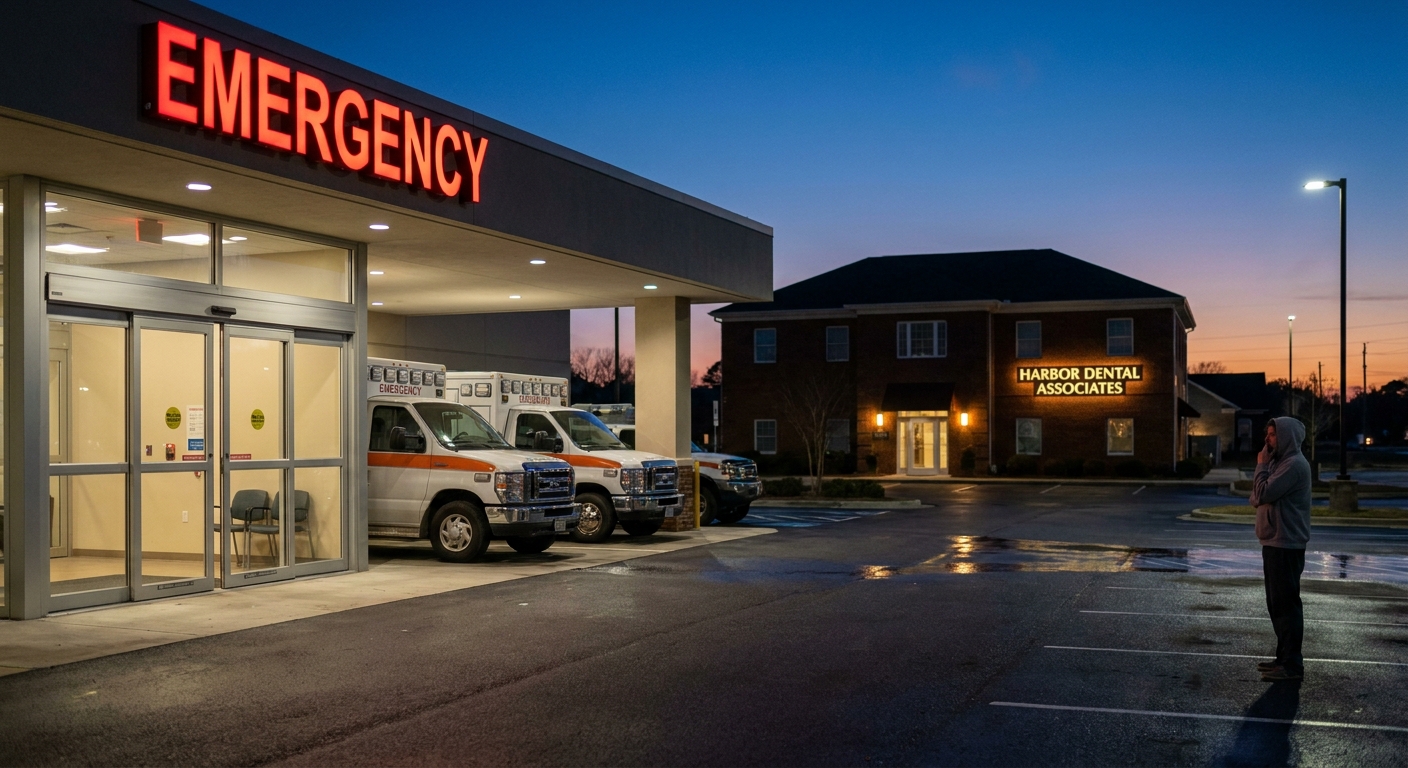
Your jaw is swollen and you need help now, but the decision splits in two directions before you even leave the house. Most people pause between the hospital and the dentist at Total Smiles of Leland because they honestly do not know which one handles teeth, and the wrong guess can mean hours in a waiting room with no real fix. A few clear signs settle it, and once you know them, the choice takes about a minute.
Will the ER Fix Your Tooth, or Only Get You Through the Night?
The ER may check you for dangerous problems and may give you antibiotics or pain medicine, and will typically send you to a dentist. An emergency dentist like Total Smiles of Leland can examine the tooth and may be able to provide repair, sometimes on the same day you call, though outcomes vary by situation.
The difference comes down to who is on staff and what equipment is in the room. Hospital emergency departments are run by physicians and nurses trained in emergency medicine. They are trained in stabilizing infections, injuries, and anything that threatens your breathing. Most ERs, though, have no dental chair, no dental drill, and no dentist on duty. A review of emergency dental care in StatPearls from the NIH notes that dental complaints often bring patients to emergency departments, where care is usually limited to managing pain and infection until a dentist can treat the cause. The ER may help manage the immediate problem, but typically cannot provide definitive dental treatment.
At an emergency dentist, the person who looks at your tooth is the person who may be able to treat it. At Total Smiles of Leland, available treatments can include tooth fillings, cracked tooth repair, root canals, simple and surgical extractions, dental crowns, and denture repairs, depending on your individual situation. Your visit starts with an exam to help identify the source of the pain. Before anything begins, the dentist explains your options and what each one involves, so nothing in the chair catches you off guard.
Say you have an infected back molar. At the ER, you might leave with a prescription for antibiotics, advice on a pain reliever, and a note telling you to see a dentist soon. The infection may settle down for a while, but the tooth that caused it is still there. At a dental office, the dentist can work to address the source, often with a root canal or an extraction. In many cases, treating the tooth itself may help reduce the likelihood of returning with the same problem, though individual outcomes vary. One path may leave you waiting. The other may help address the problem.
When Is a Dental Problem Serious Enough for the ER First?
Go to the ER right away, or call 911, if you have any of these:
- Trouble breathing or swallowing
- Bleeding that won’t stop after 15 minutes of firm pressure
- A serious injury from an accident
- A jaw you think is broken
These are medical emergencies, and a physician needs to see you before a dentist does.
The American Dental Association draws the same line. Its guidance on what makes a dental emergency separates true emergencies from urgent dental problems. True emergencies include uncontrolled bleeding, spreading infection with swelling that could block the airway, and injuries to the facial bones that could affect breathing. Urgent dental problems include severe tooth pain, abscesses, and broken teeth. The first group belongs in a hospital. Dentists handle the second group every day.
People tend to underestimate swelling. A small bump on the gum near one tooth is a dental problem. Swelling that spreads under your jaw, down your neck, or up toward your eye is different, especially with a fever or if you feel very sick. That kind of swelling can suggest an infection is moving into the tissues around your airway, and it needs hospital care tonight. The same applies after a car accident, a hard fall, or a blow to the face. If you hit your head, feel confused, or can’t close your mouth normally, go to the ER first, even if a tooth is also damaged.
In these cases the ER is the right call, not a wasted trip. Once the hospital has you stable, you will still need a dentist to treat the tooth. Total Smiles of Leland can see you for that follow-up care, so the ER visit is the first step and not a dead end.
Can a Leland Emergency Dentist See You Today for Most Tooth Problems?
For many urgent tooth problems, a same-day appointment may be available. Total Smiles of Leland works to offer same-day emergency appointments for knocked-out teeth, severe tooth pain, dental abscesses, broken teeth, and lost fillings, though availability depends on the specific day and circumstances. An ER typically will medicate these problems but won’t repair them.
The Total Smiles of Leland practice is in Leland, NC 28451, and serves families from Leland and Wilmington. For many people on this side of the river, that means skipping the drive to a crowded hospital waiting room and going straight to someone who may be able to treat the tooth. Call before you come in so the team knows what happened and can work to make room for you.
These situations may need same-day care:
- Severe or throbbing tooth pain that keeps you up at night or doesn’t ease with over-the-counter medicine
- A knocked-out adult tooth, or a tooth pushed out of place
- A cracked or broken tooth, especially with sharp edges or pain when you bite
- A painful bump or swelling on the gum, which can be a sign of an abscess
- A lost filling or crown that leaves the tooth sensitive or exposed
- Bleeding from the gums or mouth that slows with pressure but keeps coming back
- A broken denture that keeps you from eating or speaking normally
Common dental emergencies Total Smiles of Leland may be able to treat include:
- Toothaches from deep cavities and tooth decay
- Infected teeth that may need a root canal or extraction
- Cracked and chipped teeth that may need repair or a crown
- Lost or broken fillings
- Teeth that can’t be saved and may need a simple or surgical extraction
- Gum problems tied to gum disease
- Broken, cracked, or loose dentures that may need repair or relining
If you can’t tell which group your problem falls into, that’s normal. Most people can’t. Describing your symptoms over the phone is often the fastest way to sort it out.
Is the ER Really the Cheaper Choice When Money Is Tight?
Usually not. An ER visit for tooth pain can cost several hundred to a few thousand dollars once facility fees, the physician exam, and any imaging are added up. Most people still leave with prescriptions and a referral, and the tooth still needs a dentist within a day or two.
That second bill is what surprises families. You pay for the hospital visit, and then you pay again for the dental visit that may treat the problem. If the ER is your only stop, the infection or crack is still there when the antibiotics run out, and the pain often comes back. At a dental office, the cost of emergency care depends on what the tooth needs. A filling usually costs far less than a root canal or a surgical extraction. Either way, your money pays for treatment instead of a waiting room and a referral slip.
You may worry that a dentist will cost more than you can manage, or will turn you away without insurance. That worry keeps a lot of people in ER waiting rooms. Total Smiles of Leland was built around a different idea: working to provide care for everyone and removing the barriers that keep people from getting treatment. The practice accepts Medicaid. It also welcomes patients who have gone a while without a regular dentist, with compassionate care and no judgment about the condition of their teeth.
When you call, ask what your visit is likely to cost and what to expect before any treatment starts. You can also check current details on the same-day emergency dentist page for Total Smiles of Leland. Knowing the plan ahead of time helps you make a calm decision instead of a panicked one.
Why Your Child’s Broken or Knocked-Out Tooth Needs a Dentist, Not the ER
For most children’s tooth injuries and toothaches, a dentist may be the better first call. Total Smiles of Leland treats pediatric dental emergencies with care suited to your child’s age and focused on protecting developing teeth. An ER may not have pediatric dental protocols and will usually refer you to a dentist anyway.
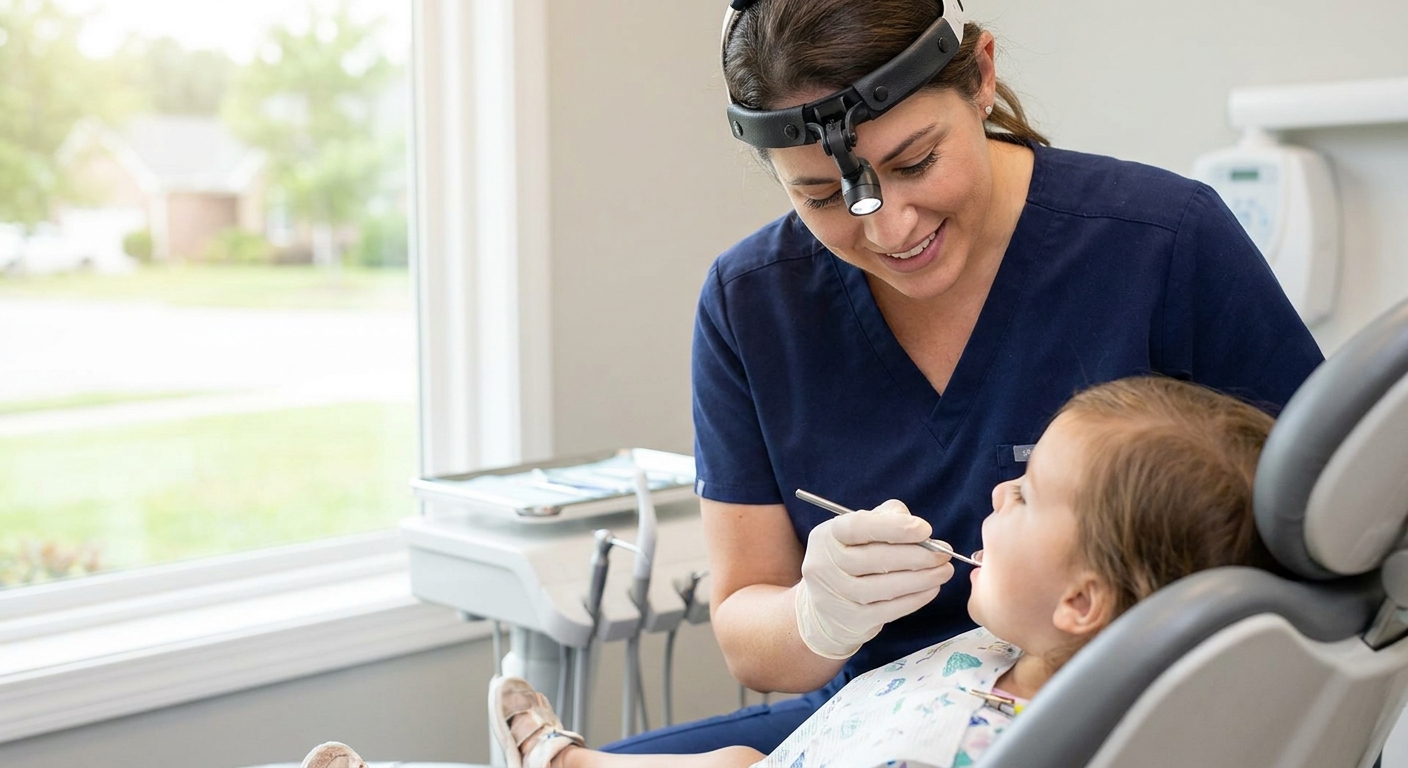
You’re probably worried about two things: whether the tooth can be saved, and whether your child will be terrified by the visit. Both are fair worries. A long wait under bright lights in a busy hospital is hard on a scared, hurting child. A dental office that sees kids every week is set up for this kind of moment. Total Smiles of Leland offers pediatric visits, teen dental care, and gentle care for dental anxiety, so your toddler and your teenager can both be seen in one familiar place.
Children’s teeth also follow different rules from adult teeth, which is a big reason a dentist matters here. The American Academy of Pediatric Dentistry’s policy on emergency oral care stresses that children need timely access to emergency dental care from providers who understand their needs. A knocked-out baby tooth should not be put back in, because that can harm the permanent tooth forming underneath. A knocked-out permanent tooth is the opposite. It is one of the most time-sensitive problems in dentistry, and getting it back in place quickly may give it a better chance, though success varies.
Here’s a common example. Your 9-year-old falls off a bike and chips a front tooth. That tooth may be a new permanent one with a root that is still growing. A dentist can check the nerve, smooth or repair the chip, and keep an eye on the tooth over the following weeks. An ER can stop bleeding and check for a head injury, which matters if your child hit their head. For the tooth itself, you’ll end up at a dentist either way.
Where Should I Go for Emergency Dental Care Right Now? A Step-by-Step Path for Leland Families
First rule out a medical emergency, then call Total Smiles of Leland. Describe your symptoms, and the team can help you decide whether you may need a same-day dental visit or the ER. You can often get a dental appointment at Total Smiles of Leland the same day, though this depends on availability.
Here’s what to do, in order, before you get to the dentist:
- Check for danger signs. If you have trouble breathing or swallowing, swelling spreading to your eye or neck, or a serious injury from a fall or accident, call 911 or go to the ER now.
- Control bleeding. Bite down on clean gauze or a damp tea bag with steady pressure for 15 minutes. If the bleeding won’t slow, go to the ER.
- Save a knocked-out tooth. Pick it up by the top, never the root. Rinse it gently without scrubbing. MouthHealthy from the ADA recommends trying to put an adult tooth back in its socket, or keeping it in milk if you can’t. Don’t put a baby tooth back in.
- Collect broken pieces. Put any chips or fragments of a broken tooth, filling, or denture in a small container and bring them with you.
- Ease the pain safely. Hold a cold compress on the outside of your cheek for short periods. Take an over-the-counter pain reliever only as the label directs. Never put aspirin directly on your gums, because it can burn the tissue.
- Call Total Smiles of Leland. Say what happened, when it happened, and what you notice now. Mention any swelling, fever, or bleeding.
- Bring what you need. Grab your Medicaid card if you have one, a list of any medicines you take, and your child’s details if the emergency is theirs.
The short version: if the problem threatens breathing, involves heavy bleeding, or follows a serious injury, go to the ER. If the problem is pain, a broken or loose tooth, swelling around one tooth, or a lost filling, call the dentist. If you still can’t tell where to go, call the dentist first and describe exactly what you see. A dental team will tell you to go to the hospital when that’s the safer choice.
Questions Leland Families Ask About Emergency Dental Care
Will the emergency room pull my tooth?
Usually not. ER physicians can prescribe pain medicine and antibiotics, but they generally don’t do extractions, root canals, or fillings. You’ll most likely be referred to a dentist. Total Smiles of Leland performs both simple and surgical extractions when clinically appropriate.
Does Total Smiles of Leland see emergency patients on weekends?
Total Smiles of Leland works to offer same-day emergency appointments. For current hours, including whether weekend times are available, call the practice or check the Total Smiles of Leland website.
What should I do with a knocked-out tooth before I get to the dentist?
Hold it by the top, rinse it gently without scrubbing the root, and try to put it back in the socket. If you can’t, keep it in milk. An adult can also hold it in the cheek with saliva, but young children shouldn’t, since they could swallow it. Get to a dentist as quickly as you can, ideally within about 30 minutes, because speed may improve the chance of saving the tooth, though outcomes vary.
Can I go to an emergency dentist if I don’t have dental insurance?
Yes. Total Smiles of Leland accepts Medicaid and works to remove financial barriers for people with and without insurance. Ask about the cost of your visit before treatment begins so there are no surprises.
How much does an emergency dental visit cost compared to the ER?
It depends on the treatment you need. The bigger point is that the ER bill often comes first and the dental bill still follows, because the ER typically can’t fix the tooth. Going straight to a dentist usually means paying once for care that may treat the cause.
What if my child knocks out a baby tooth? Is that an emergency?
Baby teeth aren’t put back in, but you should still call a dentist. The dentist will check for damage to the permanent tooth underneath and make sure no pieces are left in the gum.
Call Before You Drive to the Hospital
If you have a dental emergency in Leland right now, call Total Smiles of Leland for same-day triage and to request an emergency appointment. That way the tooth may get addressed today, and you may be able to avoid spending hours in the ER waiting for a referral.
Before you dial, look in a mirror and check where the swelling is. Swelling that stays near one tooth or on the gum suggests you should see the dentist. Swelling that spreads under your jaw, down your neck, or toward your eye suggests you should go to the ER. That one detail answers the question you started with, and it’s the first thing to tell the person who picks up the phone.
Not Sure If It Can Wait Until Morning?
When you’re dealing with sudden tooth pain or dental trauma, the right choice between the ER and a dental office can feel overwhelming in the moment. Total Smiles of Leland keeps time available for urgent cases because we know dental emergencies don’t follow a schedule. If you’re unsure whether your situation needs immediate attention or how quickly we can see you, a quick phone conversation can give you clarity and relief.
Individual experiences with emergency dental care vary based on many factors including the nature and severity of the condition, timing of treatment, and individual health circumstances. This article is general information, not medical advice. If you have trouble breathing or swallowing, call 911 or go to the nearest emergency room.