Understanding how cavities start
If you are wondering, “can a cavity heal on its own,” it helps to first understand what a cavity actually is and how it forms.
Tooth decay begins when bacteria in your mouth feed on sugars and starches in food and drinks. These bacteria produce acids that slowly dissolve your tooth’s enamel, the hard outer layer that protects the inner structures of the tooth. Over time, repeated acid attacks can lead to permanent damage if they are not interrupted or reversed [1].
This process does not happen overnight. In the earliest stage, minerals like calcium and phosphate begin to leach out of the enamel. At this point there is no hole yet. With the right care, your tooth can often repair this early damage and stop the decay from progressing [1].
Understanding where you are in this process is key to knowing whether a problem tooth may improve with home care or if it needs professional treatment.
Can a cavity heal on its own?
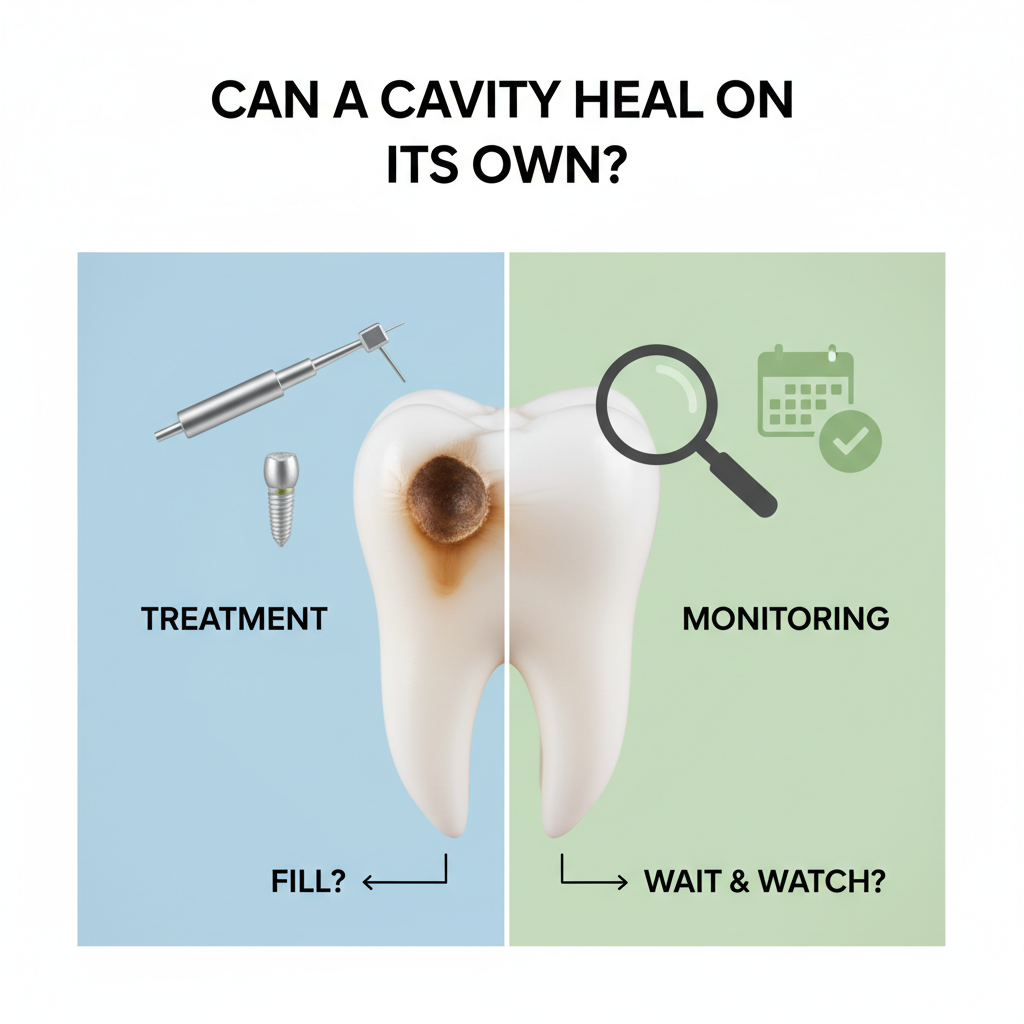
In simple terms, an actual cavity, meaning a physical hole in your tooth, cannot heal on its own. However, the very earliest stage of tooth decay, before a hole forms, can be stopped and reversed.
Dental experts describe this first stage as initial demineralization. At this point, acids have begun pulling minerals out of the enamel, but the surface remains intact. You might see a chalky white spot on the tooth. This type of early lesion can sometimes be “healed” in the sense that lost minerals are replaced and the enamel becomes hard again [2].
Once enamel has broken down and a cavity or hole has formed, the damage is permanent. Enamel is not living tissue, so it cannot grow back. At that point, only a dentist can repair the tooth with a filling, crown, or other restoration [3].
You can think of it this way: you may be able to reverse the very beginning of decay, but you cannot “grow back” a missing chunk of tooth.
Early decay that may be reversible
There is a window of opportunity when the decay process can still be turned around without a drill. In this stage, there is no cavity yet, even though damage is happening.
White spots and early warning signs
One of the earliest visible signs is a white spot lesion. This appears as a dull, chalky, or opaque white patch on the tooth surface. It indicates mineral loss in the enamel, but the surface is still unbroken. These spots can be stopped and often significantly improved if you and your dentist act quickly [4].
At this stage, you may notice:
- Mild sensitivity to cold foods or drinks
- A rough or chalky area you can feel with your tongue
- No obvious hole or dark spot yet
Initial demineralization is considered reversible with appropriate fluoride exposure and good oral hygiene habits [5].
How remineralization works
Remineralization is your body’s natural repair process for early enamel damage. Minerals like calcium and phosphate from your saliva can re-enter weakened enamel and harden it again. Fluoride from toothpaste, mouth rinses, or professional treatments speeds this process and makes the enamel more resistant to future acid attacks [6].
Several strategies help remineralization:
- Brushing twice daily with fluoride toothpaste
- Professional fluoride treatments, such as gels or varnishes, at your dental office
- Products that supply calcium and phosphate, such as those containing casein phosphopeptide-amorphous calcium phosphate (CPP-ACP), which have significantly reduced white spot areas in clinical studies [7]
- Limiting sugary snacks and drinks, which reduces acid attacks on enamel [8]
Some newer products, such as nano-hydroxyapatite and self-assembling peptides, also show promising results in rebuilding early enamel lesions and supporting de novo hydroxyapatite formation in deeper areas of early decay [7].
If you are at this early stage, your dentist might focus on remineralization and monitoring instead of filling. Our guide on early cavity treatment options explains how these conservative approaches work.
When a cavity will not heal on its own
Once a cavity has formed, you have a permanent defect in the tooth. At this point, your body cannot close the hole or rebuild the lost enamel. Bacteria and food debris can easily collect in the cavity, which speeds up decay and allows the problem to spread deeper into the tooth.
Enamel does not contain living cells, so it cannot regenerate. That is why dental organizations consistently state that a formed cavity cannot heal naturally and requires a filling or another restorative treatment to prevent pain, infection, or tooth loss [9].
If decay reaches the dentin layer beneath the enamel, it typically spreads more quickly. Without treatment, it can eventually reach the tooth’s pulp, where the nerve and blood supply are located. At that point, you may need more extensive treatment, such as a root canal, in order to save the tooth [5].
To avoid reaching that point, it is important to recognize when a cavity is past the reversible stage. You can learn more about these red flags in our resource on how to know if cavity is serious.
Silver diamine fluoride and “healing” cavities
You might have heard that silver diamine fluoride, or SDF, can “heal” cavities without drilling. SDF is an FDA approved liquid that is brushed onto decayed areas to stop the infection and harden the tooth. It combines silver, which kills bacteria and prevents new growth, with fluoride, which helps rebuild weakened tooth structure [10].
SDF does not grow back enamel that has been lost, but it can:
- Kill the bacteria causing the cavity
- Harden the decayed area to prevent further breakdown
- Delay or sometimes avoid the need for drilling in certain situations
Treatment is simple. Your dentist cleans the tooth and applies SDF with a small brush. This can be repeated a few times until the tooth is stable. One important side effect is that the treated cavity area turns dark, which shows that the lesion has been arrested. This stain does not affect healthy tooth structure and can later be covered with a white filling if desired [10].
SDF is particularly helpful for young children, individuals with special needs, or anyone who has significant anxiety about dental procedures. It is not suitable for everyone, for example if you have a silver allergy, and your dentist will let you know if it is an appropriate option for you [10].
Signs your cavity might still be early
If you are trying to judge whether a problem tooth could still be in the reversible stage, certain signs point toward early enamel demineralization rather than a fully developed cavity.
You may be dealing with an early lesion if:
- You see a white, chalky spot on the tooth that was not there before
- The area is only mildly sensitive, for example to cold, but not painful on its own
- There is no visible hole, crack, or dark brown or black spot
- Your dentist has recently mentioned “watching” a spot rather than filling it
White spot lesions are considered the first clinical sign of demineralization. Research shows that with careful management of the acidic environment in your mouth and consistent use of remineralizing agents, many of these lesions can be stabilized or even show substantial improvement [7].
That said, only a dentist can confirm whether the enamel surface is intact and whether decay has begun to spread into the dentin. If you are experiencing symptoms, it is better to have the area examined than to guess. Our page on signs you need a dental filling outlines what your dentist is looking for.
Signs the cavity needs treatment now
Many people hope tooth pain will go away on its own, but increasing discomfort is a strong signal that decay has moved beyond the reversible stage.
You should plan to see a dentist promptly if you notice:
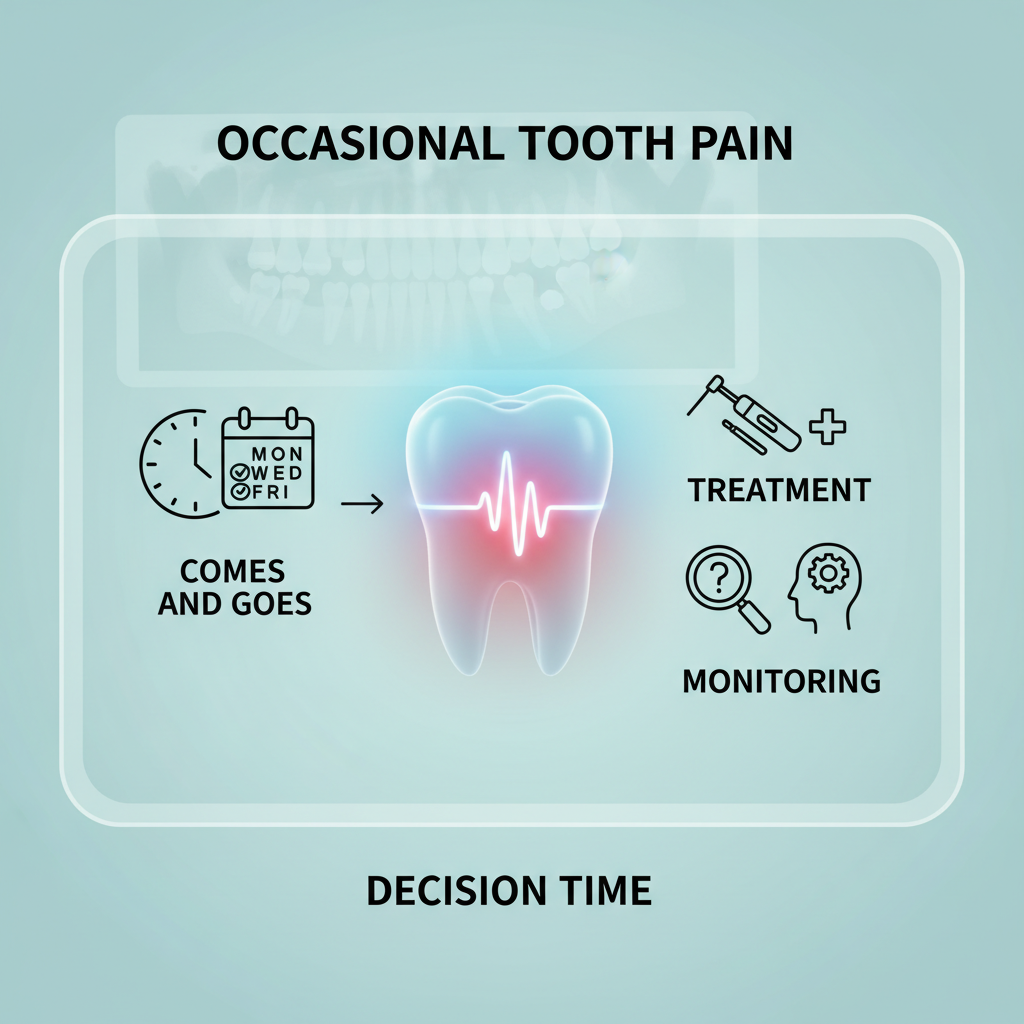
- Tooth pain that comes and goes, especially when eating or drinking
- Sharp sensitivity to sweets, hot, or cold, compared with general tooth sensitivity vs cavity
- Pain when you bite down or chew in one specific spot, which might also relate to why does my tooth hurt when i chew
- A visible hole, pit, or dark spot on the tooth
- Food regularly getting trapped in the same area
- A chipped or cracked tooth, or symptoms that match cracked tooth symptoms
Pain that lingers after you remove the trigger, such as after you stop drinking something cold, usually means decay is deeper. If left untreated, the problem can progress to nerve involvement, infection, and ultimately abscess formation. At that stage, treatment options are more limited, and you may be looking at when is a root canal necessary or even losing the tooth.
If you are already experiencing tooth pain that comes and goes, it is a sign that something is changing inside the tooth and should not be ignored.
What happens if you “wait and see”
It can be tempting to delay dental visits, especially if the pain is mild. However, tooth decay rarely stays the same over time. Once a cavity has formed, acids and bacteria have easier access to the inner layers of your tooth, and the rate of damage often increases.
Untreated cavities can lead to:
- Increasing pain and sensitivity
- Infection of the tooth pulp and surrounding bone
- Swelling, abscesses, and systemic infection risk
- More complex and costly treatment, such as crowns or root canals
- In some cases, extraction if the tooth cannot be saved
You can learn more about these potential outcomes in our detailed guide on what happens if you ignore a cavity.
Early diagnosis and treatment are almost always simpler, less invasive, and more comfortable than waiting until the problem becomes severe. Even if you are hoping that a spot might remineralize, your dentist can help you monitor it and support that process with targeted preventive care.
In most situations, acting sooner means a smaller filling, a healthier tooth, and a lower chance that you will ever need major dental work on that tooth.
How you can support natural healing
While you cannot grow back a cavity that has already formed, you can do a lot to support remineralization of early lesions and to protect the rest of your teeth from future decay.
Here are practical steps you can take:
-
Optimize daily oral hygiene
Brush at least twice a day with a fluoride toothpaste. Be thorough but gentle, and spend at least two minutes each time. Floss daily to remove plaque and food between teeth where most cavities start. -
Use fluoride consistently
Fluoride strengthens enamel by forming a more acid resistant mineral and helps re-incorporate calcium and phosphate into damaged areas [8]. Your dentist may recommend a higher fluoride toothpaste, prescription gels, varnish treatments, or a fluoride mouth rinse depending on your risk level. -
Adjust your diet
Since tooth decay does not develop without sugar consumption, cutting back on sugary snacks, sticky candies, and frequent sipping of sweet drinks can significantly reduce your risk of new or worsening cavities [8]. Try to limit between-meal snacking so your teeth have time to recover between acid attacks. -
Stay hydrated and protect your saliva
Saliva is your natural buffer against acids and a key source of minerals for remineralization. Drink water regularly, especially if you have a dry mouth. Avoid smoking and talk with your dentist or physician if medications are affecting your saliva flow. -
Consider special remineralizing products
Your dentist may recommend products containing CPP-ACP, nano-hydroxyapatite, or other advanced agents shown to improve early enamel lesions [7]. Xylitol containing gums and mints can also help raise oral pH and reduce decay causing bacteria [8]. -
Keep regular dental visits
Professional cleanings and exams allow early problems to be detected and treated before they progress. Your dentist can track small changes over time and adjust your prevention plan as needed.
These steps will not reverse a large cavity, but they can stabilize early lesions, reduce the need for fillings in the future, and help protect teeth that have already been restored.
When to see a dentist about possible cavities
If you are in pain, suspect a cavity, or are unsure whether an area might heal on its own, the safest choice is to schedule an evaluation. You do not have to wait until you are in severe pain to get help.
You should book an appointment soon if:
- You see any new white, brown, or black spots on your teeth
- You notice a rough edge, chip, or hole with your tongue
- You are experiencing sensitivity or tooth pain that is getting more frequent
- You have pain when chewing or biting in a specific spot
- It has been more than six months to a year since your last dental checkup
During your visit, your dentist will examine your teeth, possibly take x-rays, and explain whether an area can be monitored and remineralized or whether it is already a cavity that needs a filling. This proactive, prevention focused approach helps you avoid the more serious consequences of untreated decay.
If you find yourself repeatedly asking, “can a cavity heal on its own,” that is your sign to get a professional opinion. With early care and the right guidance, you can protect your teeth, manage minor problems before they become major, and keep your smile as healthy and comfortable as possible.