What gum inflammation really means
When you notice red, swollen, or bleeding gums, your mouth is telling you something important. Gum inflammation is often the first visible sign of gum disease, also called periodontal disease. This condition starts in the soft gum tissue, and if it is not treated, it can damage the bone that holds your teeth in place and eventually lead to tooth loss.
Periodontal disease is very common. It affects nearly half of all adults in the United States and is primarily caused by dental plaque, a sticky film of bacteria that builds up along and under the gumline [1]. When plaque is not removed effectively, it hardens into tartar, irritates your gums, and triggers chronic inflammation.
Effective gum inflammation treatment is about more than just calming redness or tenderness. The goal is to stop the infection, protect the bone and supporting tissues, and help you prevent further damage so you can keep your natural teeth as long as possible.
Signs you may need gum inflammation treatment
Gum disease often starts quietly. You may not feel pain until it has progressed. Paying attention to early warning signs can help you seek care before serious damage occurs.
Common symptoms that suggest you need gum inflammation treatment include:
- Gums that bleed when you brush or floss
- Red, swollen, or tender gums
- Gums that look puffy or shiny
- Bad breath or a bad taste in your mouth that does not go away
- Gums pulling away from your teeth, making teeth look longer
- Sensitivity along the gumline or between teeth
- Loose teeth or changes in the way your teeth fit together
Gingivitis, the earliest stage of gum disease, is a mild but common form of inflammation that affects the gum tissue around the base of your teeth. It causes irritation, redness, and swelling but does not damage bone if you treat it promptly [2]. Addressing these signs early with early stage gum disease treatment can help you avoid more complex procedures later.
If you have more advanced symptoms like gum recession, persistent bad breath, or loose teeth, you may already have periodontitis and need more intensive periodontal therapy.
Why inflamed gums are not just a mouth problem
Untreated gum inflammation affects more than your smile. Over time, ongoing infection and inflammation can break down the bone and ligaments that support your teeth, leading to tooth loss. That alone is a serious concern, but research has also found strong links between periodontal disease and several chronic medical conditions.
Chronic gum inflammation is associated with type 2 diabetes, cardiovascular disease, rheumatoid arthritis, and possibly Alzheimer’s disease, likely because of shared inflammatory pathways [3]. Bacteria from infected gums can enter your bloodstream, damage blood vessels, and increase your risk of heart attack or stroke if the condition is left untreated [3].
Treating gum disease can even improve blood sugar control. Studies show that managing gum inflammation can lower HbA1c levels by about 0.4 to 0.9 percent, similar to adding another diabetes medication for some patients [3].
Effective gum inflammation treatment helps you:
- Protect teeth and supporting bone
- Reduce painful infections and abscesses
- Improve bad breath related to gum disease
- Support overall health and reduce systemic inflammation
If you are already concerned about bleeding gums, gum recession, or bad breath, discussing options such as bleeding gums treatment or bad breath from gum disease treatment is an important next step.
Professional evaluation before treatment begins
The first step in any gum inflammation treatment plan is a thorough periodontal evaluation. During this visit, your dentist or periodontist will look beyond what you can see in the mirror. You can expect:
- A detailed review of your medical and dental history
- Measurement of gum “pockets,” the spaces between your teeth and gums
- X‑rays to check bone levels around your teeth
- Assessment of bleeding, plaque, tartar, and gum recession
Measuring pocket depth is especially important. Healthy gums typically attach snugly with shallow pockets. As inflammation and infection progress, these pockets deepen and trap more bacteria. Identifying how deep the pockets are helps determine whether you need early, moderate, or advanced periodontal treatment.
If your situation is complex or has not improved with initial care, your general dentist may refer you to a gum specialist, sometimes called a gum disease treatment dentist or periodontist, for targeted gum infection treatment.
Nonsurgical gum inflammation treatment options
When gum disease is caught in the early or moderate stages, your dentist can often treat it with nonsurgical methods. These procedures focus on removing the bacterial buildup that drives inflammation so your gums can begin to heal.
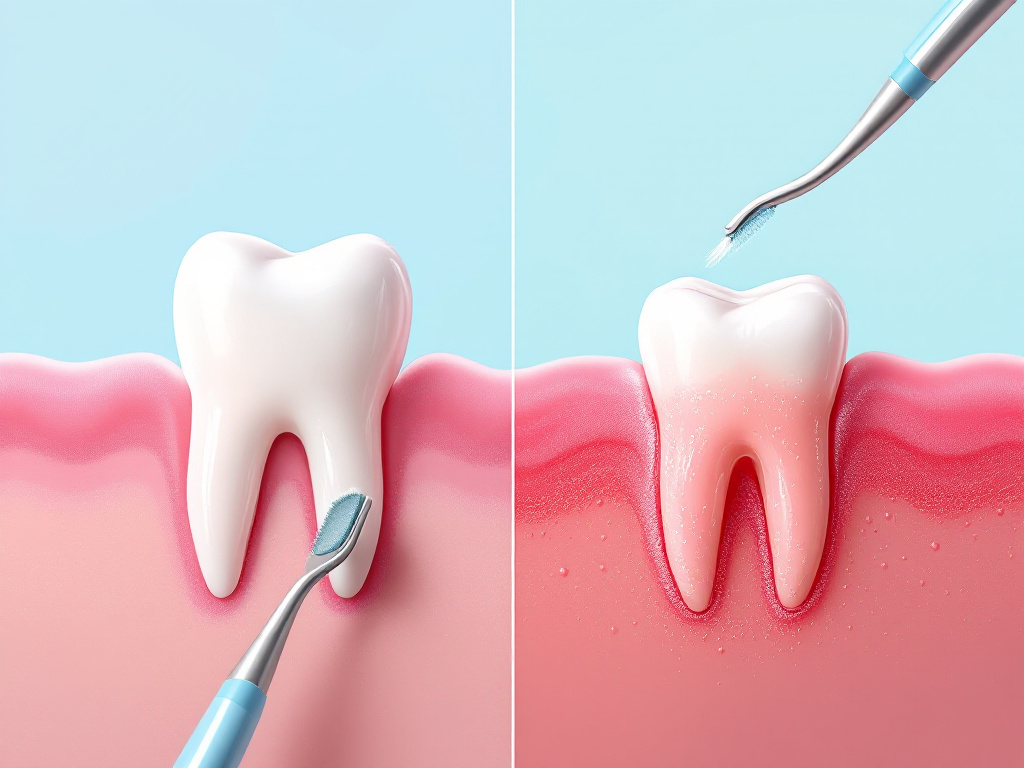
Scaling and root planing (deep cleaning)
Scaling and root planing is a specialized type of deep cleaning for gums that goes far beyond a standard dental cleaning. It is one of the most common and effective treatments for gum inflammation when pockets have become deeper but bone loss is not yet severe [1].
During scaling and root planing:
- Scaling removes plaque and tartar from the tooth surfaces, both above and below the gumline
- Root planing smooths the root surfaces so bacteria have a harder time reattaching
By thoroughly cleaning the pockets around your teeth, scaling and root planing help reduce inflammation and allow gum tissue to reattach where possible. This procedure is considered a key nonsurgical periodontal treatment for mild to moderate disease [4].
If you are nervous about the process, your dentist can use a local anesthetic to keep you comfortable during your deep cleaning dental appointment.
Targeted medication and antimicrobial care
In some cases, your dentist may recommend medications along with mechanical cleaning to help control the infection:
- Prescription antimicrobial mouth rinses to reduce bacteria
- Local antibiotic gels or chips placed directly into deep pockets
- Short courses of oral antibiotics if an acute infection is present
These medications are used as part of an overall periodontal therapy plan, not as a substitute for physical removal of plaque and tartar.
Gentle treatment for swollen or irritated gums
If you have very tender or puffy gums, you might also benefit from supportive care to ease discomfort while definitive treatment is performed. Professional treatment for swollen gums can include gentle cleaning, guidance on brushing and flossing, and recommendations for temporary home remedies.
Good oral hygiene practices, such as brushing with a soft toothbrush and flossing daily, combined with rinsing with warm salt water and using cold packs, can help soothe soreness and reduce swelling while your gums recover [5].
Surgical gum inflammation treatment for advanced disease
If gum disease has progressed to periodontitis with deeper pockets and bone loss, nonsurgical treatment alone may not be enough. In these cases, your dentist or periodontist may recommend surgical procedures to better access and clean infected areas and to rebuild lost support.
According to the Mayo Clinic, the main goal is to thoroughly clean bacteria from around the teeth and prevent further damage to gum tissue and bone [6]. Advanced chronic gum disease care can involve:
Pocket reduction (osseous) surgery
Pocket reduction surgery, sometimes called flap or osseous surgery, is designed to reduce the depth of periodontal pockets. During this procedure, your periodontist:
- Makes small incisions in the gums to lift the tissue away from the teeth
- Removes tartar, plaque, and inflamed tissue from deep pockets
- Smooths damaged bone, if necessary, to reduce areas where bacteria can hide
- Repositions the gums snugly around the teeth to create shallower, easier‑to‑clean pockets
This type of gum pocket cleaning is often recommended for moderate to advanced gum disease when pockets remain deep after scaling and root planing [1].
Regenerative procedures and grafting
If you have experienced bone loss, your periodontist may suggest regenerative procedures along with pocket reduction. These can include:
- Bone grafts to restore lost bone support
- Guided tissue regeneration, which uses special membranes to encourage the regrowth of bone and connective tissue
- Soft tissue grafts to cover exposed roots and support weakened gums, especially useful when you see a dentist for receding gums
In some advanced cases, platelet‑rich fibrin (PRF) or platelet‑rich plasma (PRP) from your own blood can be used to enhance healing and tissue regeneration after surgery, which can reduce recovery time and post‑surgical discomfort [1].
These advanced options fall under advanced periodontal treatment and are tailored to the specific pattern and severity of your disease.
At‑home care to support professional treatment
Professional procedures are only part of successful gum inflammation treatment. What you do at home every day has a powerful impact on how well your gums heal and how long your results last.
Key habits that support healing and help control inflammation include:
- Brushing your teeth two to three times daily with fluoride toothpaste and a soft‑bristled brush
- Flossing or using interdental cleaners at least once a day to remove plaque between teeth
- Rinsing with water after meals and snacks
- Using an antimicrobial mouthwash if recommended by your dentist
- Limiting sugary snacks and drinks that feed harmful bacteria
- Avoiding tobacco in all forms, since it increases your risk for gum disease and slows healing [6]
Nutrition also matters. A diet low in vitamin C is a known risk factor for gum inflammation. Adding vitamin C rich foods like citrus fruits, broccoli, kale, cherries, and kiwis can support your gum health, along with calcium rich foods for stronger teeth and bone [7].
Some home remedies, such as warm salt water rinses, may also help soothe irritated gums and support healing. A simple rinse made by mixing one‑half teaspoon of salt in a glass of warm water and swishing for 30 seconds a few times a day can reduce swelling and draw out infection in cases of gingivitis [8].
These approaches do not replace professional gum disease treatment dentist care, but they enhance and maintain the improvements you gain from treatment.
Consistent daily care and regular professional visits work together. One without the other is rarely enough to control gum disease long term.
Long‑term maintenance to prevent tooth loss
Once inflammation is under control, ongoing care is essential to keep gum disease from returning. Periodontal disease is often a chronic condition that needs continuous management, especially if you have risk factors such as diabetes, smoking, or a family history of gum disease.
Your dentist may recommend:
- Regular periodontal maintenance appointment visits every 3 to 4 months, rather than once or twice a year
- Careful monitoring of pocket depths, gum recession, and bleeding
- Periodic gum pocket cleaning to remove plaque and tartar below the gumline
- Adjustments to your home care routine if new problem areas develop
This type of follow‑up care is a key part of how you manage gum disease long term. Skipping maintenance visits can allow plaque and tartar to build back up under the gums, which increases your risk of infection and bone loss again.
Regular maintenance is also one of the most effective ways to prevent tooth loss from gum disease. By catching new inflammation early, your dental team can step in quickly with targeted early stage gum disease treatment before damage progresses.
If you ever notice new bleeding, swelling, or bad breath between visits, scheduling time with a dentist for gum problems as soon as possible gives you the best chance to stay ahead of the disease.
When to seek help for gum problems
You should not ignore gum changes or wait for symptoms to disappear on their own. Professional evaluation is especially important if you notice:
- Bleeding that persists for more than a few days when you brush or floss
- Swollen or tender gums that last more than two weeks [5]
- Sudden swelling, pain, or signs of an abscess
- Rapid gum recession or loosening teeth
- Ongoing bad breath that does not improve with brushing
Gingivitis is reversible with improved oral hygiene and routine professional cleaning before any bone loss occurs [1]. If you act quickly when early symptoms appear, your dentist can typically treat inflammation with less invasive methods, protect your bone, and avoid more complex surgeries later.
If initial treatment does not improve your symptoms, or if your gum disease is already advanced, your dentist may collaborate with or refer you to a specialist for more comprehensive periodontal therapy.
Moving forward with healthier gums
Your gums are the foundation of your smile. Effective gum inflammation treatment helps you protect that foundation, reduce infection and discomfort, and support your overall health.
By combining:
- A thorough periodontal evaluation
- Personalized treatment such as scaling and root planing, deep cleanings, or advanced surgical options
- Consistent home care and lifestyle changes
- Ongoing periodontal maintenance appointment visits
you give yourself a strong chance to stabilize gum disease, keep your natural teeth longer, and feel more confident about your oral health.
If you are dealing with bleeding, swelling, gum recession, or diagnosed periodontal disease, reaching out to a dentist for gum problems is a practical and important next step. With the right plan in place, you can calm gum inflammation, protect your smile, and maintain healthier gums for the long term.