Why early fillings matter
If you are noticing twinges of tooth pain or new sensitivity, it can be hard to know whether you really need treatment or if you can safely wait. Understanding the most common signs you need a dental filling helps you act before pain becomes severe or the problem turns into something that requires a crown or root canal.
Tooth decay usually starts quietly. In the earliest stages, your dentist may be able to reverse or slow it with fluoride or other noninvasive care, without drilling at all [1]. Once a true cavity forms, however, a filling is the standard treatment to stop decay and restore strength.
Knowing what to watch for lets you seek an evaluation before the damage spreads. That is the goal, to prevent pain, protect your teeth, and avoid more complex procedures later.
If you are unsure how serious a problem is, it often helps to learn more about how to know if a cavity is serious before you decide to wait.
How tooth decay progresses
To understand the signs you need a dental filling, it helps to know how cavities develop. Tooth decay usually moves through several stages, from silent changes in your enamel to painful infection in the nerve.
According to information summarized from the American Dental Association and Mayo Clinic, decay often follows five main stages [1]:
- Enamel lesion. Early demineralization shows up as white or light brown spots.
- Enamel decay. The surface of the tooth starts to break down and tiny holes can form.
- Dentin decay. Decay reaches the softer layer under the enamel, pain usually begins.
- Pulp decay. The nerve and blood supply are affected, leading to toothache.
- Tooth abscess. Infection causes pus, swelling, and often fever.
In the first stage or two, your dentist may be able to manage the area with topical fluoride and sealants without drilling, especially in children and high risk areas [1]. Once there is a clear cavity, a filling is needed to remove the decay and seal the tooth.
Catching problems around the enamel and early dentin stage is where you have the best chance to use a small filling and avoid more invasive treatments later.
Toothache and pain when biting
A toothache is one of the strongest and most common signs you need a dental filling. If you notice a tooth that aches on its own, throbs, or hurts when you chew, you should not ignore it.
Radiant Dentistry notes that a toothache is the most frequent indication that a filling may be required, especially if it is paired with sensitivity to hot, cold, pressure, or very sweet foods, or sharp pain when biting or eating [2]. A mild, persistent ache can indicate an early cavity, and untreated decay can progress until you need more extensive treatment such as a root canal [3].
Sharp pain when you apply pressure or bite down on a tooth is another important warning. This type of pain is frequently reported when a cavity has weakened part of the tooth surface, or when decay has reached the dentin layer underneath [4]. The pain can be very specific, as if one spot hurts with each bite.
If you find yourself asking, “Why does my tooth hurt when I chew?”, it is safer to schedule an evaluation rather than waiting. You can also explore common causes in more detail at why does my tooth hurt when I chew.
Sensitivity to hot, cold, and sweet
Tooth sensitivity can be confusing because it can come from simple enamel wear, gum recession, or a cavity. Still, new or worsening sensitivity is one of the earliest signs you need a dental filling, especially if the sensitivity is focused in one tooth.
Several dental sources describe temperature sensitivity as a key warning sign. Sensitivity to both hot and cold often reflects enamel deterioration and possible decay [2]. Increased sensitivity to hot, cold, sweet, or acidic foods and drinks may occur once tiny holes allow stimuli to reach the dentin and nerve endings [3]. Similar guidance from Listerine and other oral health experts notes that sensitivity ranging from mild to severe is one of the most common cavity symptoms that eventually leads to a filling [5].
If a desensitizing toothpaste helps and your dentist has ruled out decay, the problem may relate more to general sensitivity. However, if sensitivity is new, focused in a small area, and does not improve, your dentist will usually check for early cavities around that tooth. The Northampton Dental Specialists Group also notes that sensitivity to temperature suggests enamel has worn down and the dentin is exposed, which a filling can help protect [6].
If you are trying to sort out what your own symptoms mean, it may help to read about tooth sensitivity vs cavity so you can see how dentists evaluate each.
Visible spots, stains, and holes
Many early cavities are only visible in dental x‑rays, but you can occasionally see changes in the mirror or feel them with your tongue. These visible changes are some of the clearest signs you need a dental filling.
Very early enamel lesions may show up as bright white or light brown spots, especially near the gumline or in the grooves of back teeth. These spots indicate demineralization where minerals such as calcium and phosphate are being lost from the tooth surface [3]. At this stage, your dentist may sometimes use fluoride to strengthen the area and monitor it closely.
As decay progresses, you may see brown, gray, or black areas that do not brush off. Dentists in Round Lake, Illinois point out that a visible discolored spot that remains despite brushing can indicate early tooth decay that will eventually need a filling [7]. Tooth discoloration where a spot feels soft or sticky can also signal decay that needs to be treated [8].
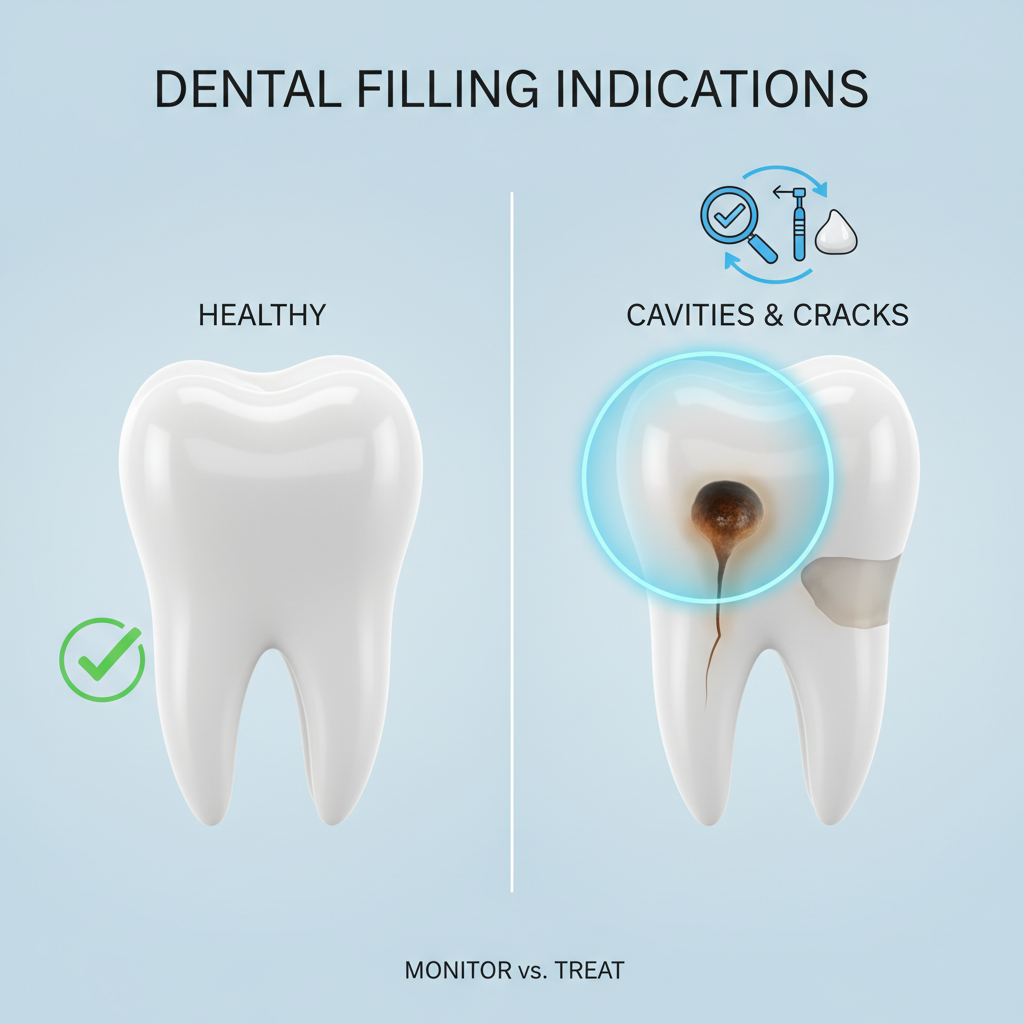
Once there is a visible hole, pit, or dent you can see or feel, decay has already broken through the enamel. Multiple sources agree that noticeable holes or pits in the tooth surface are direct signs of progressed cavities that almost always require a dental filling to restore the tooth and prevent further damage [9].
Rough edges, chips, and cracks
Not every filling is placed for a traditional cavity. You may also need a filling if a tooth is chipped, cracked, or feels rough and uneven.
Radiant Dentistry notes that visible damage to a tooth, including chips or broken areas from a cavity or injury, can often be repaired with white composite fillings. These restorations help prevent further wear and decay and improve your ability to bite and chew comfortably [2]. Northampton Dental Specialists Group also lists rough or uneven tooth surfaces, as well as cracked or chipped teeth, as common reasons to place a filling and protect the tooth from infection or additional deterioration [6].
If you notice a tooth edge that feels sharp on your tongue, a corner that has broken off, or a crack line that catches your nail, it is important to have it examined. A small composite filling or bonding material can often restore the contour before the damage grows. For more extensive cracks that involve deeper structures, your dentist may also discuss other options. You can learn more about warning signs in our resource on cracked tooth symptoms.
Food trapping, bad breath, and floss issues
Decay and structural changes in a tooth can create tiny spaces where food and bacteria collect. Over time, these areas can contribute to cavities, gum inflammation, and persistent bad breath.
Radiant Dentistry points out that food becoming trapped in unusual places or dental floss that consistently shreds or breaks around a particular tooth are often signs that there is a defect in the tooth surface or an existing restoration that needs attention [2]. When decay creates a small opening in the enamel between teeth, food tends to lodge in the same spot repeatedly. Dentists in Round Lake recommend having this checked early, since these cavities can grow quickly between dental visits [7].
Persistent bad breath or a lingering bad taste in your mouth may also be related to decay. Bacteria in cavity areas often produce foul smelling compounds. Several sources list chronic bad breath, especially when combined with other signs such as white spots, sensitivity, or visible pits, as a reason to schedule a dental exam for possible fillings [10].
If you suddenly need toothpicks or floss after every meal in one small area, or you have bad breath that does not respond to brushing or mouthwash, your dentist can check for decay and recommend appropriate treatment.
When early decay can be monitored
Not every sign of early decay means you will definitely need a filling right away. In some cases, especially in the earliest stages on smooth tooth surfaces, your dentist may suggest a preventive approach and monitoring instead of immediate drilling.
The Journal of the American Dental Association has reported that some early lesions, before a full cavity forms, can be managed with topical fluoride, sealants, and close observation. The goal is to arrest or reverse demineralization without over treating healthy tooth structure [1]. This approach is often used in children and young adults who are at higher risk for decay.
For you, that might mean your dentist notes an area to “watch” on x‑rays, recommends fluoride toothpaste or varnish, and schedules more frequent checkups. It is still important not to ignore these findings. If you postpone visits for too long, a watch area can quietly convert into a true cavity that then needs a filling.
If you are wondering whether your body can manage a small cavity on its own, it can also be useful to read more about can a cavity heal on its own. That resource explains more about which stages are reversible and which are not.
Signs decay is getting worse
There are times when a “wait and see” approach is no longer safe. Recognizing when decay is progressing helps you decide when to schedule treatment rather than postpone.
Signs that suggest the problem is worsening include:
- Pain that is increasing in frequency or intensity.
- Sensitivity that lasts longer and is triggered by more foods or temperatures.
- A visible spot that is getting darker or larger.
- A rough area that turns into a definite hole or pit.
- New swelling, redness, or tenderness around the tooth.
As decay reaches the dentin layer beneath the enamel, pain typically becomes more obvious. According to Colgate, once decay moves from enamel into dentin and pulp, tooth pain and sometimes swelling or fever can occur, and a filling or more advanced treatment is required [1].
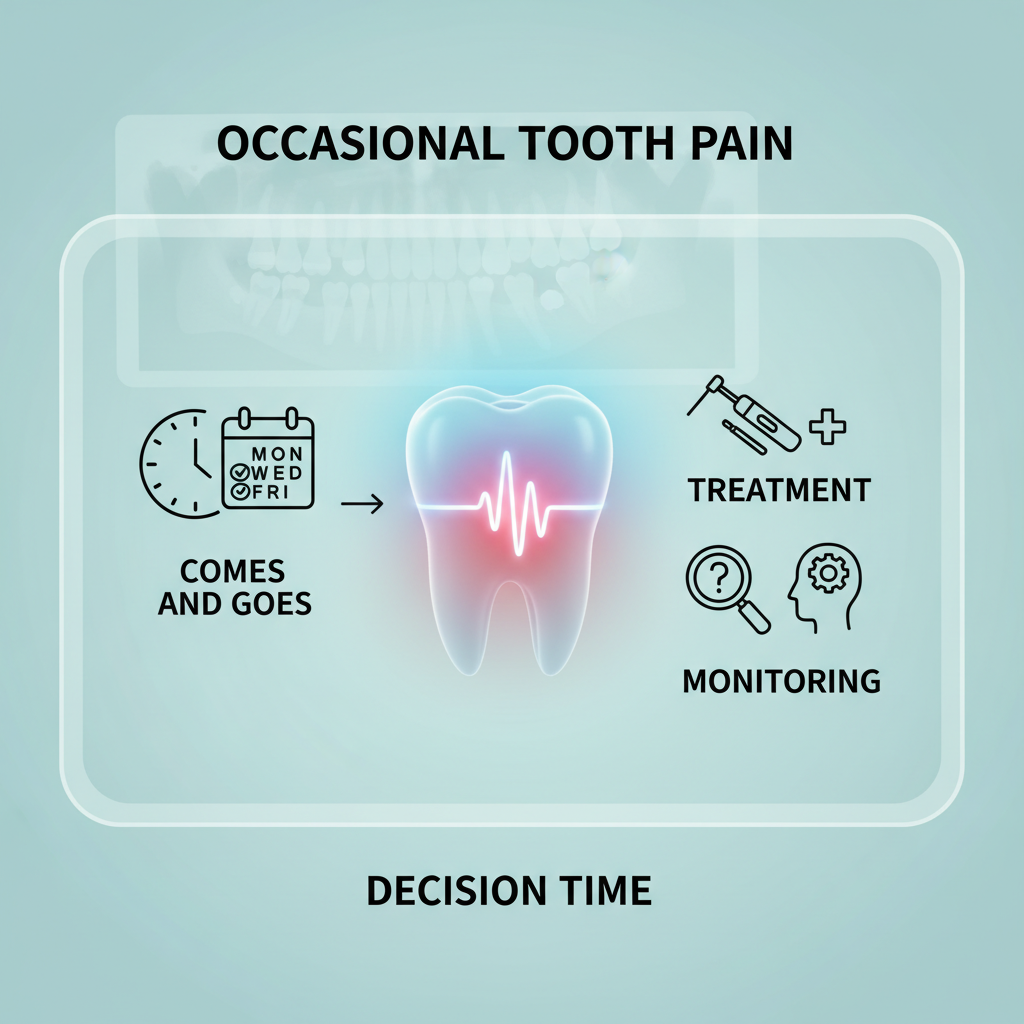
If you begin to experience tooth pain that comes and goes, especially with biting or temperature changes, that can also be a warning that decay is moving closer to the nerve. You can read more about patterns like this at tooth pain that comes and goes.
The further decay progresses, the more likely you are to need a larger filling, a crown, or even a root canal to save the tooth. You can see how timing affects treatment needs in our overview of when is a root canal necessary.
When existing fillings need to be replaced
If you already have fillings, it is helpful to remember that they do not last forever. Even with excellent brushing, flossing, and regular dental care, most fillings eventually wear out or leak.
Jeffrey Burns, DDS, notes that many fillings begin to fail after about a decade and sometimes do so without obvious symptoms at first [11]. Over time, tiny gaps can form at the edges of a filling, allowing bacteria and food debris to enter and create new decay underneath.
Warning signs that a filling may need to be replaced include:
- Sharp pain or pressure when biting on a filled tooth, which may indicate a cracked or loose filling or pressure near a nerve.
- Lingering sensitivity to hot, cold, or sweets around a filled tooth, suggesting a broken seal.
- Visible discoloration or dark edges around the filling, which can signal decay or leakage, not just surface stain.
- Food getting trapped or floss snagging around a filled tooth, which may mean the filling has shifted or developed gaps [11].
A broken or lost filling is always a reason to see your dentist promptly. A missing filling leaves a large opening where bacteria can quickly invade, which is why dentists recommend replacing it as soon as possible [8].
What happens if you ignore cavity warning signs
Putting off care when you notice signs you need a dental filling can seem easier in the short term, especially if the pain is mild. Over time, however, untreated decay almost always becomes more painful, more expensive to treat, and more likely to threaten the tooth.
If you continue to postpone treatment, decay typically advances through the stages described earlier, moving from enamel to dentin, then to the nerve. At that point, a standard filling is often no longer enough. You may need root canal therapy, a crown, or in severe cases tooth removal if infection cannot be controlled.
If infection reaches the pulp and a tooth abscess forms, symptoms can include intense pain, swelling in your face or jaw, and sometimes fever [1]. This is not only more difficult to treat, it can also affect your overall health.
To understand the long term impact in more detail, including how an ignored cavity can affect nearby teeth and gums, you might want to read what happens if you ignore a cavity.
Treatment options once you need a filling
If your dentist confirms that you have a cavity that needs a filling, you still have options for how the tooth is restored. Cavities can be filled using several materials, including amalgam, composite, gold, and porcelain, each with different durability, appearance, and cost considerations [1].
Most small to moderate cavities can be treated with tooth colored composite fillings. These materials bond directly to your tooth, look natural, and require less removal of healthy structure compared with older metal fillings. Larger areas of decay, or teeth that have cracked from long term decay, may need onlays, crowns, or additional strengthening.
If your cavity is still small or in the earliest stages, you may have more conservative options. To learn more about those possibilities, visit early cavity treatment options. That information can help you talk with your dentist about the least invasive approach that still protects your tooth.
How to reduce your chances of needing fillings
While fillings are common, there is a lot you can do to lower your risk of needing them in the future. Preventive care is usually more comfortable and less costly than restorative treatment.
Dental health experts recommend:
- Brushing with fluoride toothpaste after meals to remove plaque and support enamel.
- Flossing daily to clean between teeth where cavities often start.
- Using a fluoride mouth rinse if your dentist considers you at higher risk.
- Limiting frequent sugary snacks and drinks that encourage decay.
- Scheduling regular dental checkups and cleanings to spot early changes [1].
These habits, combined with professional care, improve your chances of catching early lesions that can be monitored or remineralized rather than filled.
When to schedule a dental evaluation
If you recognize any of the following, it is time to schedule an appointment:
- Ongoing toothache or pain when you bite.
- New or worsening sensitivity to hot, cold, sweet, or acidic foods.
- Visible spots, pits, or holes on a tooth.
- Rough, chipped, or cracked areas that catch your tongue or floss.
- Persistent bad breath or a bad taste that brushing does not fix.
- Food consistently trapping between the same teeth.
- Changes around an existing filling, such as pain, dark edges, or floss catching.
You do not need to wait until the pain keeps you up at night. In fact, that is exactly what you want to avoid. A prompt evaluation allows your dentist to decide whether a filling is needed now, whether an area can be monitored, or whether more advanced care is required.
By acting on early signs you need a dental filling, you protect your comfort, preserve more of your natural tooth, and lower the chances that you will need emergency care later.
References
- (Colgate)
- (Radiant Dentistry)
- (Avalon Dental NY)
- (Listerine, Round Lake Dentistry)
- (Listerine)
- (Northampton Dental Specialists Group)
- (Round Lake Dentistry)
- (Todd Shatkin DDS)
- (Avalon Dental NY, Listerine, Northampton Dental Specialists Group, Todd Shatkin DDS)
- (Avalon Dental NY, Listerine, Round Lake Dentistry)
- (Jeffrey Burns, DDS)