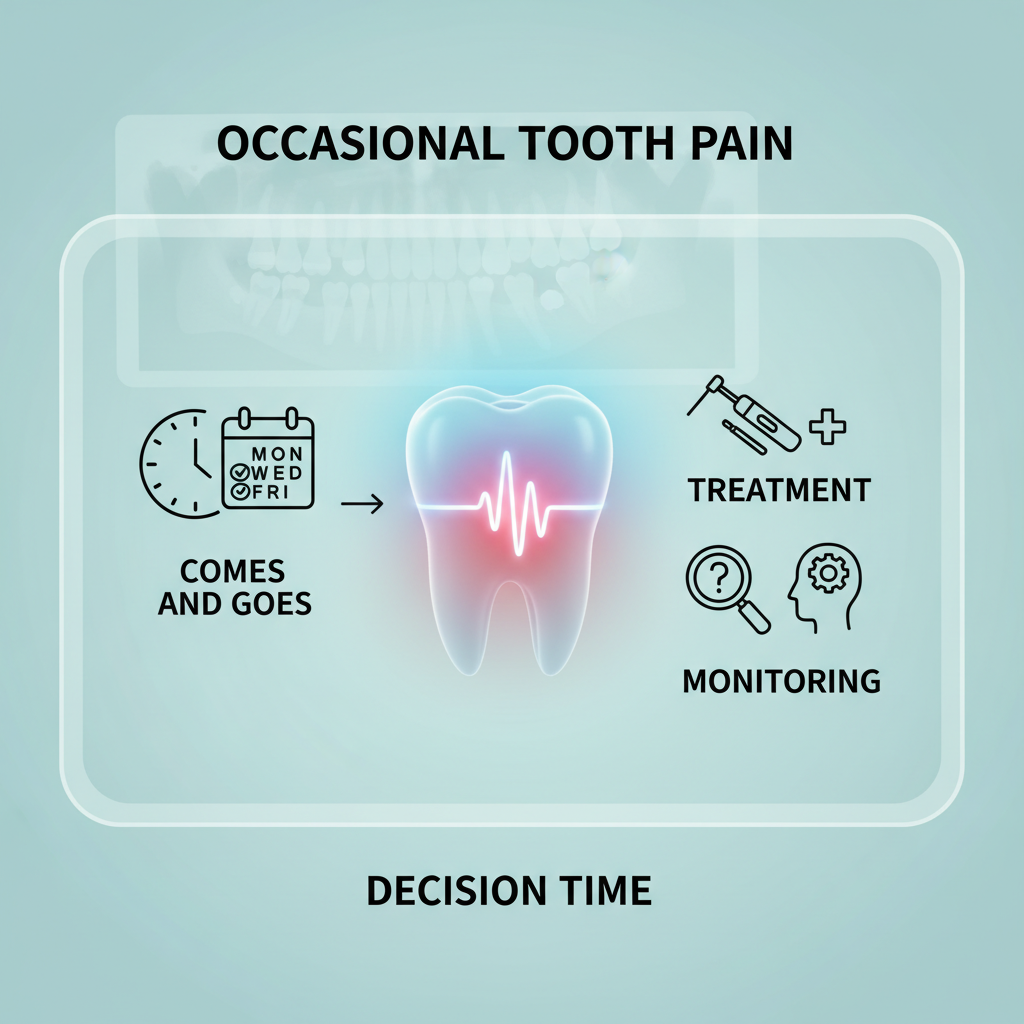

Understanding tooth nerve pain
Tooth nerve pain can feel sharp, throbbing, or constant. It may flare with hot or cold foods, pressure when you bite, or even wake you at night. This type of pain usually means the nerve inside your tooth is irritated or damaged, and it almost always needs prompt, professional care rather than a wait and see approach.
Toothaches are often caused by cavities, cracked teeth, infections, or gum disease. Left untreated, these problems tend to get worse, not better, and can affect your ability to eat, sleep, and focus. Tooth pain should never be ignored because it often signals deeper issues like tooth decay, abscesses, or infection that need early treatment to prevent complications.
When the inner part of your tooth, called dentin, becomes exposed, tiny tubules lead directly to the nerve and allow heat, cold, or pressure to trigger intense pain. Tooth sensitivity usually involves shallow surface exposure, but true tooth nerve pain reaches deeper into the nerve itself and is often more severe.
If you are dealing with nerve pain, fast, effective tooth nerve pain treatment focuses on two goals: relieving your pain and preserving your tooth for the long term.
When tooth pain is a dental emergency
Not every toothache is an emergency, but some symptoms mean you should see a dentist as soon as possible, often the same day. Severe tooth nerve pain from infections or cavities will not resolve on its own and requires professional treatment to avoid serious complications.
You should seek urgent care if you notice any of the following along with your tooth pain:
- Swelling in your face, jaw, or gums
- Fever or feeling generally unwell
- Difficulty swallowing or breathing
- A foul taste, pus, or discharge near a tooth
- Pain that is severe, throbbing, or lasts more than 48 hours despite pain medicine
These signs may suggest an abscess or spreading infection, which can impact your overall health if not treated quickly. Ignoring tooth nerve pain and delaying care can allow infection to spread and has been linked with increased risks for more serious health problems, including cardiovascular disease and other systemic issues.
If your pain is mild and has lasted less than 1 to 2 days, you can use temporary relief methods while you call to schedule a tooth pain treatment dentist visit. However, if a toothache lasts more than 2 days, the NHS advises that you see a dentist who can find and treat the cause before it worsens.
Quick home relief while you wait
Home remedies can help calm tooth nerve pain in the short term, but they cannot fix decay, cracks, or infections. Think of them as a bridge between now and your appointment, not a substitute for treatment.
Common short term relief options include:
- Over the counter pain relievers. Ibuprofen and acetaminophen can reduce pain. Ibuprofen is often preferred for dental pain because it reduces both pain and inflammation, while acetaminophen blocks pain signals but does not address inflammation. Dental providers also recommend ibuprofen with food to reduce stomach upset and acetaminophen for mild pain or post treatment soreness.
- Topical numbing gels. Products with benzocaine can numb gums around the sore tooth, but they are not safe for children under age two.
- Saltwater rinses. A warm saltwater rinse acts as a natural disinfectant, reduces inflammation, and helps loosen food from around the tooth, giving temporary relief. This is not recommended for young children who may swallow the solution.
- Cold compress. Applying a cold pack to the cheek over the painful tooth helps numb the area and reduce swelling if trauma or inflammation is involved.
- Clove oil. Diluted clove oil contains eugenol, a natural numbing and antibacterial compound that can calm nerve pain when applied carefully with a cotton swab. It must be diluted with a carrier oil to avoid burning the tissues.
While these steps can ease discomfort, they do not address the underlying cause, such as tooth decay, cracked enamel, or an infected pulp. Over the counter medications and antibiotics offer temporary relief, but they cannot cure tooth nerve pain if the structural problem in your tooth remains.
As you use home care, avoid chewing on the sore side, eat softer foods, and skip very hot, cold, or sugary items that can trigger pain. Smoking can also worsen dental problems and should be avoided while you are dealing with toothache symptoms.
How your dentist diagnoses tooth nerve pain
Effective tooth nerve pain treatment starts with a careful diagnosis. During your visit, your dentist focuses on answering two questions: what is causing your pain and what is the least invasive way to save your tooth.
A typical evaluation may include:
- A description of your pain. You will be asked when the pain started, what makes it worse, and whether it is sharp, dull, constant, or intermittent.
- Visual and tactile exam. Your dentist gently taps on teeth, checks your gums, and looks for visible damage like cracks, chips, worn enamel, or deep cavities.
- Sensitivity tests. Cold air or a cold swab may be used to see how your tooth responds and whether the nerve reacts normally or is badly inflamed.
- Bite and percussion tests. Light pressure while you bite helps identify cracked or high teeth that hurt with chewing.
- X rays. Radiographs help your dentist see decay between teeth, infections at the root, bone loss, and other issues not visible to the eye.
Once your dentist understands the source, they outline a plan to relieve your pain and restore the tooth. Treatments may include fillings, crowns, root canal therapy, cracked tooth repair, or in advanced cases, extraction with replacement options.
If you are not sure which solution you need yet, a dental restoration consultation is the place to start. This visit is designed to review your symptoms, examine your teeth, and recommend a clear treatment plan.
Fillings for cavities irritating the nerve
When tooth nerve pain comes from a cavity that has not yet reached the pulp, a filling is often the fastest and least invasive solution. In this stage, decay has created a hole in the enamel and dentin, allowing temperature or sweets to reach the nerve through exposed dentin tubules.
Your dentist removes the decayed portion of the tooth and fills the area with a durable material to seal and protect it. This stops bacteria from progressing deeper and usually provides rapid relief once the inflammation settles. If you catch the problem early, a tooth filling dentist can often complete treatment in a single visit.
If you have a small to moderate cavity, arranging a cavity filling appointment promptly can prevent the need for more complex procedures like crowns or root canals later. This is generally the best treatment for cavity issues that are still limited to the outer layers of the tooth.
Crowns to protect weakened or cracked teeth
When a tooth is significantly weakened from a large cavity, a fracture, or prior fillings, a simple filling may not be enough. In that case, a dental crown is often recommended to fully cover and protect the tooth.
A crown functions like a custom made cap that fits over your existing tooth structure. It restores strength, shape, and function so you can chew without worrying about the tooth breaking further. If you have nerve pain when chewing or sensitivity from a large cavity, a dental crown procedure may be part of your treatment plan.
Crowns are commonly used for:
- Large cavities where much of the tooth is missing
- Cracked or fractured teeth that hurt with biting
- Teeth that have undergone root canal treatment
- Broken cusps on molars or teeth with heavy bite forces
In some cases, you may be able to schedule a same day dental crown consultation to discuss faster crown options. A dental crown for cracked tooth is especially important if you have a crack that reaches close to the nerve. Covering the tooth helps stabilize it and can relieve pain from chewing pressure.
Root canal therapy for deep nerve pain
If decay, trauma, or a crack has allowed bacteria to reach the pulp inside your tooth, the nerve can become inflamed or infected. This often leads to intense, lingering pain, extreme sensitivity to temperature, or pain that radiates to your jaw or ear.
In these situations, root canal therapy is a targeted tooth nerve pain treatment that removes the diseased nerve tissue, disinfects the inside of the tooth, and seals it to prevent reinfection. According to the Cleveland Clinic, root canal therapy involves cleaning the root canals, filling them with a special material, and usually placing a crown to protect the tooth afterward.
You might need to see a root canal treatment dentist if you notice:
- Severe, lingering toothache, especially to hot or cold
- Pain that wakes you at night
- Swelling or a pimple like bump on the gums
- Darkening or discoloration of the tooth
- Painful chewing without a visible large cavity
If you are wondering, “do I need a root canal,” your dentist can confirm with an exam and x rays. While root canals have a reputation for being uncomfortable, modern techniques and anesthetics make them very manageable. The goal is to keep your natural tooth in place, remove the source of infection, and stop nerve pain at its origin.
Repairing cracked, chipped, or broken teeth
Cracks, chips, and fractures often expose dentin or reach close to the nerve, which can trigger sharp pain with biting or sensitivity to temperature. In some cases, the crack can allow bacteria to enter the inner tooth and start an infection.
Your specific tooth fracture repair depends on the location and depth of the damage:
- Minor chips. Small enamel chips near the edge of a tooth may be smoothed or rebuilt with bonding. If you want to restore chipped tooth surfaces, tooth colored materials can match your natural enamel.
- Moderate cracks. These often require a combination of bonding and a crown for strength. A cracked tooth repair dentist can evaluate whether your tooth is stable enough to save.
- Deep fractures. When a crack extends into the pulp, you may need root canal therapy combined with a crown. If the crack extends far below the gumline, sometimes the only option is extraction followed by replacement.
If you are dealing with a broken tooth, quick action matters. A broken tooth restoration plan can help you avoid further splitting and more complicated treatment. Whether you need to fix damaged molar surfaces or address front tooth damage, your dentist will focus on both function and appearance.
Treating infected teeth and abscesses
When bacteria reach the pulp of your tooth, infection can form inside the root and sometimes spread into surrounding bone and gums. This often causes severe, throbbing pain, swelling, and sometimes fever or a bad taste in the mouth.
Lasting relief from tooth nerve pain in this case comes from treating the infection at its source. This usually means either root canal treatment to clean and seal the tooth or extraction if the tooth cannot be saved.
An infected tooth treatment plan may include:
- Antibiotics to help control the infection, especially if swelling or fever is present.
- Drainage of an abscess if pus has collected in the gums or bone.
- Root canal therapy to remove infected pulp and seal the tooth.
- Extraction followed by replacement options if the tooth is too damaged.
Pain medications and antibiotics alone will only offer temporary relief if the underlying decay or crack remains. The infection is likely to return or worsen without definitive treatment. Prompt care not only protects your tooth but also reduces the risk of infection spreading to other areas of your body.
Lasting tooth nerve pain relief depends on addressing the cause, not just numbing the symptoms. Early treatment usually means less pain, simpler procedures, and better long term results.
Bridges and restorations if a tooth must be removed
If a tooth is too decayed, cracked, or infected to be saved, removal may be the healthiest choice. Once the area heals, replacing the missing tooth is important for chewing comfort, appearance, and protecting neighboring teeth.
A dental bridge is one common solution. It uses crowns on the teeth next to the gap to support an artificial tooth in between. If you want to replace missing tooth with bridge options, your dentist will evaluate the strength of the adjacent teeth and your bite.
You might explore:
- A dental bridge for missing tooth if you are missing one or a few teeth in a row.
- A dental bridge consultation to compare bridge types and see which fits your situation and budget.
In other cases, you may consider implants or other prosthetic options. The goal is always the same. Restore function, prevent shifting of nearby teeth, and give you a comfortable, confident bite.
Restoring worn, decayed, or damaged teeth long term
Fast relief is important when you are hurting, but the best tooth nerve pain treatment also supports long term oral health. Restorative dentistry focuses on rebuilding and reinforcing your teeth so they stay comfortable and functional for years.
Depending on your needs, your dentist may recommend:
- To repair decayed tooth surfaces with fillings or onlays.
- To restore damaged tooth structure with crowns, inlays, or onlays after trauma or extensive cavities.
- To tooth fracture repair areas that threaten the integrity of the tooth.
- To rebuild worn down teeth if grinding or erosion has shortened or flattened your bite.
- A plan for permanent tooth restoration rather than short term fixes that may fail quickly.
If you are unsure what combination of fillings, crowns, or bridges you need, a dental restoration consultation will help you understand your options and prioritize treatment.
Over time, keeping up with regular checkups and cleanings is essential for preventing new nerve pain. Preventive visits can identify small issues before they reach the nerve and turn into emergencies. Regular care is often less costly and much less stressful than waiting until you have severe pain or infection.
Taking your next step toward relief
If you are living with tooth nerve pain, you do not need to guess at home or wait until the pain becomes unbearable. A focused exam and personalized treatment plan can give you clear answers and fast relief.
You can:
- Schedule a cavity filling appointment if you suspect a new cavity or have sensitivity starting.
- Contact a cracked tooth repair dentist if biting down causes sharp, shooting pain.
- Arrange a visit with a root canal treatment dentist if you have deep, lingering pain or signs of infection.
- Request a dental restoration consultation if you have multiple damaged or worn teeth and want a comprehensive plan.
Addressing tooth nerve pain early protects your health, preserves your natural teeth whenever possible, and keeps your smile strong and comfortable. When you are ready, your dentist can guide you through each option, from simple fillings to advanced restorations, so you can move from constant pain to confident, pain free function.
References
- (Penn Dental Medicine)
- (Colgate)
- (Cleveland Clinic)
- (Snow Tree Dental, NHS)
- (NHS)
- (Snow Tree Dental)
- (Lincoln Dental Associates)
- (Cleveland Clinic, Edna Dentistry)
- (Snow Tree Dental, Edna Dentistry)
- (Cleveland Clinic, Lincoln Dental Associates)
- (Cleveland Clinic, Colgate)
- (Cleveland Clinic, Snow Tree Dental)
- (Penn Dental Medicine, Colgate)