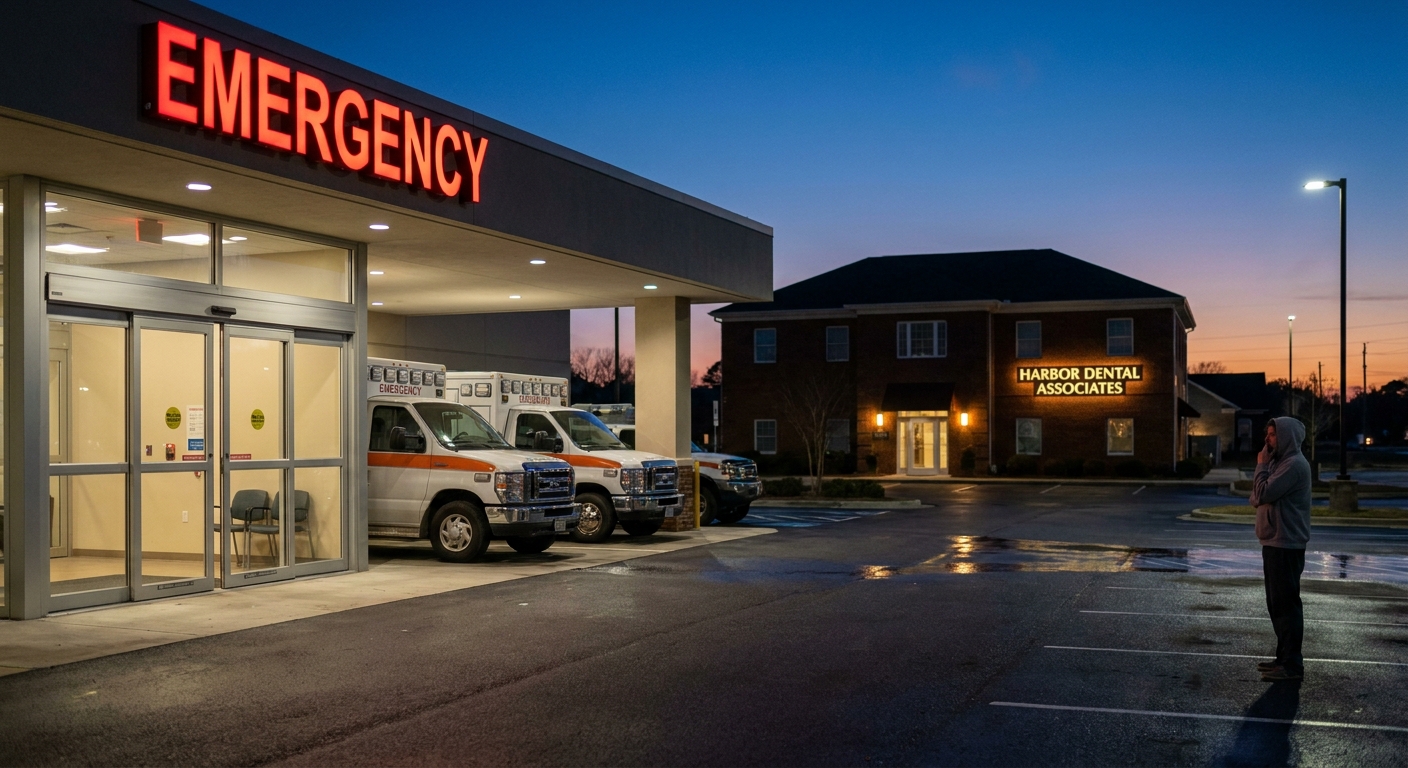
You call the hospital at midnight thinking they can pull the tooth that’s keeping you awake, and the intake nurse tells you to follow up with a dentist in the morning. Most people who walk into an ER with tooth pain leave with the same tooth still in their mouth, a bottle of antibiotics or painkillers, and instructions to see a dental professional like Total Smiles of Leland as soon as possible. So, can the ER help with a tooth? It can for a short list of true medical dangers, and it can take the edge off the pain for a night. For almost everything else, you will leave with a prescription, a referral to a dentist, and the same broken or infected tooth you came in with.
That gap matters, especially when money is tight and every bill counts. It matters even more when the person hurting is your child and you just want someone to make it better without a scary, drawn-out night. This guide covers what counts as a dental emergency, what the ER can and cannot do, the warning signs that mean you should go to the hospital tonight, what Total Smiles of Leland can treat with same-day emergency appointments, and what to do for a knocked-out tooth or a pounding abscess while you wait to be seen.
What Qualifies as a Dental Emergency?
A dental emergency is any mouth or tooth problem that causes severe pain, active bleeding, signs of infection, or damage that could put the tooth at risk if you wait. If you are not sure whether your situation counts, these are the most common signs that you need same-day care:
- Severe or throbbing tooth pain that keeps you up at night or doesn’t ease with over-the-counter pain relievers
- A knocked-out permanent tooth, which may have a better chance of being saved if seen quickly, ideally within 30 to 60 minutes
- A cracked, chipped, or broken tooth, especially one with a sharp edge or pain when you bite
- Swelling in the gums, face, or jaw, which can signal an abscess or spreading infection
- A pimple-like bump on the gum that may leak a bad-tasting fluid
- Bleeding that won’t stop after an injury or an extraction
- A lost filling or crown that leaves the tooth sensitive or exposed
- A broken denture that leaves you unable to eat or speak comfortably
- A loose or shifted adult tooth after a fall, sports injury, or accident
Some of these can wait until morning. Others cannot. The next sections explain where each one should go first.
Can the ER Help With a Tooth? Only Up to a Point
The ER can stabilize you, but it usually cannot fix your tooth. Emergency physicians can control dangerous bleeding, treat facial injuries, protect your airway, and prescribe antibiotics or pain relief. Most hospital ERs, however, have no dentist on duty and no dental equipment.
This mismatch is common. The American Dental Association’s Health Policy Institute has tracked roughly 2 million emergency department visits a year in the United States for dental conditions, and most of those visits end with a recommendation to see a dentist. University of Utah Health’s guidance on toothaches makes the same point. The ER can help manage pain and watch for signs of a spreading infection, but the tooth itself still needs dental care.
The reason is simple. ER doctors are trained in medicine, not dentistry. Fixing a painful tooth means removing decay, treating an infected nerve, repairing a crack, or taking the tooth out, and each of those needs a dentist and a dental setup. Antibiotics can calm an infection for a while, but they do not remove its source. If the infection lives inside the tooth or at the tip of the root, it can flare back up once the pills run out.
Picture a cracked molar on a Saturday night. At the ER, you might wait hours, get a quick exam, and leave with a prescription and instructions to follow up with a dentist within a few days. By Monday you still need that dentist, and now you have two bills instead of one.
When Should You Go to the ER Instead of an Emergency Dentist?
Go to the ER, or call 911, if a dental problem threatens your breathing, causes bleeding you cannot control, or comes with an injury to your face or jaw. In these situations the hospital comes first, and the dentist comes second.
The most urgent warning sign is facial swelling that makes it hard to breathe or swallow. A tooth infection can spread into the soft tissue under the tongue and down into the neck. One rare but serious example is Ludwig’s angina, which can narrow the airway. If your face, jaw, or neck is swelling, your voice sounds muffled, you are drooling because swallowing hurts, or breathing feels tight, do not wait for a dental appointment. Go to the hospital now.
Bleeding is the second signal. After an extraction or a mouth injury, bite down firmly on clean gauze or a damp tea bag and hold steady pressure for 15 minutes without peeking. If the blood is still flowing freely after that, head to the ER. This matters even more if you take a blood thinner.
Jaw trauma from a car accident, a hard fall, a sports collision, or an assault is the third. A broken jaw, a head injury, or a concussion needs medical care before anyone treats the teeth. The fourth is a fever along with facial swelling. Harvard Health notes that swelling and fever together can signal an infection that is spreading beyond the tooth and needs urgent attention.
Outside those four situations, a dentist is usually the better first call. That includes a severe toothache, a cracked or broken tooth, a lost filling or crown, and swelling that stays limited to the gum. If the ER does treat you first, still follow up with a dentist as soon as you can, because stabilizing the problem is not the same as fixing it.
What Can an Emergency Dentist Treat That the ER Cannot?
Once you know the ER isn’t the right stop, the next question is what a dentist can actually do for you. An emergency dentist treats the cause of the pain, not just the symptoms. At Total Smiles of Leland, a same-day emergency appointment can lead directly to the restorative treatment that addresses the problem.
Common dental emergencies the team treats include:
- Infected or inflamed nerves, which may be treated with root canals to try to save the natural tooth
- Teeth that cannot be saved, which may be handled with simple and surgical extractions
- Cracked teeth split by biting, grinding, or injury, which may be treated with cracked tooth repair
- Badly broken teeth or crowns that came off, which may be restored with dental crowns
- A missing tooth after an extraction, which can later be replaced with options like a dental bridge or partial denture
- Lost fillings or deep cavities that have started to hurt, which may be repaired with tooth fillings
- Abscessed teeth, which may be treated by removing the source of infection through a root canal or extraction
- Broken or loose dentures, which may be fixed with denture repairs and denture relines so you can eat and speak more comfortably again
- Tooth pain from cavities, tooth decay, or gum disease, which can be diagnosed and addressed at the source
An emergency dental visit usually starts with questions about where it hurts and when the pain began. The dentist then examines the tooth and takes an X-ray to see what is happening below the gumline. You should leave with a clear explanation of what is wrong and what your options are. Some problems may be addressed in that first visit, though results vary by individual. Others, like certain root canals, start with relief that day and finish at a follow-up visit. Either way, you are working on the actual problem instead of putting it off.
If you’re a parent, you may be wondering whether your child will be scared, or whether one office can really handle both a toddler and a teenager. That worry is completely fair. Total Smiles of Leland offers pediatric visits, teen dental care, and adult and senior care under one roof. If your child chips a front tooth on the playground or your teenager cracks a molar at practice, the whole family can be seen in one place by a team that knows how to slow down, explain things simply, and keep little ones calm. For anyone who dreads the dental chair, the Total Smiles of Leland practice also offers gentle care for dental anxiety, which matters when you are already hurting and scared.
What Does Emergency Dental Care Cost?
The cost of emergency dental care depends on what the dentist finds and what treatment you need. A simple filling costs far less than a root canal and crown, and your out-of-pocket amount also depends on whether you have Medicaid, private insurance, or no coverage at all. The most reliable way to know your number is to ask for a cost estimate before treatment starts, which the team at Total Smiles of Leland is glad to provide.
What is easier to predict is how an ER visit compares. An ER visit for dental pain can run into hundreds or even thousands of dollars depending on your insurance, and you will usually still need to pay a dentist afterward. An emergency dental appointment goes straight to the treatment that addresses the problem, which for many people means paying once instead of twice.
ER bills add up quickly because they bundle several charges together. There is a facility fee for using the emergency department, a separate physician fee, and charges for any imaging or medication. None of that pays for removing the infected tooth or sealing the crack, so when the antibiotics run out, the dental bill is still waiting.
Cost is also one of the biggest reasons people put off dental care, and waiting tends to make problems bigger and more expensive. A cavity that could have been filled can reach the nerve and need a root canal. A tooth that might have been saved with a root canal can end up needing an extraction. A mouth infection is not only a mouth problem, either. The National Institute of Dental and Craniofacial Research continues to highlight the links between oral health and the health of the rest of your body.
Total Smiles of Leland was built around removing those barriers. The practice accepts Medicaid and focuses on affordable care for everyone, including patients who are uninsured, underinsured, or have gone years without a regular dentist. If you are worried about the bill, say so when you call and ask what your visit is likely to cost before treatment begins. You deserve to know, and asking is never a reason to feel embarrassed.
First Aid That Buys You Time Before You Reach the Dentist
Knowing the cost picture helps, but in the moment, what you do next matters most. The right steps in the first hour can help protect a knocked-out tooth and keep an abscess or cracked tooth manageable until you are seen.
First aid does not replace treatment. It keeps the situation from getting worse and protects your options. For most dental emergencies, follow this order:
- Check for ER warning signs first. If there is trouble breathing or swallowing, bleeding that won’t stop, or a jaw or head injury, go to the ER or call 911.
- Control any bleeding with clean gauze or a damp tea bag and firm, steady pressure for 15 minutes.
- Save any tooth or broken piece and keep it moist in milk or saline.
- Manage pain safely with an over-the-counter pain reliever taken exactly as the label directs, plus a cold compress on the outside of the cheek.
- Call for a same-day emergency appointment as soon as you can, and tell the team what happened so they can prepare.
- Avoid chewing on the affected side and skip very hot, cold, or sugary foods until you are seen.
With a knocked-out tooth, the minutes right after the injury can affect whether reimplantation is attempted, though success rates vary and the tooth may not survive. With a toothache, sensible pain control keeps you functioning without masking warning signs you need to notice.
What to Do for a Knocked-Out Tooth
For a knocked-out permanent (adult) tooth, getting to a dentist within 30 to 60 minutes is recommended, which is why we at Total Smiles of Leland offer same-day emergency appointments. Even with fast, compassionate care, reimplantation success is unpredictable, and many factors affect whether the tooth survives. Follow these steps:
- Find the tooth and pick it up by the crown, the white chewing part. Never touch the root, because the cells on it help the tooth reattach.
- Rinse it briefly if it is dirty. Use milk or clean water for a few seconds. Do not scrub it, use soap, or wrap it in tissue.
- Try to place it back in the socket if the person is calm and old enough to cooperate. Push it gently into place, then bite down on clean gauze or cloth to hold it.
- If it will not go back in, keep it moist. Store it in a small cup of milk or saline, or tuck it between the cheek and gum. Never let it dry out.
- Call the dentist right away and head in with the tooth.
If the tooth belongs to a young child and it is a baby tooth, do not try to put it back in, because doing so can damage the adult tooth developing underneath. Keep the tooth, comfort your child, control any bleeding with gentle pressure, and call the dentist so your child’s mouth can be checked.
Managing Severe Tooth Pain Until Your Appointment
For a throbbing abscess or a cracked tooth, the safest first step for most adults is an over-the-counter pain reliever taken exactly as the label directs. An evidence-based clinical practice guideline on acute dental pain recommends nonopioid medicines such as ibuprofen, sometimes combined with acetaminophen, as the first choice for short-term dental pain. Check with a pharmacist first if you take other medications, are pregnant, or have kidney, liver, or stomach problems. For children, use only products and doses made for their age and weight.
A few other steps can help. Hold a cold compress on the outside of your cheek, 15 minutes on and 15 minutes off. Rinse gently with warm salt water, keep your head raised when you lie down, and chew on the other side. Never put aspirin directly on the gum, because it can burn the tissue. For a cracked tooth with a sharp edge, cover it with dental wax or sugar-free gum, and save any broken piece.
Watch for one trap. If severe pain suddenly disappears, the nerve may have died while the infection is still there, so keep your appointment instead of canceling it. If swelling spreads toward your eye or neck, or you develop a fever, go back to the ER warning signs above and act on them.
Why Total Smiles of Leland Wants Your Call Before the ER Gets It
Total Smiles of Leland offers same-day emergency appointments, accepts Medicaid, and is committed to removing the cost and access barriers that keep people from getting dental care. If your emergency does not need a hospital, a call to the practice puts you on the path to addressing the problem instead of a temporary one.
The Total Smiles of Leland practice is in Leland, NC 28451, close to home for Leland families and an easy drive for patients coming from Wilmington. When your face is throbbing, a dental office nearby that can see you today is worth more than a long wait in a crowded ER.
Many people who reach out during an emergency have been avoiding the dentist for a long time. Some were afraid of the cost, some had a rough experience years ago, and some simply never found a practice that accepted their situation. Total Smiles of Leland takes a compassionate, judgment-free approach, so you will not get a lecture about how long it has been. The goal is to help stop your pain, treat the infection, and give you an honest picture of what comes next, with no pressure to add treatment you don’t need.
That same compassionate care carries through to everyday visits. Once the emergency is handled, the Total Smiles of Leland practice offers routine cleanings and exams, fluoride, sealants, and oral cancer screening for the whole family. Regular visits catch cavities, tooth decay, and gum disease early, before they become 2 a.m. emergencies, and that is one way to help keep both pain and costs down over time.
Still Not Sure Whether to Call or Drive?
If you are breathing comfortably, any bleeding is under control, and your jaw was not hurt in an accident, call a dentist first. If any of those are not true, go to the ER.
Do you offer same-day emergency dental appointments in Leland, NC?
Yes. Total Smiles of Leland offers same-day emergency appointments for urgent dental problems like severe tooth pain, abscesses, cracked teeth, and knocked-out teeth. Call as early as you can so the team can fit you in, prepare for your visit, and see you as quickly as possible. The Total Smiles of Leland practice serves patients from Leland and Wilmington, accepts Medicaid, and can see kids, teens, adults, and seniors.
Can the ER help with a tooth infection?
The ER can prescribe antibiotics and pain medication and can treat a dangerous spreading infection. It usually cannot remove the source of the infection, so you will still need a dentist to treat or remove the tooth.
Will the ER pull an infected tooth?
In most cases, no. Most ERs do not have a dentist on staff or the equipment for extractions. They typically prescribe antibiotics and pain medication, then refer you to a dentist to remove or treat the tooth.
How much does an ER visit cost for a toothache?
ER visits for dental pain can cost hundreds to thousands of dollars depending on your insurance. You will still need a dentist afterward to fix the underlying problem.
Can I go to the ER for a knocked-out tooth?
Go to the ER if there is serious facial trauma, a possible head injury, or bleeding that will not stop. Otherwise, call an emergency dentist immediately, because in some documented cases, prompt care within 30 to 60 minutes has been associated with saving a permanent tooth, though success is not guaranteed and many teeth cannot be saved, though outcomes vary by individual.
What if I don’t have dental insurance for an emergency?
Total Smiles of Leland accepts Medicaid and focuses on affordable care for everyone, including uninsured and underinsured patients. Ask about costs when you call so you know what to expect before treatment starts.
Call Total Smiles of Leland now to request a same-day emergency appointment, and if you want to know what happens once you arrive, read what to expect at a same-day emergency dental visit before you head over. One thing to remember tonight: if the pain eases after a dose of ibuprofen, the infection behind it has not gone anywhere. Use that quieter moment to make the call, not to put it off.
Not Sure Whether Your Tooth Pain Can Wait Until Morning?
Severe dental pain, trauma, or swelling can feel overwhelming, especially when it strikes after hours. If you’re in Leland and wondering whether to head to the ER or wait to see a dentist, the team at Total Smiles of Leland can help you make that call. We understand that timing matters when it comes to tooth emergencies, and we’re here to guide you toward the right care at the right time.
This article is general information and not a diagnosis. Individual results and experiences vary. If you have trouble breathing or swallowing, call 911 or go to the nearest emergency room.